Subscribe

RSS Feed (xml)

Powered By

Skin Design:
Free Blogger Skins

Powered by Blogger

Wednesday, October 29, 2014

Rare Birds of North America

When I was in high school, one of my favorite books was Don Roberson's Rare Birds of the West Coast.  The only copy available to me was in the Portland Public Library, and I would have to ride the bus downtown to check it out on a special out of county loan.  I would then spend hours looking at all the vagrants recorded in Oregon and nearby states, and dream about what it might be possible to find.  When I got kicked out of my Junior year English class for being obnoxious and had to come up with a self-study unit to pass the time, Rare Birds of the West Coast was my principle source in compiling a paper on which birds were most likely to be added to the official Oregon state list.  Roberson's book, though very dated now, is still one of my favorite bird books of all time.

When I heard that Steve Howell, Ian Lexington, and Will Russell were coming out with Rare Birds of North America (Princeton, 2014), I was very excited to get my hands on the definitive guide to rare birds of the whole continent!

The book has been out for months now, and there have been many excellent reviews (including BirdGuides, Birder's Library, Birdwatch, and ABA).  These reviews are all pretty much glowing, and I recommend going there for more details that I may skip here.  Most reviews come out when a book is released.  Now that I've lived with and used this book for a few months, perhaps I can offer a different perspective.

Rare Birds of North America has a lot going for it.  Let's start with the illustrations.  For me, the gouache paintings by Ian Lewington are the best thing about this book--and blow the socks off the color plates in Rare Birds of the West Coast and they pretty much trump any current field guide illustrations found in North American guides. The illustrations--from the accentor on the cover, to the very last of the 275 color plates--are stunning.  They are clear, large, and a joy to behold.  They've got my mouth watering for the future publication of a field guide to North American birds that will feature Lewington's work.  These illustrations have made this book my second stop (after my trusty Sibley) when considering the identity of a possible vagrant bird.  I even carried it around in my car for awhile.  I expect I'll be using and enjoying these illustrations for a long time.

Sample plate from Rare Birds of North America


The text of Rare Birds of North America is exhaustively researched and documented and the format and layout is fantastic, with great introductory sections on vagrancy as well as molt and topography of bird plumage (but what else would you expect from the author of Peterson Reference Guide to Molt in North American Birds?).  The species accounts are also well thought out, with information on occurrence, possible patterns of vagrancy, and identification and habits of each species covered.    In summary here's what works best for me:

  • Discussion of vagrancy--good review of literature and speculations
  • Molt and topography section--concise review
  • Species accounts organization and layout, especially the--
  • Comments section--where we get the clearest access to the authors's thoughts on these birds and their occurrence, including fun speculations about how, why, and where these birds might possibly turn up next.
In living with the text of this book, there's a few things that have been a little irritating for me:
  • Division of the species accounts based on geographic origin of vagrants.  For each taxonomic group of birds, birds of New World and Old World origin are split from each other, sometimes them harder to find in the text.
  • Field Identification section--generally good information, but sometimes vague and frustrating.  Many times I'm left wondering what field marks are really diagnostic, or if I would be able to really identify one of these vagrants based on the information provided.  A case in point from an actual frustrating ID I faced here is Yellow-legged Gull.  This is a real possible vagrant where I live (and I had a candidate bird last year), but one that might be impossible to distinguish from a hybrid Herring x Lesser Black-backed Gull.  The text mentions this challenge without really providing a good discussion of how to actually make the distinction.  Granted this may be a frontier of bird identification, but I was hoping for some more clarity here from the founder of the Bird ID Frontiers listserv!  Likewise, when a possible New Jersey first European Golden Plover showed up in a sod farm field a few miles from my house, the ID text offered some hints (underwing pattern and body structure), but left me hanging in describing the plumage.  In fact there aren't detailed plumage descriptions here--just comparisons between the vagrant birds and more familiar North American species, or between the ages and sexes of the vagrant species.  So where I would hope a book like this would provide the definitive descriptions and field identification discussions, after using this book a few times I feel like it is a good reference, but not the final word, and that more research in other references will often be needed to actually identify a vagrant.
  • Summaries of vagrant records are generally good, but when I found that the 1996 Common Crane record from Nebraska that I and many other North American listers twitched (this was the first twitchable Common Crane in 20 years) was not included, it made me wonder how exhaustive these summaries actually are.  I suspect they are pretty thorough, but you hate for there to be a doubt.
That said, and my petty quibbles aside, Rare Birds of North America is an impressive book.  While I may not actually work as the best source of ID info on some of these birds, it will still be helpful, the illustrations will be very useful, and the summary of bird records will still inspire the imagination.  If it helps birders find and recognize more of these mega vagrants, than it will have fulfilled its purpose and provided a lot of enjoyment to twitchers across North America.  I personally look forward to spending additional time with this book, and using it to help me when I'm birding on my own or twitching somebody else's good find.

As I mentioned, most bird books arrive with much aplomb and online reviews, then you don't hear much about them later.  I'd be curious to hear how Rare Birds of North America has lived up to its initial reviews, or what other thoughts folks have about it after living with it for half a year?

(Review based on a review copy provided by Princeton University Press).


Tuesday, September 30, 2014

Pre Dawn Thrush Flight 30 September 2014

I recorded over 310 thrush calls between 5am and 6:35am at my home in Hunterdon County, NJ this morning.  Here's the eBird checklist.

As always, there are many calls that I'm still puzzling over.  Here's a spectrogram of a call sequence from 6:09am:

You can download the audio of this clip, and follow any possible discussion of it from my post on the Nocturnal Flight Call Facebook group.

Wednesday, September 24, 2014

Back in the NFC Saddle

This past spring I crashed the laptop I was recording night flight calls on, and I didn't get my MacBook Pro set up to record until last night.  But I'm back in business now thanks to my Griffin iMic adapter and Audacity software.  Still recording using the Oldbird 21c mic.  Since the Oldbird detectors aren't set up for the Mac, for now I'm just recording then browsing the spectrogram by hand to find and ID the calls.

Here's my eBird checklist from early this morning.


Wednesday, June 11, 2014

Neotropical Cormorant

Neotropic Cormorant, Clinton, NJ, 11 June 2014

After not seeing any reports of the Neotropic Cormorant I found in Clinton back in April, I stopped by the Red Mill pond downtown and quickly found the bird sitting on branches in the middle of the pond.  This will be the 1st New Jersey record pending acceptance by the NJBRC.  When I first found the bird, I guessed it would stay the summer (where else would it go?), so we'll see how long it hangs out.  It's got a nice river to fish in, and unless it gets lonely and wants to go off and look for a mate, I don't know why it won't just hang out here along the river.

eBird checklist

Monday, June 09, 2014

Grasshopper Sparrows

Grasshopper Sparrows are special hidden marvels that only birders get to enjoy.  They aren't a bird that the public would usually notice.  They are small, mostly plain brown, live in tall grass, and have a song that sounds like an insect (check out a video of one singing).  So they are easy to overlook.

Here in my part of New Jersey, Grasshopper Sparrows are uncommon breeders, nesting in a few scattered larger fields across the county.

Last week I got some photos of a couple of birds at the Horseshoe Bend Preserve.  I digiscoped a male singing from a pole in a field, and got shots from my car with my Nikon CoolPix P500 of another bird was seen along the fence line carrying insects for its young--presumably in a nest nearby.   Since most songbirds only carry food when they have young in the nest, this is considered confirmed evidence of nesting.

Just another hidden gem that only birders get to enjoy in the wild!


Nikon CoolPix P500 shot of the singing male, not as good as the digiscoped shots below

Singing male Grasshopper Sparrow, Hunterdon Co, NJ, 6 June 2014
Food carrying nesting Grasshopper Sparrow

Grasshopper Sparrow, food carrying, 6 June 2014

Grasshopper Sparrow, Nikon CoolPix P500, 6 June 2014

eBird post


Tuesday, June 03, 2014

Peek-a-Boo Chat

I spent an hour this morning trying to get a photo of a very vocal Yellow-breasted Chat singing in the dense shrubbery in a field near Flemington, NJ.  I got some OK sound recordings of the bird singing--it sang nonstop the whole time I was there.  But what a tough guy to get a photo of!  I did get some short but close looks at the chat, and even watched it sing in flight for over 50 yards.  I'm sure some of my friends with big lenses who are quick on the draw could have gotten some spectacular shots.

Unfortunately, most of mine look like this:

Can you see the bird in the oak tree?  Me neither!

The only shot I really got that shows anything is this sad shot here:


How about now?  Yes, there's a bird there.


And here it is cropped to show the bird.

Yellow-breasted Chat, 3 June 2014, Hunterdon County, NJ

Oh well, it was a nice morning out--at one point we accidentally flushed a Wild Turkey off her nest.  Here's the nest, with nine eggs.

Nine future Wild Turkeys

Thursday, April 10, 2014

Lighting strikes--thrice? 1st Neotropic Cormorant for NJ

Tuesday night I had to run to the store, and on my way home, I stopped by Demott Park in Clinton, NJ.  I stop by this little pond almost every day.  Sometimes more than once.  Its a quick stop to scan for ducks.  For over a week a Redhead had been hanging out with some Ring-necked Ducks.  In the winter there are always a lot of Gadwall, and usually some Hooded Mergansers.  And sometimes something even better.

Tuesday night, as it was getting dark, I noticed a long-tailed bird in the tree on an island in the middle of the pond.  As I got my bins on it, I was shocked to see it was a cormorant--but much longer tailed and smaller than a normal cormorant.  I jumped out of the car, grabbed my scope, and started taking pictures through my scope with my camera phone.


Light was fading fast, but I sent out a text with a  photo to a local birding friend (who I didn't realize was in Florida).  I try to be careful, and didn't want to claim it 100% until I could look at the photos--and I was just taking as many photos as I could, hoping to get ones that would prove the ID of this bird--since it really looked to me like a Neotropic Cormorant--a bird I used to see a lot of when I lived in Texas, but a bird never documented before in New Jersey!

As I took my last shot I realized I was 50 yards from my van, with the doors wide open, and the keys left in the ignition.  I also had ice cream melting in the van.  But that was the least of my concerns :-)

I got home and started going through the photos.  OK, they weren't great perfect.  But they seemed to show what I saw in the field--a very long-tailed cormorant, with dark feathering (instead of yellow flesh) in front of the eye, a dark chocolate brown breast and belly.  As far as I could tell, I had all the field marks for a Neotropic Cormorant.  Unfortunately the photos couldn't really show how small the bird was--which was the thing that really struck me at first.  Oh well.

I started sending the photos around to friends to get their opinion.  It was getting late on the East Coast.  A couple friends in Texas, Mexico, and Washington thought it looked good--though the photos were not perfect by any stretch, so caution was warranted.

By 1:30AM I was convinced I had something that others needed to see--and without being able to reach anyone else for the night, I had to pull the trigger and call it myself.  If I wasn't imagining things, this was a bird that others would want to see.  If I was somehow off, well, that would be embarrassing.  I bit the bullet and sent out word of a probable Neotropic Cormorant on the JerseyBirds email list.

Next morning I had some tasks to do that kept me from the park at first light.  By the time I got there at 6:45, no bird.  A couple friends showed up to look, but otherwise not many birders there for a potential first state record.  I guess my photos posted on Flickr weren't convincing enough.  

After I got home, I found out that Jonathan Klizas had been there earlier, and had seen the bird, and gotten some photos.  Though they were still a bit fuzzy in the early morning light.  

A discussion of the ID on the ID Frontiers email list went round and round.  Some birders thought it looked good for Neotropic Cormorant.  Others expressed caution.  There was a story about a mysterious cormorant in California that may not be identifiable still.  Some folks thought my photos showed a bird with a head and/or bill too large for Neotropic Cormorant.  Others couldn't get past the long tail and dark lores--usually classic diagnostic marks for this bird.  At one point some people were questioning if what if any marks really would be convincing for a Neotropic Cormorant in this plumage.

Fortunately, last night, Ellen DeCarlo checked out the island at dusk and relocated the bird sitting on the shore of the island and got a couple good clean shots.


Thank goodness for these shots!  Today, as more birders saw these last shots, those who expressed concerns were mostly won over.  Peter Pyle was even able to age this bird (a young bird from last year in the middle of a molt to an adult plumage).

So tonight, finally a crowd should be gathered to see this potential first record for New Jersey.  I don't know if finding a first state record is the birding equivalent of pitching a perfect game, or just winning the Powerball.  But that's three for me in 15 months here in NJ.  I'm feeling very blessed.  And I hope that it sticks around long enough so everyone who wants to see it can come and take a look.

My wife just thinks it is good karma for my going to get some stuff she needed from the store :-)

As with all good birding tales, this one is a mix of fun and passion and frustration.  Not sure there are any real lessons to be learned.  But I'm grateful for all who have participated in the discussion of this bird, and for all that I learned about cormorants over the past few days.  

Good luck to all the bird chasers out there.  I hope everyone who wants to gets to see this bird!

Wednesday, March 12, 2014

Wilson's Snipe

Wilson's Snipe, Clinton, Hunterdon, NJ 12 March 2014
Spring is finally in the air, with warm temps and rain.  Today was the first day in a month and a half that I didn't have to step in snow or ice to get to my car.  Waterfowl are moving through, and today I saw my first Wilson's Snipe of the season--as well as my first Wood Duck and Eastern Phoebe of 2014.  Birding has been slow, but now starting to pick up.

Blogging remains slow.  As with most long term bloggers, I've sagged a bit, and most of my sharing lately has been on Facebook.  I am working on some book reviews, and other posts, so see you again soon :-)

Friday, March 07, 2014

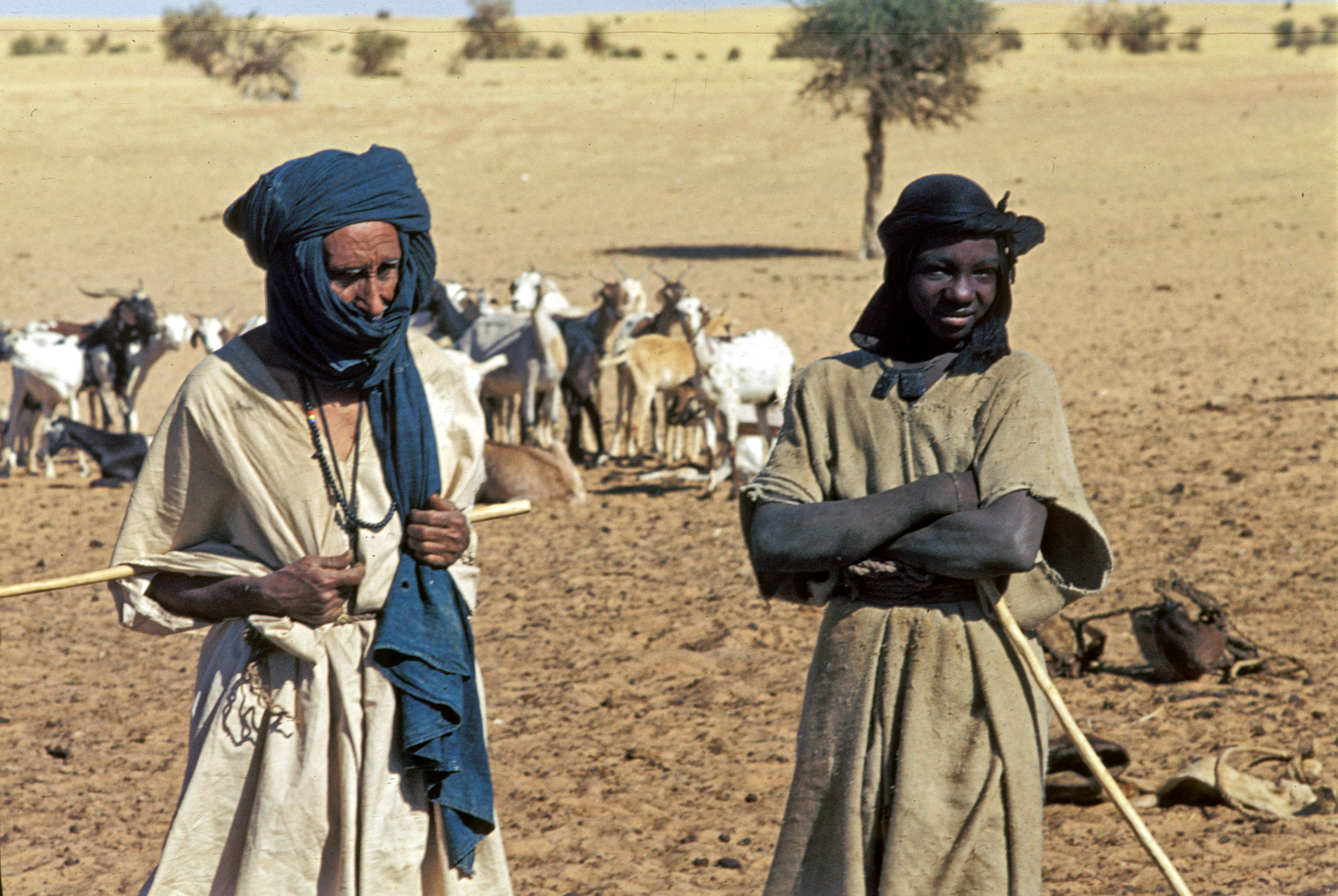
Spring 2014 ESU Ethnographic Expeditions

This semester my students at East Stroudsburg University will be getting to know 100 traditional and indigenous cultures around the world.  We will be exploring their environment, world views, connections to nature (including birds, of course), foods, and cultural survival.  Here are the cultures we will be connecting with.  Please feel free to visit the blogs where each student is posting their explorations, and if you have contacts or resources that can help them, please contact them directly on their blogs to let them know.

Update (1 May 20014): Most explorers have their blogs created, but a few haven't posted anything yet.  Most should be completed by the beginning of next week.  A sample blogs with a lot of content include the Basque blog.


Expedition Team 1: Europe


Expedition Team 2: Russia & Central Asia 


Expedition Team 3: Middle East & North Africa


Expedition Team 4: Sub-Saharan Africa


Expedition Team 5: US & Canada


Expedition Team 6: Latin America & Caribbean


Expedition Team 8: South Asia

Expedition Team 9: Southeast Asia


Expedition Team 10: Oceania

Monday, February 03, 2014

January 2014 Goals

It was a cold and frozen month, with most water in Hunterdon County frozen over.  With some determination and good fortune, I was able to make my gold of 100 bird species for the month, ending up with 101 species on January 31.  Best birds were Greater White-fronted Goose, White-winged Scoter, and Rough-legged Hawk.  Biggest miss was the Snowy Owl at Round Valley that I spent too many mornings looking for and never did find.  Such is life.  I also wanted to get my daughter started on her year list, and she went with me several times to Round Valley and has more than 30 birds for the year.  Lots of fun.  Here's a digiscoped view of the Rough-legged Hawk that I found at dusk on Janury 31.


Tuesday, December 31, 2013

Top 10 best birds of 2013

I didn't do a lot of traveling this past year, so most of my birding was close to home.  Here are my top 10 birds of 2013:

1) Mew Gull--back in January I was able to find this bird, the first one ever photographed in New Jersey.

First documented Mew Gull in NJ, photo Rob Fergus

2) Lazuli Bunting--six days after finding the first Mew Gull in New Jersey, I found this bird, the first Lazuli Bunting ever found in New Jersey.  I didn't get the best look and we weren't able to fully identify it until others were able to get photos a week later.  Thank goodness birding is a team sport :-)

First documented Lazuli Bunting in NJ, photo Sam Galick.


3) Blue-footed Booby--on one of only a couple out of state trips this year I was able to see two of these birds at Skinner Lake in Riverside County, California earlier this month.  Looks like it will be my only new bird for my ABA area list this year.

Blue-footed Boobies with cormorants, Skinner Lake, CA--photo Rob Fergus

4) Snowy Owl--there are hundreds of these guys across the East Coast this winter, and a couple weeks ago I got a call about one near my home.  A couple hours later it was relocated and I got to see it, the first one documented for our county (or so we thought until a photo of one a week earlier ended up in the local paper!).
2nd Hunterdon County NJ Snowy Owl record--photo Rob Fergus


5) Barnacle Goose--this bird from last January was one of 10 species I was able to add to my county list last year, and maybe a third county record.  Just got word this morning that it was seed again today, so hope to see it again in 2014.


6) Long-eared Owl--another scarce local bird I was able to add to my county list this year.

7) Pink-footed Goose--got this rare Eurasian bird for the first time in the county late in 2012, and at least three different birds showed up off and on in the county for the first part of 2013.  So far no reports from this winter, but we'll be looking.
Pink-footed Goose, Hunterdon Co, NJ--photo Rob Fergus

8) Glossy Ibis--saw my first one for the county back in May, a bird seen flying across the Spruce Run reservoir at the end of a very good day of birding there with friends.

9) Northern Lapwing--three birds in South Jersey were the first ones I've seen in North America since 1995.


10) Short-eared Owl--my first one for the county was pretty sweet to see, and took a lot of attempts at dusk and dawn to finally see.

I only saw 252 species this past year, my worst year probably in a long time.  That is fewer species than I saw in the county alone last year, and really not great. 1 new ABA bird is the fewest new ABA species I've added in a long time as well.  New responsibilities at church and a new job kind of slowed me down.  My blogging here has tapered off a lot too.  But even with all that, these are some very fine birds to have part of my life this past year, and I am grateful for them!

So what about birding goals for 2014?  I want to get 100 species for my yard next year.  Also want to help two of my kids get 200 species for the county in 2014.  So look forward to lots of birding with them in the coming year.  I'm close to an ABA birding milestone of 700 species, so I'm still playing with the possibility of a south Florida trip in the spring to (finally!) put me over that milestone.

Tuesday, October 01, 2013

Bird Control for Building Renovations

Sometimes contractors working on building renovations run into properties that have had serious bird problems--including pigeon infestations in abandoned buildings.  To help contractors get on the right path, here's a bird control article I recently had published with Retrofit Magazine online.

Crossing the Finish Line--1000 Species Challenge Final Day

Sora, Cold Brook Preserve, NJ
The day started with my not knowing exactly how many species I needed to cross the 1000 species threshold, as I hadn't tallied up all my species from Saturday.  But I thought I needed at least 30 species to finish the day.

After teaching my classes at East Stroudsburg University, I stopped by the greenhouse and picked up what I hoped would be at least a dozen species.  Then I stopped by Cold Brook Preserve to look for the Sora that had been there the last two days.  After many days of looking for this bird this fall and last fall, it was nice to get good looks of an adult Sora feeding on the edge of the small marshy pond there.

Then I headed home to be with my kids as they got off the bus from school.  We wandered the yard and turned over logs hoping to get enough species to finish out the month.  By bedtime I was sure I had gotten 1000 species, but didn't know what my final tally would be.  As it is, the final tally will go up as I identify additional plants and moths that I have photographed this month, but for now at least the goal was met.

Later I'll post a recap and retrospective of what I learned doing this challenge this month.  I'm already thinking about how to go bigger next September :-)

Final Species Tally: 1004+

New Species
Jumping Spider Salticidae sp.
Orb-weaving Spider Araneidae sp.
Wolf Spider Lycosidae sp.
Sora Porzana carolina
Woodlouse Oniscidea sp.
Ant  Formicidae sp.
Band-winged Grasshopper Oedipodinae sp.
Bumblebee  Bombini sp.
Fruit Fly Tephritidae sp.
Large Carpenter Bee Xylocopinae sp.
Orange Sulphur Colias eurytheme
Northern Short-tailed Shrew Blarina brevicauda
Birdbill Dayflower Commelina dianthifolia
Bowstring Hemp Sansevieria hyacinthoides
False Lilac Leptodermis oblonga
Fire Lilly Cyrtanthus elatus
Fuchsia Fuchsia hybrid
Grass Aloe Aloe verecunda
Hippeastrum Hippeastrum vittatum
Hippeastrum Hippeastrum aulicum
Hummingbird Bush Anisacanthus quadrifidu
Lindheimer's Beeblossom Oenothera lindheimeri
Pelargonium Storksbill Pelargonium sp.
Pink Friesland Sage Salvia nemorosa
Porcupine Tomato Solanum pyracanthum
Purple Passionflower Passiflora incarnata
Red Clover Trifolium pratense
Rose Cactus Pereskia grandifolia
Spotted Touch-Me-Not Impatiens capensis
Turquoise Crossanda Ecbolium viride

1000 Species Challenge Homestretch--Day 28 Update

Northern Brown Snake

A big day, starting early driving down to Philadelphia to take my Rosemont College students on their first birding expedition to the John Heinz NWR.  We met up with a small group and walked the dike trail out into the refuge, and picked up a lot of new birds for the month including Bald Eagle, Peregrine Falcon, and Marsh Wren.  I also picked up four reptiles--including a Northern Brown Snake, and several turtles.


On my way home I stopped off at Todd Marcus Birds Exotic in Delran, NJ and picked up a couple dozen exotic birds, mostly parrots.


The last species of the day reflects the difficulty of identifying many species in the food trade--wild caught Chinese Crawfish.  One can only hope these are accurately labeled, though I can only guess that they are native Asian crawfish, which would be from the family Cambaridae.  I don't have any other crawfish on my list, so it is a new species for the month even if it is misidentified.  But it sure would be nice to have species labels on seafood--and hats off to those companies that I found this month that do label their packaging.  Lets hope they are accurately labeled!


Cumulative Species Total: 974

New Species
African Grey Parrot                            Psittacus erithacus
American Black Duck Anas rubripes
Bald Eagle Haliaeetus leucocephalus
Black-capped Parakeet Pyrrhura rupicola
Blue-and-yellow Macaw Ara ararauna
Blue-fronted Amazon Amazona aestiva
Blue-headed Parrot Pionus menstruus
Blue-winged Teal Anas discors
Brown-headed Parrot Poicephalus cryptoxanthus
Canary Serinus canaria
Chestnut-fronted Macaw Ara severus
Cockatiel Nymphicus hollandicus
Curl-crested Aracari Pteroglossus beauharnaesii
Eclectus Parrot Eclectus roratus
Galah Eolophus roseicapilla
Gouldian Finch Erythrura gouldiae
Greater Yellowlegs Tringa melanoleuca
Green Singing Finch Serinus mozambicus
Green-backed Twinspot Mandingoa nitidula
Green-cheeked Parrot Ara severus
Green-winged Macaw Ara chloropterus
Green-winged Teal Anas carolinensis
Hyacinth Macaw Anodorhynchus hyacinthinus
Lesser Yellowlegs Tringa flavipes
Little Blue Heron Egretta caerulea
Marsh Wren Cistothorus palustris
Northern Harrier Circus cyaneus
Northern Rough-winged Swallow Stelgidopteryx serripennis
Pacific Parrotlet Forpus coelestis
Palm Cockatoo Probosciger aterrimus
Peach-faced Lovebird Agapornis roseicollis
Peregrine Falcon Falco peregrinus
Pied-billed Grebe Podilymbus podiceps
Pin-tailed Wydah Vidua macroura
Red-rumped Parrot Psephotus haematonotus
Red-winged Blackbird Agelaius phoeniceus
Ruby-crowned Kinglet Regulus calendula
Salmon-crested Cockatoo Cacatua moluccensis
Scarlet Macaw Ara macao
Snowy Egret Egretta thula
Star Finch Neochmia ruficauda
White Cockatoo Cacatua alba
White-bellied Parrot Pionites leucogaster
White-crowned Parrot Pionus senilis
Yellow-crowned Amazon Amazona ochrocephala
Boxelder Acer negundo
Common Mugwart Artemesia vulgaris
Creeping Primrose Willow Ludwigia repens
Goldenrod Solidago altissima
Pickerel Weed Pontederia sp.
Purple Loosestrife Lythrum salicaria
Spatterdock Nuphar advena
Swamp Milkweed Asclepias incarnata
Tickseed Sunflower Bidens aristoa
Wild Rice Zizania sp.
Northern Brown Snake Storeria dekayi
Northern Red-bellied Turtle Pseudemys rubriventris
Red-eared Slider Trachemys scripta
Snapping Turtle Chelydra serpentina
Chinese Crawfish Cambaridae sp.

Thursday, September 26, 2013

Down to the Wire--Day 26 Update--1000 Species Challenge

Only one new bird for the month--a Blue-headed Vireo that popped out in the trees while I was visiting with friends on my patio this morning.  At Amwell Lake I managed to find a Puffball as well as my first Odonates--actually the first dragonflies and damselfly that I've ever tried to ID, so hope I got them right :-)

Then I stopped by the Rutgers Landscape & Nursery on Hwy 202 south of Flemington and picked up over 80 additional plant species, and got some more ideas for landscaping our yard.

Northern Bluet, Amwell Lake, Hunterdon, NJ

Autumn Meadowhawk, Amwell Lake, Hunterdon, NJ

I only have a few more days in the month, and new species are harder to get all the time.  Looks like I need to plan on more than just the Rosemont College biodiversity class field trip on Saturday to put me over the top!

Total Cumulative Species: 906+

New Species
Blue-headed Vireo Vireo solitarius
Puffball Bovista pila
Autumn Meadowhawk Sympetrum vicinum
Eastern Pondhawk Erythemis simplicicollis
European Honey Bee Apis mellifera
Northern Bluet Enallagma annexum
Adam's Needle Yucca filamentosa
American Holly Ilex opaca
American Sweetgum Liquidambar styraciflua
American Willow Salix discolor
Arkansas Blue Star Amsonia hubrichtii
Autumn Joy  Hylotelephium telephium
Black Tupelo Nyssa sylvatica
Blue Pacific Juniper Juniperus conforta
Butterfly Blue  Scabiosa columbaria
Carpathian harebell Campanula carpatica
Cheddar Pink Dianthus gratianopolitanus 
Cinnamon Fern Osmundastrum cinnamomeum
Common Holly Ilex aquifolium
Cotoneaster Cranberry Cotoneaster apiculatus
Crape Myrtle Lagerstroemia indica
Curve-leaf Yucca Yucca gloriosa
Darley Heath Erica × darleyensis 
Dense Blazing Star Liatris spicata
Deutzia Hydrangea Deutzia gracilis
European Hornbeam Carpinus betulus
Flowering Dogwood Cornus florida
Fountain Grass Pennisetum alopecuroides
Foxglove Beard Tongue Penstemon digitalis
Fraser's Photinia Photinia x fraseri
Garden Catmint Nepeta racemosa
Gold Flame Honeysuckle Lonicera x heckrotti
Green Osier Dogwood Cornus alternifolia
Honey Locust Gleditsia triacanthos
Hosta Hosta sieboldiana
Hydrangea Hydrangea petiola
Hydrangea anomala Hydrangea anomala
Japanese Anemone Anemone tomentosa
Japanese Flowering Crabapple Malus floribunda
Japanese Forest Grass Hakonechloa macra
Japanese Lilac Syringa reticulata
Japanese Snowball Viburnum plicatum
Japanese Stewartia Stewartia pseudocamellia
Japanese Stonecrop Sedum makinoi
Japanese Wisteria Wisteria floribunda
Korean Sun Pear Pyrus fauriei
Large-flowered Tickseed Coreopsis grandiflora
Maiden Grass Miscanthus sinensis
Mediteranean Fan Palm Chamaerops humiilis
Mexican Evening Primrose Oenothera berlandieri
Montauk Daisy Nipponanthemum nipponicum
Mountain Cornflower Centaurea montana
Nandina Nandina domestica
Pampas Grass Saccharum ravennae
Persian Ironwood Parrotia persica
Pin Oak Quercus palustris
Prague Viburnum Viburnam x praganse
Purple Willow Salix purpurea
Red Carpet Sedum spurium
Red Horse Chestnut Aesculus x carnea
Redvein Enkianthus Enkianthus campanulatus
Rose Mallow Hibiscus moscheutos
Rosy Tickseed Coreopsis rosea
Russian Sage Perovskia atriplicifolia
Seaside Goldenrod Solidago sempervivens
Short's Goldenrod Solidago shortii
Showy Stonecrop Hylotelephium spectabile
Siberian Bugloss Brunnera macrophylla
Siberian Iris Iris siberica
Silver Lime Tilia tomentosa
Sneezeweed Helenium x coppelia
Snow-in-Summer Cerastium tormentorum
Solomon's Seal Polygonatum multiflorum
South American Elephant Grass Miscanthus sinensis
Spindle Euonymus fortunei
Sugar Maple Acer saccharum
Sullivant's Coneflower Rudbeckia speciosa
Swamp White Oak Quercus bicolor
Tropical Mandevilla Mandevilla sp.
Violet Viola etain
Virginia Knotweed Persicaria virginiana
Weeping Willow Salix babylonica
Weigela Florida Weigela florida
White Snakeroot Ageratina altissima
Windmill Palm Trachycarpus fortunei
Winterberry Ilex verticillata
Wood Oats Chasmanthium latifolium

Nature Blog Network Fatbirder's Top 1000 Birding Websites