Subscribe

RSS Feed (xml)

Powered By

Skin Design:
Free Blogger Skins

Powered by Blogger

Sunday, May 31, 2020

Birding Providence

My house is right on Providence Rd, in the township of Nether Providence in Pennsylvania, so when I am yard birding, I am literally birding Providence.
Birding Providence

But that's not the Providence I'm thinking of this week, after some interesting birding experiences.  For centuries, Providence has been used as a name for Deity, or for the foresight or beneficial intervention of God.  No matter your theology about Providence (there are even naturalistic or atheist traditions addressing it), it is fun to ponder and consider the magic that sometimes happens in birding.  Here are two examples from just one day this week.

1) My wife woke me up at 12:30 in the morning because she needed help with something.  While I am a Latter-day Saint, I am no angel, and am especially grumpy after being awoken from a deep sleep.  But after I composed myself, I got out of bed and helped her for half an hour.  After that, since I was already awake, I decided I would listen to my NFC microphone recording in progress, to see what might be migrating over my house.  I fell asleep with the earbuds in, but was awoken again just after 3am by the distinct loud churr call of a King Rail migrating over my house.  This is a very rare bird in my county, with very few records after their local breeding habitat was mostly destroyed by a Philadelphia airport expansion project over 20 years ago. If I hadn't gotten up to help my wife, I wouldn't have put in the earbuds, and I wouldn't have heard this cool bird and added it to my year and county list. So that was very Providential!

King Rail CHURRR call, Nether Providence, PA

2) Later that day several of us were social-distance birding together at the Delaware River behind the Philadelphia airport.  One of my friends went home for lunch, and missed a pair of Least Terns, rare for the county, as they flew past us.  We commented on how sometimes we make the wrong choices.  He texted us a few minutes later, with cell phone pics of a Mississippi Kite, another rare and hard to find migrant in the region, that had just flown over his house while he was doing yard work! Maybe he didn't make the wrong choice after all!  Forty-five minutes later, I had the thought that I should let my friends in Haverford know about the kite sighting.  They went outside as soon as they got my text, and almost immediately saw and photographed a Mississippi Kite flying over their yard!  This was ten miles away from where the bird was first seen, and its impossible to know if it is the same bird--what would the chances be? And what are the chances that I would think to text them at the exact moment they would need to go outside to see the bird--a lifer for one of them?  And my birding friend that missed the terns?  He later rejoined us just in time to see a second pair of Least Terns fly by. Amazing! Providential!

Of course it doesn't always happen that way.  Sometimes we don't see the bird.  Sometimes we barely miss it.  But it happens often enough that whether you call it God or karma or whatever, magic like this happens.  Sometimes you think of an unlikely bird, and then see one shortly thereafter. Or bizarre "coincidences" happen to put you in just the right place at just the right time to have a completely unexpected, yet providential, bird sighting. That's one of the things that I love most about birding--the skill, hard work, luck, and dare I say Providence, that has to come together to find a bird you are looking for, or to discover one that you couldn't expect.

Birding Providence.  One of my great joys of birding.


Sunday, April 19, 2020

In Praise of the Sun

The sun, dominating the horizon during my first hour of Outdoor Church
I missed sunrise this morning, as I didn't get outside until 45 minutes later.  But during my 4 hours of Outdoor Church in the yard, I became increasingly cognizant and appreciative of my relationship to the sun.

During the first hour, with the sun low on the horizon, the local weather station was showing a temperature of 36F, but there was still frost on our cars.  I was constantly dancing with the sun, to get warm, to position my body so that I could better see the birds in my yard.  Eventually, the sun climbed higher, as did the temperature.  But I was constantly looking around the sun--avoiding looking directly at it, yet looking to see where its light was most effectively making it possible to see and identify the loons, cormorants, and other birds as they passed by (see my eBird list here).

It was a perfect Sun day.  And though we still have one day of the week that carries its name, we are a culture committed to severing ourselves from the sun.  We use subterranean fossilized sunshine for most of our energy needs.  We are Hadean, rather than Celestially oriented. Our daily cycle, dominated by artificial lighting, is less and less tied to the sun.  Even our calendar, once dominated by Moonths and the passage of the sun, is now more dominated by fiscal years and quarterly financial forecasts.  Past societies literally built their most prominent buildings to line up with the passage of the sun.  The sun is shining, but we mostly just use it as a light source for our outdoor entertainments.

But sitting in my yard, I ponder all the ways the sun still sustains us--all the plants in my yard, also dancing to best catch the sun's rays, all the birds, all the other life forms, moving in daily and seasonal cycles with the sun.  All my food that needs the sun to grow. Light, warmth, and comfort. As a birder, I dance with those birds, as they dance with the sun.

It was a perfect Sun day, as should be they all!

Thursday, April 09, 2020

Birding the COVID-19 Shutdown

The COVID-19 pandemic has killed many people and disrupted the lives of many more.  While it is a terrible tragedy and scary for all of us, I've been birding a lot from my yard as well as local hotspots I can get to without having to bump into too many people.  I've got my NFC station up and running, and have already had a couple of Virginia Rails caught on tape.  I am currently #1 on eBird for the Delaware County this year, and my yard list is currently #1 in the county and #6 in Pennsylvania.

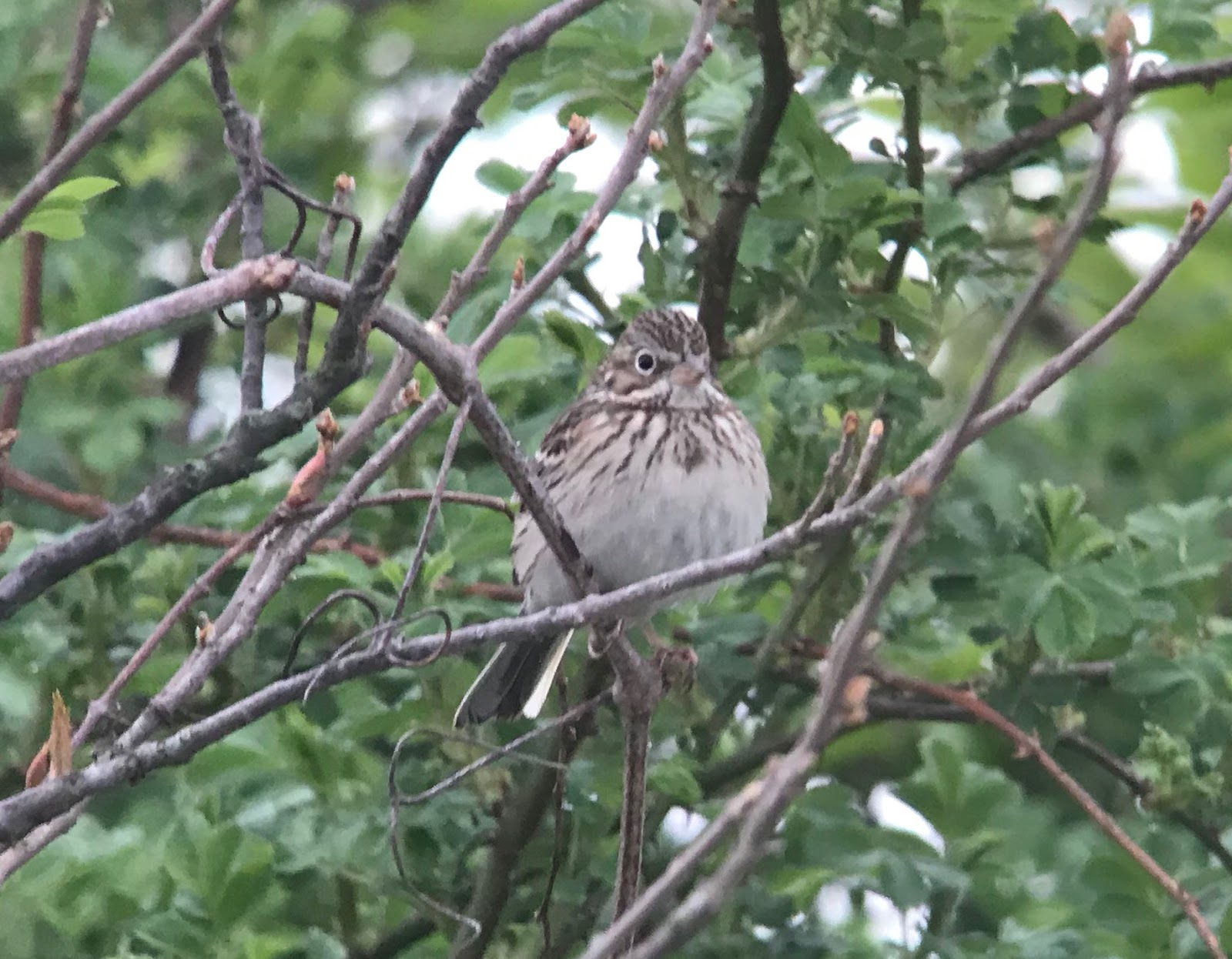
Today I was looking for Horned Larks and American Pipits--two tough birds to get in my county.  No dice in a field where they were seen yesterday (and missed by me later in the afternoon), but I did manage to get a photo of a Vesper Sparrow that has been hanging out there.  And just as I was going to leave, a Wild Turkey wandered across the field--my first for Delaware County and my overall county bird #235.  So, yay!

Vesper Sparrow, Glen Mills, Pennsylvania

After the fields at Glen Mills, I headed down to check my local patch, the Delaware River behind the Philadelphia Airport.  My first Forster's Terns of the year were hanging out on the low tide sandbar until the local Bald Eagles put them up.  21 Wilson's Snipe in a ditch, and 13 American Kestrels hunting on the airport runways were high counts.  On my way home, an American Coot--surprisingly tough to see in the county, was bird #128 for me in the county this year.

My heart goes out to everyone who is suffering.  For those who are able, enjoy your yard birds or birds close to home.  Be safe, be healthy, be well!

Saturday, February 08, 2020

Ornitheology Seminar

Looking forward to my latest five lecture series coming up next week at Widener University--Ornitheology: Birds as Symbols and Messengers of the Divine.  Lectures will include:

  1. Introduction and Birds in Australian Dreaming and African Animism
  2. Birds in Shamanic Cultures
  3. Ancient Middle Eastern and European Gods and Birds
  4. Birds in the Abrahamic Religions
  5. Eastern and Southeast Asian Religions and Birds

Tuesday, December 31, 2019

My Top Birds of 2019

As we wrap up another year, time to take a last look back at my birding for the year.  I had some great birding in my home county, but other than that, I didn't get a lot of birding in elsewhere this year, ending with a very meager 282 species for 2019 (my worst total in recent memory).  But here are my Top 10.

10. Harlequin Duck--rare in Pennsylvania, a very enjoyable sighting of a continuing female bird up in north central Pennsylvania when I had to drive up to give a talk in Williamsport in November.


9. Black Scoter--rare for the county, was able to find a beautiful pair on the river behind the Philadelphia airport during spring migration.

8. Least Bittern--pretty easy to find at the John Heinz NWR within a hundred yards of Delaware County, was glad to finally get one on the Delaware County side.

7. Red-headed Woodpecker--not seen in the county every year, I was happy to find a nice adult bird at Heinz NWR in early May.
Worst shot ever of Red-headed Woodpecker, John Heinz NWR

6. Yellow-throated Warbler--at the top of my wish list for the year for Delaware County, after missing a few in 2018.  A singing bird was found at Ridley Creek State Park in the spring and I was able to relocate it and enjoy it singing one Saturday afternoon in May.

5. Ross's Goose--rare but regular in the region, managed to get one for my yard list by scanning huge flocks of migrating Snow Goose that I was able to see one day after hearing that birds were moving through the area.

4. Blue Grosbeak--after missing this new bird for me for the county a mile from my home while sick this spring, I managed to find a nice male myself behind the Philadelphia airport later in the summer.
Not easy to shoot a Blue Grosbeak against a blue sky!  PHL airport, Delaware County, PA

3. American White Pelican--another first for me for Delaware County, seen the evening before flying south over the county, hoped they might have put down on the river for the night and was fortunate to find them down there the next morning.

More bad shots of good birds, American White Pelicans on the Delaware River

2. Brown Booby--probably my best solo find of the year, a review species for the state, a bird flying up the Delaware River behind the Philadelphia airport back in the spring.

1.  Laysan Albatross--a bird I've wanted to see since I was a kid in Oregon.  Finally got several from land on the north shore of Oahu in March.

I managed to squeak out 201 birds for Delaware County this year, passing 200 for the second year in a row.  But after hitting 200 in September I just saw one more for the year.  Too much attention to other things in my life, not enough birding.

As far as life birds, I only got four new birds for the year, thanks to a quick conference trip to Oahu in March--Laysan Albatross, Sooty Tern, Japanese Bush-Warbler, and Yellow-fronted Canary.

Looking back on the decade, some modest but good birding across the country and around the world, with trips to the Netherlands, Spain (long layover), Germany (airport birding on a layover), the United Arab Emirates (so great), Mexico (several research trips), Canada, and New Zealand (gotta get back!).  I only got 160 new birds this decade.  I would like to be getting at least that many, if not ten times as many, each year!

So for the coming decade, I would like to do much more overseas birding, and see most of the scattered regularly occurring birds I haven't seen yet in North America.  I've been to almost 40% of U.S. counties, and would like to boost that up to over 60% as well (maybe more).  And I'd like to hit all the Canadian provinces and territories--especially Nunavut.  If we stay in Delaware County, it would be nice to get over 275 on my county list, I doubt we will live here for me to get to 300 (Al Guarente is the only person with that total for the county in eBird, achieved this year after a lifetime of birding hear--congratulations Al!).

Best birding wishes to all for 2020 and for the 2020s!

Monday, December 16, 2019

100th Glenolden Pennsylvania Christmas Bird Count

When you are supposed to be birding the river for waterfowl, and all you get is this.
Saturday was the 100th Glenolden PA CBC.  I woke up very excited to try and help the count get to 100 species for the day.  It was a little wet and drizzly, but I left at 5:30 to look for owls.  Long story short--after 17 miles of driving and playing owl tapes, no owls.

I started the day up by the PHL airport to check out the river on that stretch, and wait for low tide at 9:00am to see if any good gulls showed up on the tidal flat.  But the birding was very slow, there wasn't anything around, and after an hour or so fog rolled in and I couldn't even see the river.

That was the theme for the day.  Fog and no birds.  By 11:30 without being able to see the river, I was only at 31 species, far below the 50+ I was hoping for in my area, and ten below my best morning of scouting last week.  Since I couldn't see the river, I took a longer lunch break than I otherwise would have.  It was really pretty pointless.

In the afternoon, the fog continued, then about 2:30 it finally lifted.  I hurried to Marcus Hook to look for swans, geese, and ducks--got the geese but no swans and the wind and heat shimmer off the water made it impossible to identify most distant ducks on the water.  By this point I was racing the sun to scour the 10 miles of river back to the airport.  No real surprises, most of the river was bare, making me wonder if I should have just stayed at Marcus Hook and prayed for better looks at the ducks there.

I ended the day where I started, at my favorite spot behind the PHL airport.  60 Brown-headed Cowbirds flew in at dusk, and as I refused to give up scanning the river after sundown, I was able to see a Wilson's Snipe flying over the river in the gathering darkness to end the day at 44 species.  Much lower than I had hoped.

If I do this area again, depending on the conditions, I would probably start at Marcus Hook for the waterfowl first thing (the fog killed me!) and work my way upstream, rather than the other way around.  But the possibility of owls or other grassland birds at the airport is alluring as well, though a much longer shot.  Oh well, the joys and travails of a CBC birder!  I've been doing Christmas Bird Counts for over 35 years.  Each one is a challenge.  And a memory.  This won't be one of my best, but I put in my best and learned a lot more about the fragmented urban habitats in Delaware County outside of Philly.  This count has experienced several years of bad weather lately, better luck next year!

Thursday, December 12, 2019

REVIEW: Field Guide to Bird Sounds of Eastern North America

So I've been sitting on this review for over a year--a very worthy title that I want to do justice to, but have struggled with how to review.  Here's the short of it--this is a pathbreaking book, representing an amazing new effort in birdsound identification that I want to be successful, but one that I am still struggling with.

Donna at 10,000 Birds has a great review of the book here.  If you haven't read that yet, it's a great place too start.

Take a look at the sample pages--they show what a great design this book has, with spectrograms of most of the bird sounds of the 520 bird species normally found east of the 100th meridian.  These are made from the 5400+ audio files that accompany the book, found online at www.petersonbirdsounds.com.  Checking out this excellent website, you quickly notice that there are more sounds here than included in the field guide.  That's one of the first difficulties of treating a subject like this--there just isn't room in a standard bird guide to cover every sound one might hear out there.

I am very intregued by the system that Pieplow created to classify bird sounds.  Unfortunately, I haven't put in the time to learn his nomenclature, so I'm not sure how useful it is.  So this book creates a whole new way to classify and understand bird sounds--which is great on one level, but seemingly requires significant time and effort to learn and use.  Time and effort I haven't been able to put in yet, and am not sure I will ever get around to.

So I recommend this as an amazing resource, but would like to hear more from folks who have actually used it to learn and identify bird vocalizations.  What is the best way to use this book?  How have you used it to actually learn and identify birds?


Scouting for Suburban Philly Christmas Bird Count

This year for the Glenolden Christmas Bird Count I've inherited a 10 mile stretch of the Delaware River downstream from Philly, from the PHL International Airport to Marcus Hook on the Pennsylvania/Delaware state line (see below).

My Glenolden CBC area from Marcus Hook, PA (left) to PHL International Airport (right)

Over the past week, I've scouted out more small urban woodlots, marinas, petrochemical complexes, and abandoned industrial landscapes than I have in a long time.  So far I've found 50 species in my area, and am hoping for more during the actual count on Saturday (though projected rain may hurt).

Abandoned industrial facility, Marcus Hook, PA
So far my biggest take away from scouting--there just aren't as many birds as I would expect for so m much open space.  Is it just a surfeit of exotic vegetation creating bad habitat, or is something else going on?  We hear about declines in bird populations, and it is a bit shocking how thin the bird numbers are.  In a half mile stretch of road near this abandoned complex above, there were only 41 individuals of 12 species--pretty much all urban adapters.  I would have thought there would be more sparrows in all the brush, but it was pretty slim pickings.  

I love this time of. year when I get to explore usually marginal birding areas for potential habitat and lingering migrants or vagrant wintering birds.  So far I've found a lingering (Western) Palm Warbler near the base of the Commondore Berry Bridge and three late Pine Warblers in Marcus Hook.  Hope they stick around for the count on Saturday, and that I can find a few more goodies tucked away here and there in the habitat pockets of Marcus Hook, Chester, Eddystone, Essington, and Tinicum Twp!

Wednesday, June 05, 2019

Arrival of Fat White Jowled Americans

What is big, fat, white, American with big jowls?

Last night my friend Sheryl Johnson was watching the sky over Haverford College, hoping to catch sight of the shorebird flocks that pass over SE Pennsylvania at dusk on late spring days with south winds.  While watching the sky, she and her daughter and friends were surprised so see five American White Pelicans flapping south in the fading light about ten minutes before sunset (eBird report).

I lives about eight miles away and dashed outside on the outside chance that they might pass by my house.  But no dice.  Sheryl speculated that they might stop at nearby Springton Reservoir, or perhaps on the Delaware River.  I hoped they would put down at dark and that somehow I might be able to see them--since they've never been reported in the county before.

With sunrise at 5:30am, I was at Springton Reservoir at 5:20.  I scoped it out, but no dice.  By 6:20 I was at my usual vantage point on the Delaware River behind the Philadelphia airport.  Nothing was on the river close by, but then scoping downstream, I spotted five large white birds about 2.5 miles downstream!  I quickly threw my scope in the car and dashed down the the western end of the airport to get a better look.  Sure enough, there they were, our five American White Pelicans sitting pretty on the water in the early morning light!

First documentary shots of birds half mile away on the Delaware River behind PHL airport.

I had to get home to get my kids to school, but I grabbed a few quick documentary digiscoped shots and put word out on the local birding text alerts.  After other birders arrived, they reported that the birds were slowly drifting downstream, so on my way back to the river I decided to check out a downstream vantage point near Governor Printz Park in Essington.  Sure enough, there the birds were, much closer and in excellent light.  I put word out and several birders joined me to enjoy watching them float towards the western end of Little Tinicum Island.

Pelicans lounging on the river near Governor Printz Park in Essington, PA

Eventually they waddled up onto the shore, occasionally flapping wings and giving great looks until they were buzzed by a young Bald Eagle and took off heading downstream.


We watched them rise higher and higher, up over the Commodore Berry, heading west and out of sight.
American White Pelicans heading west about 9:20am after being buzzed by an eagle.

Up, up, and away!  Heading to Delaware downstream.

So great to be able to relocate these fat, white, jowled American birds--the first to be seen in Delaware County, PA--and to share the sighting with friends.  Life is good!


Saturday, April 06, 2019

Early Philly Migration on NEXRAD

So far there have been a few nights with birds on the NEXRAD.  Tonight is another night of light migration.  A few birds on the radar, but not hearing any on my microphone.  Still waiting for nocturnal migrants to make an appearance here at my listening station.

Light nocturnal migration over Philly

Monday, March 18, 2019

Kōlea--Hawaiian urban bird

On a recent trip to Oahu to present Mayan ethno-ornithological results at an endangered languages conference, I enjoyed spending time with the kōlea, otherwise known as the Pacific Golden Plover.  While I tend to think of these as breeders in the arctic wilderness, in Hawaii these guys are running around in people's lawns, roadsides, and even forests.  They are common everywhere, and a lot of fun to watch.  If you get to Hawaii during the winter months, you are sure to see them running around everywhere.  Enjoy!


kōlea or Pacific Golden Plover

kōlea on a rooftop

Monday, January 21, 2019

BCDC Field Trip--January 19


Last Saturday I led a morning field trip for the Birding Club of Delaware County.  We hit the main vantage points along the Delaware River here in Delaware County, looking for wintering waterfowl and other winter birds.  Highlights were Great Cormorant (locally uncommon) and 61 Tundra Swans.  I also found a couple American Tree Sparrows right before the trip started, but we didn't see them when were were all together.  It was cold, but the weather was fine and we managed about 30 species in a couple hours.  

Friday, July 27, 2018

Birding in a van, down by the river

My name is Rob Fergus.  I'm an ornithologist.  I am almost 50 years old, and I bird in a van, down by the river.

With fall migration well underway, the best place in my county for shorebirds is a small tidal flat on the Delaware River behind the Philadelphia airport.  Several times a week I try to hit there at low tide to see what comes my way.  Half a dozen Bald Eagles patrol this area and like to land on the spit as well, so oftentimes they spook birds that have landed there.  Which means you have to pay attention, because the shorebirds you want to see may only get to land for a few minutes before they get flushed and take off.

This morning a nice flock of 3 Short-billed Dowitchers, 3 Lesser Yellowlegs, and 4 Pectoral Sandpipers landed on the spit.  The pectorals were a county year bird for me, so that was great.  What wasn't so great was 1) The birds are over half a mile away out on the river, so this was the best shot I could get before 2) the eagles flushed all the birds, and the shorebirds disappeared.

At half a mile away, the best shot I could get of the dowitchers and Pectoral Sandpipers (with a Ring-billed Gull)

So its the middle of summer break.  I'm trying to get some writing done.  I'm not headed off to any exotic locations to see new birds in Australia or Nepal.  I'm birding in a van, down by the river.

But life is good.  I'm on track to become only the third person to report 200 species in this county in a calendar year.  And things could be a lot worse.  I could be eating a steady diet of government cheese, thrice divorced, and actually living in that van.


With the world going crazy, I'll take the birds!

Tuesday, May 29, 2018

Adventures in Birding: A Book, A Culture, A Life


As a teenage birder growing up in Oregon, my favorite book to check out from the Clackamas County Library was Adventures in Birding, by Jean Piatt.  Published in 1973, Adventures in Birding chronicled the adventures of Piatt and his wife Marybelle as they made journeys around North America trying to find 600 species of birds to join what was then called the 600 club--an informal group of the continent's top birders who had each seen that many species in North America north of Mexico.  I loved reading of these birders and their travels, and dreamed of someday seeing the same places and same birds.

Fast forward 30+ years and many birds later, and I was pleased to recently find a first edition copy of Adventures in Birding (were there actually other printings?) at a used bookstore.  I scooped it up, and after getting it home I got a big surprise.  Unbeknownst to me, all these years later, I had actually moved to within just a few miles of where Jean Piatt started birding!


Piatt mentions three local birding sites where he got his start here in Delaware County, Pennsylvania--Furness Upper Bank Nursery in Media, Springton Reservoir, and Tinicum wildlife refuge.  Tinicum is now the Heinz National Wildlife Refuge--a large wetland area near the Philadelphia airport that I've birded many times since moving to Pennsylvania in 2004.

The Upper Bank Nursery was more of a puzzle, a couple local birders I asked about it didn't know where it was.  Some Googling led me to find it just south of Media, less than three miles from my home.  This is where Piatt first started birding--in his first chapter, he describes seeing an Eastern Towhee there as the spark bird that got him first interested in listing the birds he found, and the desire to find more.  What used to be a local nursery well known for growing many types of bamboo, is now private property, but I was able to find it and take a few pictures.


Site of the former Furness Upper Bank Nursery on South Ridley Creek Rd in Media, PA
Site of the former Furness Upper Bank Nursery in Media, PA less than 3 miles from my home.
Springton Reservoir is where some Buffleheads fanned the spark for Piatt into a full-fledged birding flame.  I've birded there a few times over the past year--if you take a left out of my driveway it is just a 15 minute drive down my road to the reservoir.


Springton Reservoir just 5.5 miles straight down the road from my home.
The irony of my having unknowingly or perhaps subconsciously moved to my old birding idol's own stomping grounds has caused some reflection on my own journey, my own adventures in birding and North American bird listing.  From my own spark on 10 August 1981 on a week-long school outing to Malheur National Wildlife Refuge in Oregon and the state and county listing of my youth--to the fanning of the flame after my wife and I moved to Washington DC in 1994 and I met some of my first big North American chasers at a Yellow-legged Gull stakeout at Georgetown Reservoir.  By this time, 600 was small potatoes, and the top listers had seen well over 700 bird species in North America.

So 700 became my goal over the next decade as we moved to Texas and eventually back out to Pennsylvania.  Working for Audubon, I was able to see more and more birds in my work travels around the country, putting me closer and closer to 700 as the club moved on and the top listers started shooting for 800+ species.  Then when my Audubon job evaporated in 2009, my travel schedule changed and my North American listing started slow-walking, even as the top listers started hitting 900+ species for the continent.  This past year, I finally saw my 700th species in North America, just before the American Birding Association officially added Hawaii to the North American listing region, making 1000+ the new benchmark for top North American bird listers.

Sitting here now, with Adventures in Birding in hand, and looking back over my own adventures, I am happy for all the birds and places that I've seen over the years, and the wonderful people that I've met.  But my own listing goals have come smaller--county and yard listing have become more of my passion the last few years.  I can't imagine spending the money required for the multiple Alaska trips necessary to get to 800, let alone 900 or 1000 species for North America.  So I don't have a North American listing goal to motivate me beyond the occasional chase for a new bird near me, or perhaps trips to see some of the scattered other species I haven't seen so far.

Over the past decade I've enjoyed more and more foreign research and conference trips--and the birds I've been able to see outside of North America.  I've only seen about 14% of the bird species in the world, so there are many more to enjoy--but I currently don't have a listing goal for my world list either, but I do expect to make many more trips and see more birds, countries, and cultures.  The world is a very big place for hopefully many more adventures in birding!

Saturday, May 26, 2018

Back in the NFC saddle

This week I finally got my OldBird21c microphone back up and running for the first time after moving from NJ to sePA this past year.  It has been raining most nights this month, but with clear weather forcast it seemed like a good night for migration.  And it was pretty decent.  Here's the NEXRAD radar showing the bird movement.

NEXRAD radar showing decent density of birds moving on the night of May 21

NEXRAD radar showing northerly movement of birds towards (green) and away (yellow) from the radar station.

Here's the NFC protocol eBird checklist from 9:25pm to midnight.

Only 16 species confirmed so far, several unidentified--but I was able to add 12 new species to my yard list:

I love radar ornithology and NFC birding with my microphone.  It is still very humbling and a challenge for me to ID many calls.  But that's probably a good thing :-)


Tuesday, January 09, 2018

Philadelphia Airport Snowy Owl


On Jan 5, the weather was turning bad with a week of subfreezing temperatures forecast.  Birds were few and far between at my backyard feeders, so I wanted to make a quick drive to see what I could find down by the river in order to get my #20BirdMDR.  Since this has been a big Snowy Owl year in the East, for the past month I've been regularly driving the road behind the Philadelphia airport hoping one would show up there.

This time, as I pulled over to scan the westernmost part of the airport, I noticed a yellow operations vehicle out on a service road near the runway.  As I put my binoculars up to check it out, I saw something white flying.  Away.  Through the snow.  150 yards away.  For about 5-10 seconds.  Then it was gone.

 The bird was white with dark flecks, big headed, and long heavy-winged.  Fortunately, I've seen Snowy Owls in flight at a great distance before--in the 1990s.  I knew that's what it was, even though it was the worst look in the world, so I called it in.

The next day, local birder Al Guarente relocated it, and soon others were getting great looks at it--as it regularly landed on the airport fence or on light poles over the road.

I was super jealous of the good looks they got over the weekend, and finally on Jan 8 I was able to see it on the ground about 80 yards from the road, and get these shots through my scope (iPhone 6 with Kowa 883 scope).

Rare birds are rare, you don't always find rare birds.  But it pays to regularly go birding, and even to look for hoped for rarities.  Sometimes it pays to make yourself go birding in bad weather.  It pays to go out and make sure you find your 20 species for the day.  It pays to let other folks know what you see, so they can further verify it and enjoy the bird themselves.

And it's just nice to spend some time with visitors from the far north or other distant realms.

It's a cool world out there.  Go see for yourself.

Sunday, December 31, 2017

My Top 10 Birds of 2017

So by the numbers, 2017 was better than average for me, though not particularly stellar.

I did manage to get my official (old) ABA area list to over 700, just before the area was expanded to include Hawaii.  This normally would be a huge accomplishment that I would celebrate, except that I feel like I should have hit this milestone about 10 or 15 years ago (My ABA #600 was Kirtland's Warbler way back in 1997).  I guess I just haven't traveled as much this last decade as I did in the past.  Oh well!  I'm an official ABA 700 club member now, when all the big boys are now in up in the 900s!

I also got to bird in Spain, The Netherlands, and Mexico this year.  These were all work trips, with a little bit of designated birding, mostly on my own.

All in all, I added 4 birds to my ABA area list (Cassia Crossbill, White-winged Tern, Common Greenshank, and Corn Crake).

I was able to add 23 additional birds to my World list--8 in Mexico and 13 in an eight hour layover in Madrid.

Here are my Top 10 favorites for the year:

10) Eurasian Penduline Tit
When you start flipping through European field guides, this is one of those cool birds you hope to see.  I finally ran into a troop of them in Madrid on a whirlwind 6 hour layover trip out from the airport on my way to The Netherlands.


9) Spotless Starling
OK, its just a starling without spots.  No big deal.  But growing up prejudiced against starlings in the US, it was fun to start seeing other starling species.  I never did see one close enough to get a good photo.  And there really isn't much to see.  But it was fun to see anyway!

8) Spanish Sparrow
Growing up in the US, was also prejudiced against House Sparrows.  My friends in Europe love them, and are working tirelessly to stop their precipitous population declines, and I've learned to love them for that.  But these fancy House Sparrow cousins were a must see bird for me on my layover in Madrid.  Fortunately I came across a bush full of these bad boys and was glad to see them.


7) Cassia Crossbill
I've been a big fan of the crypto-species crossbills ever since learning about their diversity back in the early 1990s.  When this form was declared a good species by the AOS this summer, and learning that I had just lost Thayer's Gull to lumping with Iceland Gull, I made a detour up into the hills of southern Idaho to search for this bird on my way from Utah up to Oregon this summer.  I wasn't able to get very satisfying looks, but had at least one flyover calling this call type.  I look forward to going back up to this beautiful area again (I saw four moose up there in just over an hour) and getting better looks someday.  Looking for new birds takes you to great places you'd otherwise maybe never visit.

6) Eurasian Griffin
Another favorite from my Madrid layover.  I scanned dozens of these guys looking for a Spanish Imperial Eagle that never showed up.  But these crazy looking Old World vultures were great to see in and of themselves.


5) White-winged Tern
I moved to the East Coast for the first time in 1994, when this bird was almost annual in the DelMarVa area, so it was on the top of my most wanted birds list.  Then it pretty much stopped showing up.  I was out West this summer when one showed up in western PA, then one showed up during the Big Sit at Tinicum NWR 10 minutes from my house.  I was there early the next morning and got to watch it for 20 minutes or so before torrential rains set in and the bird disappeared, never to be seen again.  Unfortunately, it was too far away for photos, but great to watch as it patrolled back and forth along the back edge of the main impoundment on the refuge.  Super bonus to this bird for being my official ABA Bird #700!

4) Gray Silky-flycatcher
My favorite bird from my Mexico archaeology trip this summer.  I wasn't able to chase any of the ABA area record birds over the years, and am usually too far south in Mexico to see it.  But they were all over at several sites I visited this year, including the great pyramid at Cholula.


3) Eurasian Hoopoe
I must have first seen a picture of this crazy looking bird shortly after I started birding.  During my layover in Madrid this spring, I heard distant hooting and was able to track down this guy calling in a tree off in the distance.  Not the best digiscoped pics, but really happy to see this beauty.


2) Corn Crake
When I bought my first field guide back in the early 1980s, this bird was a dream bird illustrated in the old Golden guide.  There had been records up to the 1960s in the Eastern US, but then nothing.  I hadn't had a chance to look for them in Europe, and when one showed up on the side of the road on Long Island this fall, I dropped everything and took off to chase it.  It turned out that the drive was the hardest part about seeing the bird, as it was spectacularly easy to see parading around on the shoulder of the highway.  Bonus points on this bird for being able to show it to my teenage son, who joined me for the chase.

1) Smew
I've wanted to see this stunning merganser ever since I probably first saw it depicted in the new National Geographic field guide in 1983.  My trips to Europe have always been miss-timed to see this bird, but this past March there were still a handful around in The Netherlands when I traveled to speak at an urban nature conference there.  I still hope to see one in North America someday.  But in the meantime, I've bonded with these beauties in their native land.

Thursday, June 01, 2017

May Update 2017 Project 25/50/100/200

As of the end of May, my photo standings for the year are:

  • Mammals   6/25 
  • Herps         8/50
  • Moths       0/100
  • Birds     118/200

I'm doing OK on birds, but way behind on the others.  Since moving from NJ to PA, I need to find a new source of moths, as my yard here is not attracting them as much as our old NJ yard.  Also depending on a trip out to Utah and Oregon to get me more mammals and herps this summer.

A few photo highlights from May:

Snapping Turtle, John Heinz NWR, PA

Musk Turtle, John Heinz NWR, PA

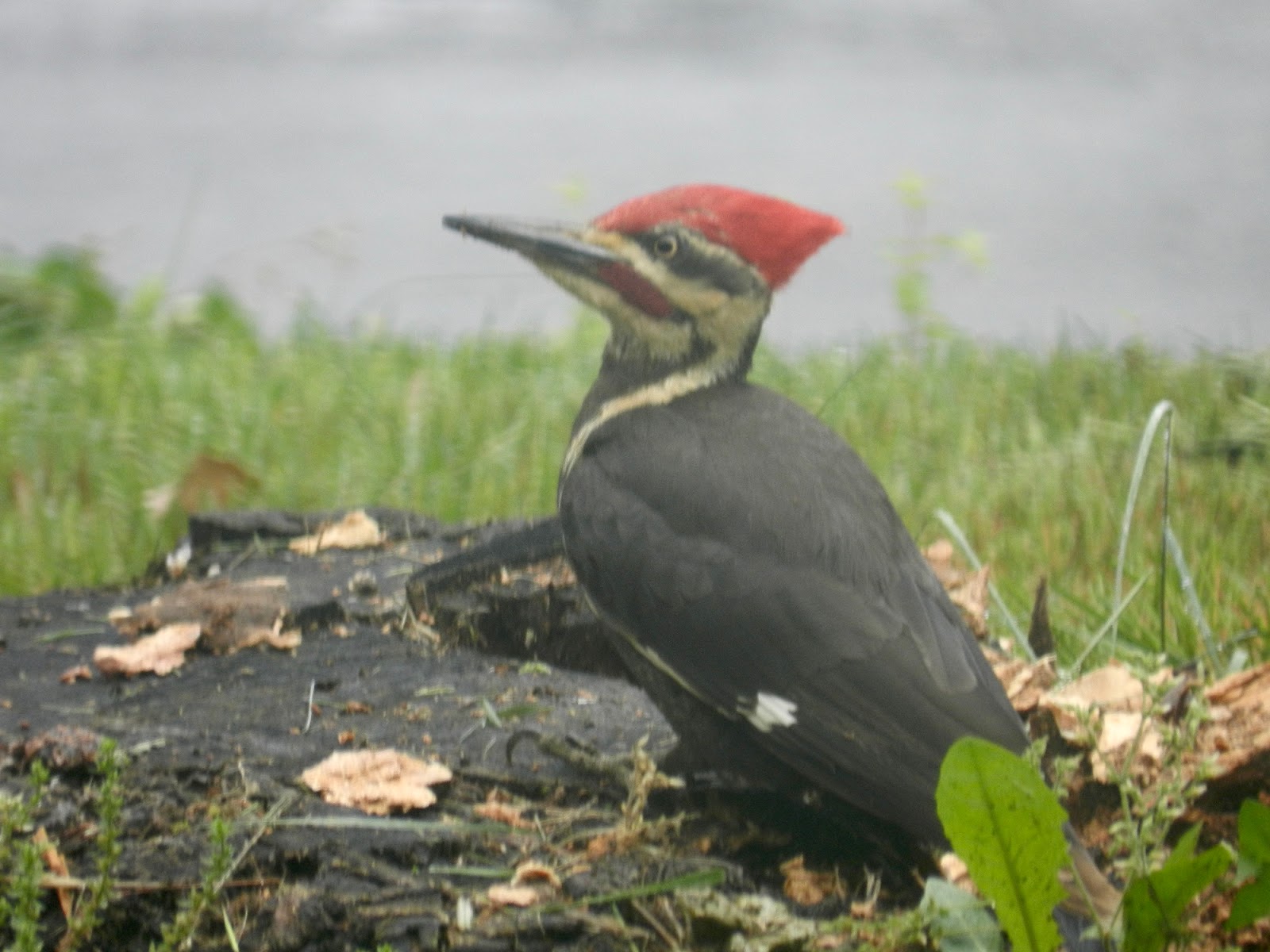
Pileated Woodpecker, Home, Wallingford, PA

Semipalmated Sandpiper, Spruce Run, Hunterdon, NJ

Thursday, May 18, 2017

2017 Project 25/50/100/200

A little game I'm playing this year is to see if I can take identifiable photographs of:
25 Mammals
50 Reptiles or Amphibians
100 Moths
200 Birds

So far I'm doing terrible on Reptiles and Amphibians, have no moths, and 98 birds.  I've been posting most of my photos on Facebook, but will start doing updates here as well.

Today I spent half an hour in the yard trying to photograph, without a lot of success, several of my yard birds.

Better photos desired, but at least the following are (almost) identifiable:

Nesting at the golf course across the road, 2017 Bird#94 Baltimore Oriole
Home, Wallingford, PA

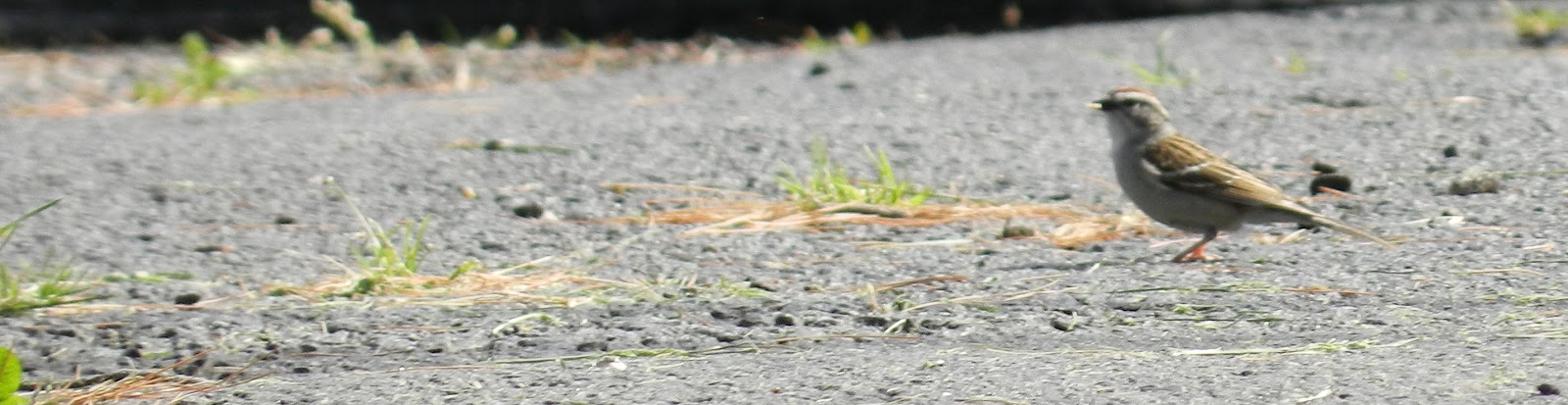
2017 Bird#98 Chipping Sparrow in the driveway
Home, Wallingford, PA

So hard to photograph with a bridge camera--2017 Bird#96 Chimney Swift
Home, Wallingford, PA

2017 Bird#97  Carolina Chickadee
Home, Wallingford, PA


Thanks to my friend Bob Ferguson for the inspiration for this game this year.  He's playing a similar game, with higher totals (and no moths).


Nature Blog Network Fatbirder's Top 1000 Birding Websites