


 RSS Feed (xml)
 |
| Light nocturnal migration over Philly |
Saturday, April 06, 2019
Early Philly Migration on NEXRAD
So far there have been a few nights with birds on the NEXRAD. Tonight is another night of light migration. A few birds on the radar, but not hearing any on my microphone. Still waiting for nocturnal migrants to make an appearance here at my listening station.


Monday, March 18, 2019
Kōlea--Hawaiian urban bird
On a recent trip to Oahu to present Mayan ethno-ornithological results at an endangered languages conference, I enjoyed spending time with the kōlea, otherwise known as the Pacific Golden Plover. While I tend to think of these as breeders in the arctic wilderness, in Hawaii these guys are running around in people's lawns, roadsides, and even forests. They are common everywhere, and a lot of fun to watch. If you get to Hawaii during the winter months, you are sure to see them running around everywhere. Enjoy!
 |
| kōlea or Pacific Golden Plover |
 |
| kōlea on a rooftop |
Monday, January 21, 2019
BCDC Field Trip--January 19

Last Saturday I led a morning field trip for the Birding Club of Delaware County. We hit the main vantage points along the Delaware River here in Delaware County, looking for wintering waterfowl and other winter birds. Highlights were Great Cormorant (locally uncommon) and 61 Tundra Swans. I also found a couple American Tree Sparrows right before the trip started, but we didn't see them when were were all together. It was cold, but the weather was fine and we managed about 30 species in a couple hours.
Friday, July 27, 2018
Birding in a van, down by the river
 My name is Rob Fergus. I'm an ornithologist. I am almost 50 years old, and I bird in a van, down by the river.
With fall migration well underway, the best place in my county for shorebirds is a small tidal flat on the Delaware River behind the Philadelphia airport. Several times a week I try to hit there at low tide to see what comes my way. Half a dozen Bald Eagles patrol this area and like to land on the spit as well, so oftentimes they spook birds that have landed there. Which means you have to pay attention, because the shorebirds you want to see may only get to land for a few minutes before they get flushed and take off.
This morning a nice flock of 3 Short-billed Dowitchers, 3 Lesser Yellowlegs, and 4 Pectoral Sandpipers landed on the spit. The pectorals were a county year bird for me, so that was great. What wasn't so great was 1) The birds are over half a mile away out on the river, so this was the best shot I could get before 2) the eagles flushed all the birds, and the shorebirds disappeared.
 |
| At half a mile away, the best shot I could get of the dowitchers and Pectoral Sandpipers (with a Ring-billed Gull) |
But life is good. I'm on track to become only the third person to report 200 species in this county in a calendar year. And things could be a lot worse. I could be eating a steady diet of government cheese, thrice divorced, and actually living in that van.
With the world going crazy, I'll take the birds!
Tuesday, May 29, 2018
Adventures in Birding: A Book, A Culture, A Life
 As a teenage birder growing up in Oregon, my favorite book to check out from the Clackamas County Library was Adventures in Birding, by Jean Piatt. Published in 1973, Adventures in Birding chronicled the adventures of Piatt and his wife Marybelle as they made journeys around North America trying to find 600 species of birds to join what was then called the 600 club--an informal group of the continent's top birders who had each seen that many species in North America north of Mexico. I loved reading of these birders and their travels, and dreamed of someday seeing the same places and same birds.
Fast forward 30+ years and many birds later, and I was pleased to recently find a first edition copy of Adventures in Birding (were there actually other printings?) at a used bookstore. I scooped it up, and after getting it home I got a big surprise. Unbeknownst to me, all these years later, I had actually moved to within just a few miles of where Jean Piatt started birding!
Piatt mentions three local birding sites where he got his start here in Delaware County, Pennsylvania--Furness Upper Bank Nursery in Media, Springton Reservoir, and Tinicum wildlife refuge. Tinicum is now the Heinz National Wildlife Refuge--a large wetland area near the Philadelphia airport that I've birded many times since moving to Pennsylvania in 2004.
 The Upper Bank Nursery was more of a puzzle, a couple local birders I asked about it didn't know where it was. Some Googling led me to find it just south of Media, less than three miles from my home. This is where Piatt first started birding--in his first chapter, he describes seeing an Eastern Towhee there as the spark bird that got him first interested in listing the birds he found, and the desire to find more. What used to be a local nursery well known for growing many types of bamboo, is now private property, but I was able to find it and take a few pictures.
 |
| Site of the former Furness Upper Bank Nursery on South Ridley Creek Rd in Media, PA |
 |
| Site of the former Furness Upper Bank Nursery in Media, PA less than 3 miles from my home. |

 |
| Springton Reservoir just 5.5 miles straight down the road from my home. |
So 700 became my goal over the next decade as we moved to Texas and eventually back out to Pennsylvania. Working for Audubon, I was able to see more and more birds in my work travels around the country, putting me closer and closer to 700 as the club moved on and the top listers started shooting for 800+ species. Then when my Audubon job evaporated in 2009, my travel schedule changed and my North American listing started slow-walking, even as the top listers started hitting 900+ species for the continent. This past year, I finally saw my 700th species in North America, just before the American Birding Association officially added Hawaii to the North American listing region, making 1000+ the new benchmark for top North American bird listers.

Over the past decade I've enjoyed more and more foreign research and conference trips--and the birds I've been able to see outside of North America. I've only seen about 14% of the bird species in the world, so there are many more to enjoy--but I currently don't have a listing goal for my world list either, but I do expect to make many more trips and see more birds, countries, and cultures. The world is a very big place for hopefully many more adventures in birding!
Saturday, May 26, 2018
Back in the NFC saddle
This week I finally got my OldBird21c microphone back up and running for the first time after moving from NJ to sePA this past year. It has been raining most nights this month, but with clear weather forcast it seemed like a good night for migration. And it was pretty decent. Here's the NEXRAD radar showing the bird movement.
Here's the NFC protocol eBird checklist from 9:25pm to midnight.

 |
| NEXRAD radar showing decent density of birds moving on the night of May 21 |
 |
| NEXRAD radar showing northerly movement of birds towards (green) and away (yellow) from the radar station. |
Only 16 species confirmed so far, several unidentified--but I was able to add 12 new species to my yard list:

I love radar ornithology and NFC birding with my microphone. It is still very humbling and a challenge for me to ID many calls. But that's probably a good thing :-)
Tuesday, January 09, 2018
Philadelphia Airport Snowy Owl

This time, as I pulled over to scan the westernmost part of the airport, I noticed a yellow operations vehicle out on a service road near the runway. As I put my binoculars up to check it out, I saw something white flying. Away. Through the snow. 150 yards away. For about 5-10 seconds. Then it was gone.

 The bird was white with dark flecks, big headed, and long heavy-winged. Fortunately, I've seen Snowy Owls in flight at a great distance before--in the 1990s. I knew that's what it was, even though it was the worst look in the world, so I called it in.
The next day, local birder Al Guarente relocated it, and soon others were getting great looks at it--as it regularly landed on the airport fence or on light poles over the road.
I was super jealous of the good looks they got over the weekend, and finally on Jan 8 I was able to see it on the ground about 80 yards from the road, and get these shots through my scope (iPhone 6 with Kowa 883 scope).

And it's just nice to spend some time with visitors from the far north or other distant realms.
It's a cool world out there. Go see for yourself.
Sunday, December 31, 2017
My Top 10 Birds of 2017
So by the numbers, 2017 was better than average for me, though not particularly stellar.
I did manage to get my official (old) ABA area list to over 700, just before the area was expanded to include Hawaii. This normally would be a huge accomplishment that I would celebrate, except that I feel like I should have hit this milestone about 10 or 15 years ago (My ABA #600 was Kirtland's Warbler way back in 1997). I guess I just haven't traveled as much this last decade as I did in the past. Oh well! I'm an official ABA 700 club member now, when all the big boys are now in up in the 900s!
I also got to bird in Spain, The Netherlands, and Mexico this year. These were all work trips, with a little bit of designated birding, mostly on my own.
All in all, I added 4 birds to my ABA area list (Cassia Crossbill, White-winged Tern, Common Greenshank, and Corn Crake).
I was able to add 23 additional birds to my World list--8 in Mexico and 13 in an eight hour layover in Madrid.
Here are my Top 10 favorites for the year:
10) Eurasian Penduline Tit
 When you start flipping through European field guides, this is one of those cool birds you hope to see. I finally ran into a troop of them in Madrid on a whirlwind 6 hour layover trip out from the airport on my way to The Netherlands.
9) Spotless Starling
OK, its just a starling without spots. No big deal. But growing up prejudiced against starlings in the US, it was fun to start seeing other starling species. I never did see one close enough to get a good photo. And there really isn't much to see. But it was fun to see anyway!
8) Spanish Sparrow
 Growing up in the US, was also prejudiced against House Sparrows. My friends in Europe love them, and are working tirelessly to stop their precipitous population declines, and I've learned to love them for that. But these fancy House Sparrow cousins were a must see bird for me on my layover in Madrid. Fortunately I came across a bush full of these bad boys and was glad to see them.
7) Cassia Crossbill
I've been a big fan of the crypto-species crossbills ever since learning about their diversity back in the early 1990s. When this form was declared a good species by the AOS this summer, and learning that I had just lost Thayer's Gull to lumping with Iceland Gull, I made a detour up into the hills of southern Idaho to search for this bird on my way from Utah up to Oregon this summer. I wasn't able to get very satisfying looks, but had at least one flyover calling this call type. I look forward to going back up to this beautiful area again (I saw four moose up there in just over an hour) and getting better looks someday. Looking for new birds takes you to great places you'd otherwise maybe never visit.
6) Eurasian Griffin
 Another favorite from my Madrid layover. I scanned dozens of these guys looking for a Spanish Imperial Eagle that never showed up. But these crazy looking Old World vultures were great to see in and of themselves.
5) White-winged Tern
I moved to the East Coast for the first time in 1994, when this bird was almost annual in the DelMarVa area, so it was on the top of my most wanted birds list. Then it pretty much stopped showing up. I was out West this summer when one showed up in western PA, then one showed up during the Big Sit at Tinicum NWR 10 minutes from my house. I was there early the next morning and got to watch it for 20 minutes or so before torrential rains set in and the bird disappeared, never to be seen again. Unfortunately, it was too far away for photos, but great to watch as it patrolled back and forth along the back edge of the main impoundment on the refuge. Super bonus to this bird for being my official ABA Bird #700!
4) Gray Silky-flycatcher
 My favorite bird from my Mexico archaeology trip this summer. I wasn't able to chase any of the ABA area record birds over the years, and am usually too far south in Mexico to see it. But they were all over at several sites I visited this year, including the great pyramid at Cholula.
3) Eurasian Hoopoe
 I must have first seen a picture of this crazy looking bird shortly after I started birding. During my layover in Madrid this spring, I heard distant hooting and was able to track down this guy calling in a tree off in the distance. Not the best digiscoped pics, but really happy to see this beauty.
2) Corn Crake
 When I bought my first field guide back in the early 1980s, this bird was a dream bird illustrated in the old Golden guide. There had been records up to the 1960s in the Eastern US, but then nothing. I hadn't had a chance to look for them in Europe, and when one showed up on the side of the road on Long Island this fall, I dropped everything and took off to chase it. It turned out that the drive was the hardest part about seeing the bird, as it was spectacularly easy to see parading around on the shoulder of the highway. Bonus points on this bird for being able to show it to my teenage son, who joined me for the chase.
1) Smew
 I've wanted to see this stunning merganser ever since I probably first saw it depicted in the new National Geographic field guide in 1983. My trips to Europe have always been miss-timed to see this bird, but this past March there were still a handful around in The Netherlands when I traveled to speak at an urban nature conference there. I still hope to see one in North America someday. But in the meantime, I've bonded with these beauties in their native land.
I did manage to get my official (old) ABA area list to over 700, just before the area was expanded to include Hawaii. This normally would be a huge accomplishment that I would celebrate, except that I feel like I should have hit this milestone about 10 or 15 years ago (My ABA #600 was Kirtland's Warbler way back in 1997). I guess I just haven't traveled as much this last decade as I did in the past. Oh well! I'm an official ABA 700 club member now, when all the big boys are now in up in the 900s!
I also got to bird in Spain, The Netherlands, and Mexico this year. These were all work trips, with a little bit of designated birding, mostly on my own.
All in all, I added 4 birds to my ABA area list (Cassia Crossbill, White-winged Tern, Common Greenshank, and Corn Crake).
I was able to add 23 additional birds to my World list--8 in Mexico and 13 in an eight hour layover in Madrid.
Here are my Top 10 favorites for the year:
10) Eurasian Penduline Tit
 When you start flipping through European field guides, this is one of those cool birds you hope to see. I finally ran into a troop of them in Madrid on a whirlwind 6 hour layover trip out from the airport on my way to The Netherlands.
 9) Spotless Starling
OK, its just a starling without spots. No big deal. But growing up prejudiced against starlings in the US, it was fun to start seeing other starling species. I never did see one close enough to get a good photo. And there really isn't much to see. But it was fun to see anyway!
8) Spanish Sparrow
 Growing up in the US, was also prejudiced against House Sparrows. My friends in Europe love them, and are working tirelessly to stop their precipitous population declines, and I've learned to love them for that. But these fancy House Sparrow cousins were a must see bird for me on my layover in Madrid. Fortunately I came across a bush full of these bad boys and was glad to see them.
7) Cassia Crossbill
I've been a big fan of the crypto-species crossbills ever since learning about their diversity back in the early 1990s. When this form was declared a good species by the AOS this summer, and learning that I had just lost Thayer's Gull to lumping with Iceland Gull, I made a detour up into the hills of southern Idaho to search for this bird on my way from Utah up to Oregon this summer. I wasn't able to get very satisfying looks, but had at least one flyover calling this call type. I look forward to going back up to this beautiful area again (I saw four moose up there in just over an hour) and getting better looks someday. Looking for new birds takes you to great places you'd otherwise maybe never visit.
6) Eurasian Griffin
 Another favorite from my Madrid layover. I scanned dozens of these guys looking for a Spanish Imperial Eagle that never showed up. But these crazy looking Old World vultures were great to see in and of themselves.
5) White-winged Tern
I moved to the East Coast for the first time in 1994, when this bird was almost annual in the DelMarVa area, so it was on the top of my most wanted birds list. Then it pretty much stopped showing up. I was out West this summer when one showed up in western PA, then one showed up during the Big Sit at Tinicum NWR 10 minutes from my house. I was there early the next morning and got to watch it for 20 minutes or so before torrential rains set in and the bird disappeared, never to be seen again. Unfortunately, it was too far away for photos, but great to watch as it patrolled back and forth along the back edge of the main impoundment on the refuge. Super bonus to this bird for being my official ABA Bird #700!
4) Gray Silky-flycatcher
 My favorite bird from my Mexico archaeology trip this summer. I wasn't able to chase any of the ABA area record birds over the years, and am usually too far south in Mexico to see it. But they were all over at several sites I visited this year, including the great pyramid at Cholula.
3) Eurasian Hoopoe
 I must have first seen a picture of this crazy looking bird shortly after I started birding. During my layover in Madrid this spring, I heard distant hooting and was able to track down this guy calling in a tree off in the distance. Not the best digiscoped pics, but really happy to see this beauty.
2) Corn Crake
 When I bought my first field guide back in the early 1980s, this bird was a dream bird illustrated in the old Golden guide. There had been records up to the 1960s in the Eastern US, but then nothing. I hadn't had a chance to look for them in Europe, and when one showed up on the side of the road on Long Island this fall, I dropped everything and took off to chase it. It turned out that the drive was the hardest part about seeing the bird, as it was spectacularly easy to see parading around on the shoulder of the highway. Bonus points on this bird for being able to show it to my teenage son, who joined me for the chase.
 1) Smew
 I've wanted to see this stunning merganser ever since I probably first saw it depicted in the new National Geographic field guide in 1983. My trips to Europe have always been miss-timed to see this bird, but this past March there were still a handful around in The Netherlands when I traveled to speak at an urban nature conference there. I still hope to see one in North America someday. But in the meantime, I've bonded with these beauties in their native land.
Thursday, June 01, 2017
May Update 2017 Project 25/50/100/200
As of the end of May, my photo standings for the year are:
I'm doing OK on birds, but way behind on the others. Since moving from NJ to PA, I need to find a new source of moths, as my yard here is not attracting them as much as our old NJ yard. Also depending on a trip out to Utah and Oregon to get me more mammals and herps this summer.
A few photo highlights from May:
- Mammals 6/25
- Herps 8/50
- Moths 0/100
- Birds 118/200
I'm doing OK on birds, but way behind on the others. Since moving from NJ to PA, I need to find a new source of moths, as my yard here is not attracting them as much as our old NJ yard. Also depending on a trip out to Utah and Oregon to get me more mammals and herps this summer.
A few photo highlights from May:
 |
| Snapping Turtle, John Heinz NWR, PA |
 |
| Musk Turtle, John Heinz NWR, PA |
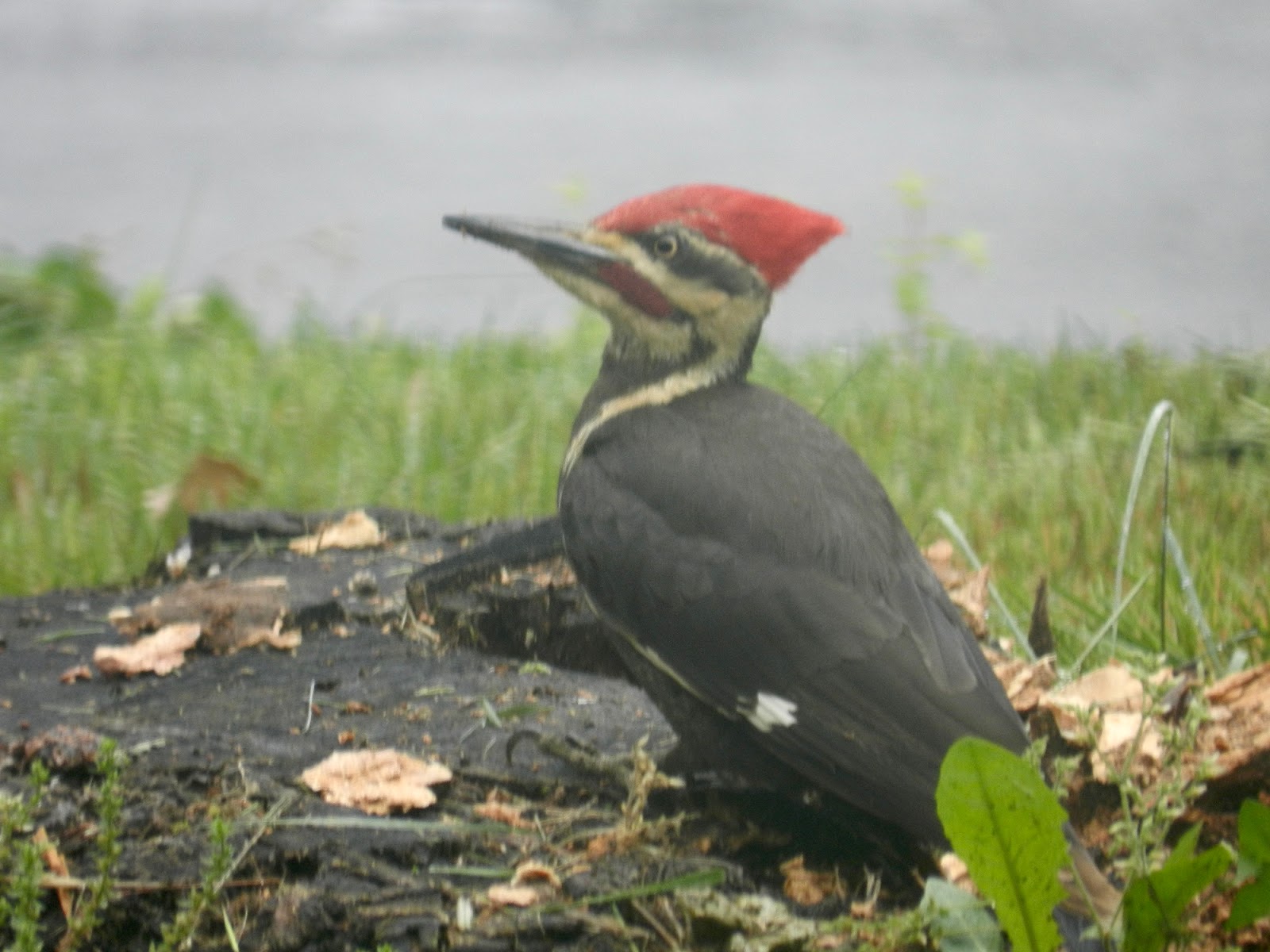 |
| Pileated Woodpecker, Home, Wallingford, PA |
 |
| Semipalmated Sandpiper, Spruce Run, Hunterdon, NJ |
Thursday, May 18, 2017
2017 Project 25/50/100/200
A little game I'm playing this year is to see if I can take identifiable photographs of:
25 Mammals
50 Reptiles or Amphibians
100 Moths
200 Birds
So far I'm doing terrible on Reptiles and Amphibians, have no moths, and 98 birds. I've been posting most of my photos on Facebook, but will start doing updates here as well.
Today I spent half an hour in the yard trying to photograph, without a lot of success, several of my yard birds.
Better photos desired, but at least the following are (almost) identifiable:
Thanks to my friend Bob Ferguson for the inspiration for this game this year. He's playing a similar game, with higher totals (and no moths).
25 Mammals
50 Reptiles or Amphibians
100 Moths
200 Birds
So far I'm doing terrible on Reptiles and Amphibians, have no moths, and 98 birds. I've been posting most of my photos on Facebook, but will start doing updates here as well.
Today I spent half an hour in the yard trying to photograph, without a lot of success, several of my yard birds.
Better photos desired, but at least the following are (almost) identifiable:
 |
| Nesting at the golf course across the road, 2017 Bird#94 Baltimore Oriole Home, Wallingford, PA |
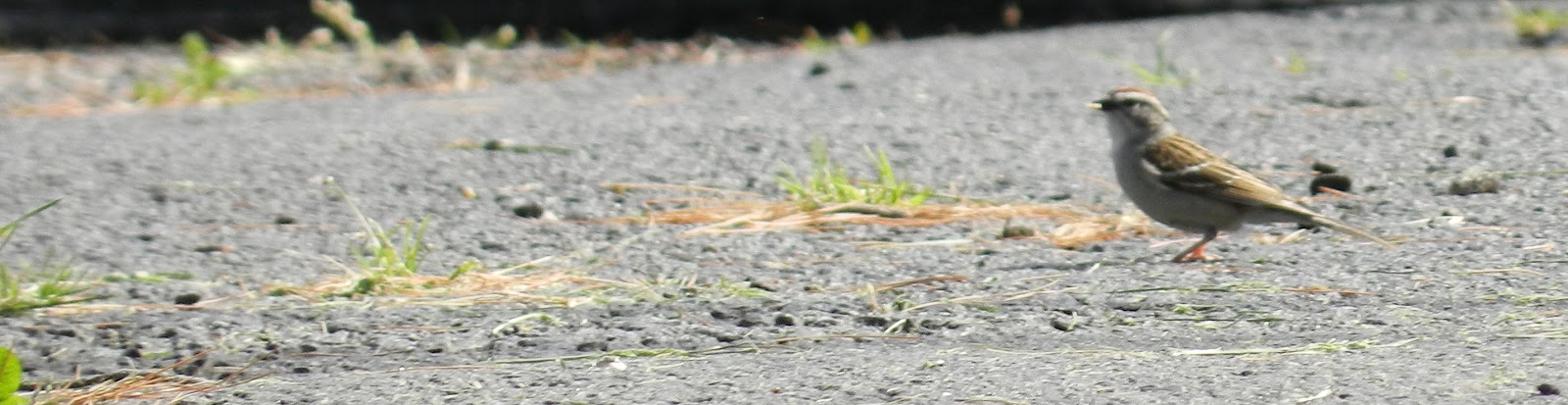 |
| 2017 Bird#98 Chipping Sparrow in the driveway Home, Wallingford, PA |
 |
| So hard to photograph with a bridge camera--2017 Bird#96 Chimney Swift Home, Wallingford, PA |
 |
| 2017 Bird#97 Carolina Chickadee Home, Wallingford, PA |
Thanks to my friend Bob Ferguson for the inspiration for this game this year. He's playing a similar game, with higher totals (and no moths).
Friday, May 12, 2017
Where I've Been
I've been A.W.O.L. here at the Birdchaser blog for over a year. Most of my social media time is now on Facebook. I post most of my bird photos and sightings on my personal profile.
But you can also join a couple of new Facebook birding groups I've started. I'll be back here more frequently, but check out these groups and hope to hang out with you there on Facebook as well.
20 Bird Minimum Daily Requirement--this one's to share the challenge of finding at least 20 bird species every day, even when you don't have time for "official" birding.

Yard Birding--this one is for taking your backyard birdwatching to the next level, bringing hard core birding to your yard, balcony, or patio.

But you can also join a couple of new Facebook birding groups I've started. I'll be back here more frequently, but check out these groups and hope to hang out with you there on Facebook as well.
20 Bird Minimum Daily Requirement--this one's to share the challenge of finding at least 20 bird species every day, even when you don't have time for "official" birding.

Yard Birding--this one is for taking your backyard birdwatching to the next level, bringing hard core birding to your yard, balcony, or patio.

Birdchaser talk at Penn Museum in Philly
Looking forward to giving an all new Maya birds talk this Saturday at the Penn Museum in Philadelphia. More details here.


Thursday, December 31, 2015
Top 10 Birds of 2015
Most of 2015 was dedicated to my Backyard Big Year. So I didn't chase many birds. Or build much of a list outside of my yard. But I did manage to get 14 lifers--all but one from my July research trip to the Lacandon Maya region of Mexico. I also picked up 3 new Hunterdon County birds. In line with my backyard birding emphasis, I also managed to add 30 new species to my yard list. So this list may not be as exotic as past versions, but here it is, in totally subjective order, my best birds of 2015.
10) Crested Caracara When my friend David Harrison found this first Hunterdon County record, I was hanging out with friends at the Princeton University Art Museum. By the time I was able to get to Holland Township to look for the bird, it was too late in the day. Another all day search came up empty. Finally on my third attempt, I was able to see this bird fly by in the fog and rain. A great new addition to my county list. Thanks, David!
9) Barn Owl At the start of the year this may have been my most wanted Hunterdon County bird. I'd chased one a couple times and missed, and there were no publicly available sites to find these birds. So in February when a pair were seen feeding over a field in Ringoes, I hoofed it down there and got some good looks at dusk. Most daytime sightings are of birds at a nest or roost, or of a bird flushed from a roost. So getting to watch them hunt was a really great.
8) Peregrine Falcon This isn't that rare of a bird, but I'd never seen one in my yard until this year when I saw two while conducting hawk watches in my yard. The second one was a nice adult bird that soared directly over my house. What a treat!
7) Wild Turkey Again, not a rare bird, but one that was on the top of my most wanted list for my yard this year. I had seen them within a couple miles of my home, but never in my neighborhood. One day as I was sitting working on my computer, I looked up and saw a hen turkey walking down along the edge of my yard. Nice yard bird!
6) White Hawk A stunning bird, one of my favorites from my Lacandon Maya trip in July. Several of these birds were seen soaring around Metzabok, the Lacandon Maya village where we worked.
5) Little Gull A regular visitor to Spruce Run in April, I didn't think I could get it for my yard list but when I heard that there were a couple consorting with Bonaparte's Gulls I got out my scope and spent the day scoping the area I could see to the west of the reservoir and was able to pick out a small dark-underwinged gull with a distant swirling group of Bonaparte's Gulls.
4) Mourning Warbler a new species for my yard this year, I was able to audio record a spring migrant bird and determine that it was from the Nova Scotia population.
3) Common Redpoll You can see photos and read how I used audio to attract this bird to my yard in a snowstorm here.
2) Thick-billed Murre My only new ABA bird for the year, when one showed up close to shore on the Jersey shore, I took a break from my backyard big year to chase this alcid. We got crummy looks at the bird as it moved farther offshore, so would definitely like to get better looks sometime.
1) Ornate Hawk-Eagle Perhaps my favorite new life bird from my Lacandon Maya research--I was able to snap this picture through my binoculars. A huge forest hawk with long plumes on its head. What's not to like?

Looking forward to a new year, to get out of my yard more, and to achieve some additional birding goals. I'm close to the 700 ABA milestone, so need to finally take care of that this year. Who knows what else the new year will bring!?!
10) Crested Caracara When my friend David Harrison found this first Hunterdon County record, I was hanging out with friends at the Princeton University Art Museum. By the time I was able to get to Holland Township to look for the bird, it was too late in the day. Another all day search came up empty. Finally on my third attempt, I was able to see this bird fly by in the fog and rain. A great new addition to my county list. Thanks, David!
9) Barn Owl At the start of the year this may have been my most wanted Hunterdon County bird. I'd chased one a couple times and missed, and there were no publicly available sites to find these birds. So in February when a pair were seen feeding over a field in Ringoes, I hoofed it down there and got some good looks at dusk. Most daytime sightings are of birds at a nest or roost, or of a bird flushed from a roost. So getting to watch them hunt was a really great.
8) Peregrine Falcon This isn't that rare of a bird, but I'd never seen one in my yard until this year when I saw two while conducting hawk watches in my yard. The second one was a nice adult bird that soared directly over my house. What a treat!
7) Wild Turkey Again, not a rare bird, but one that was on the top of my most wanted list for my yard this year. I had seen them within a couple miles of my home, but never in my neighborhood. One day as I was sitting working on my computer, I looked up and saw a hen turkey walking down along the edge of my yard. Nice yard bird!
 |
| Not a great shot, but the best I could manage as the turkey walked away |
6) White Hawk A stunning bird, one of my favorites from my Lacandon Maya trip in July. Several of these birds were seen soaring around Metzabok, the Lacandon Maya village where we worked.
5) Little Gull A regular visitor to Spruce Run in April, I didn't think I could get it for my yard list but when I heard that there were a couple consorting with Bonaparte's Gulls I got out my scope and spent the day scoping the area I could see to the west of the reservoir and was able to pick out a small dark-underwinged gull with a distant swirling group of Bonaparte's Gulls.
4) Mourning Warbler a new species for my yard this year, I was able to audio record a spring migrant bird and determine that it was from the Nova Scotia population.
 |
| Hear audio of the bird here |
3) Common Redpoll You can see photos and read how I used audio to attract this bird to my yard in a snowstorm here.
2) Thick-billed Murre My only new ABA bird for the year, when one showed up close to shore on the Jersey shore, I took a break from my backyard big year to chase this alcid. We got crummy looks at the bird as it moved farther offshore, so would definitely like to get better looks sometime.
1) Ornate Hawk-Eagle Perhaps my favorite new life bird from my Lacandon Maya research--I was able to snap this picture through my binoculars. A huge forest hawk with long plumes on its head. What's not to like?

Looking forward to a new year, to get out of my yard more, and to achieve some additional birding goals. I'm close to the 700 ABA milestone, so need to finally take care of that this year. Who knows what else the new year will bring!?!
Thursday, October 15, 2015
2015 Machine Assisted Big Sit
 |
| Pre-dawn BigSit in the backyard |
I was tired and didn't get up until 5:30, and started off the morning listening to my OldBird21c microphone for an hour. No birds. No nocturnal migrants calling overhead. A stiff 9 mph north wind wasn't helping. I was nervous, but headed outside to the 17 foot count circle when I started hearing
1. White-throated Sparrow (calling at 6:35am)
On a good morning, I can get my 20 Bird Minimum Daily Requirement in under an hour. But birding was slow and it took a long time to get new birds. Slowly but surely, the birds started appearing:
2. American Crow (calling at 6:36am)
3. Northern Cardinal (calling at 6:42am)
4. Blue Jay (6:43am)
5. Carolina Wren (6:49am)
6. American Robin (6:50am)
7. Tufted Titmouse (6:57am)
In the first half hour that was it. Super slow. Painfully slow. Not how you want to start a Big Sit! Over the next hour I managed to find:
8. American Goldfinch (7:08am)
9. Downy Woodpecker (7:08am)
10. Canada Goose (7:09am)
11. White-breasted Nuthatch (7:11am)
12. Morning Dove (7:14am)
13. House Finch (7:15am)
14. gull sp. (sadly, didn't see it better, distant flyby at 7:27am)
15. European Starling (7:30am)
16. Cedar Waxwing (7:46am)
17. Northern Flicker (7:49am)
18. Brown-headed Cowbird (8:00am)
 |
| Forget blue screen, blue skies are death to birding |
19. Pileated Woodpecker (distant calling bird at 8:17am)
20. Chickadee species (probably most of what we have are hybrids here 8:44am)
21. Turkey Vulture (8:58am)
22. Cooper's Hawk (flyover at 8:58am)
That's a long hour with few birds. Things picked up a little bit the next hour, but it was still too slow for what one would want on a record-setting Big Sit.
23. Ruby-crowned Kinglet (first of the fall, singing at 9:11am)
24. Red-bellied Woodpecker (9:15am)
25. Yellow-rumped Warbler (FINALLY a warbler at 9:15am)
26. Gray Catbird (where have you been all morning? at 9:29am)
27. Black Vulture (10 at 9:34am)
28. Yellow-bellied Sapsucker (9:36am)
29. Chipping Sparrow (should have been around earlier, but appeared at 9:41am)
30. Red-tailed Hawk (soaring in the distance at 9:45am)
Almost 4 hours to get to 30 species. Horrible! I limped along finding:
31. Chimney Swift (getting late, distant soaring bird at 10:20am)
32. American Kestrel (not an easy migrant to see from my yard, at 10:33am)
I was dying. A long way from my goals for the day. Then it got good with
33. Cackling Goose (a locally rare flyover with Canada Goose flock at 11:30am)
34. Golden Eagle (another hard to come by migrant here at 11:40am)
35. Sharp-shinned Hawk (11:49am)
 |
| Reviewing NFCs in the field |
36. Savannah Sparrow (NFC)
37. Gray-cheeked Thrush (NFC)
38. Swainson's Thrush (NFC)
39. Common Yellowthroat (NFC)
And that was it until after almost two hours with no new birds I tried playing an Eastern Screech Owl call to see if it would pull in any migrants and got
 |
| Calling all migrants |
I soldiered on for the rest of the afternoon, but ended with only a few more additions--
41. Tree Swallow (4:05pm after a two hour drought of no new birds)
42. Black-throated Green Warbler (getting my hopes up again at 4:26pm)
43. Merlin (Yes! bring on the birds at 4:42pm)
44. Eastern Phoebe (5:17pm)
And then it got dark, with no new birds. As it got dark, I got out my recording again and was able to call up
45. Eastern Screech Owl (at 7:02pm)
 |
| OldBird21c microphone |
46. Northern Parula (NFC)
47. ZEEP call (a NFC that was probably a Blackpoll Warbler, but could have been something else)
48. Palm Warbler (NFC)
49. Black-throated Blue Warbler (NFC)
50. Swamp Sparrow/Lincoln's Sparrow (NFCs are super similar and may not be separable)
51. Dark-eyed Junco (NFC--making up for the one I thought I heard earlier in the day but never appeared)
52. Ovenbird (NFC)
53. Green Heron (NFC)
As usual, there were some odd and as of now still unidentified NFCs on the recording, so perhaps at some point I'll be able to add additional species, but for now, this is the official tally and new Big Sit record for my yard. So after a miserably slow day of birding, persistence (and the assist from my microphone!) payed off.
 I love the Big Sit. I love sitting in the yard in one spot all day and watching the sun come up, move overhead, and then descend below the trees and set. All while I'm sitting there looking for birds. It's a great Zen type of exercise, which is good, at least it helps the blood pressure when the birding is as slow as it was today!
Can't wait for the Big Sit to roll around next year!
Tuesday, September 01, 2015
2015 Backyard Big Year--End of August Update
After a month of travel in Mexico and out to Utah, it was hard to get back in the Backyard Big Year saddle. Hard to get excited about hardcore birding in 2.7 acres when there is the whole rest of the world to explore (and Noah Strycker is off doing that right now--thou shalt not covet, thou shalt not covet!). Hard when your species count is behind where you had hoped to be at this point. Hard when it's still over 80 degrees outside.
But jumping back in the last two weeks, the migrants are starting to come through and new birds are showing up regularly. So it's getting fun again.
I'm currently at 143 yard birds for the year. eBird has me at 133 species--that's missing the 10 species so far recorded only by my OldBird21c microphone. That's several dozen birds down from where I had hoped to be at this point in the game, but I've still to review most of my night recordings from the spring, so hard to know where I'm really at. Time to spend more time reviewing recordings!
New birds for August include Yellow-bellied Flycatcher (Code 3), Warbling Vireo, Blackburnian Warbler, and Bobolink. Lots of bird activity in the yard these last few mornings, with Scarlet Tanagers and Baltimore Orioles feasting on my wild grapes.
My photo big year seems to be off the rails at this point. It's just super hard to get photos of flitting warblers with my Nikon Coolpix P500. I need to go through my photos to see how many I actually have now and update the list, but my original goal of 150 seems...well, difficult!
Now that kids are back in school I can get some time to review recordings. By the end of September I should have a much better handle on where I'm at with that--plus another month of migration recording done to hopefully boost the list.
So stay tuned. I'm coming from behind, but plan to have a great fall!
More on what birds I'm still missing at my Backyard Big Year blog.
But jumping back in the last two weeks, the migrants are starting to come through and new birds are showing up regularly. So it's getting fun again.
I'm currently at 143 yard birds for the year. eBird has me at 133 species--that's missing the 10 species so far recorded only by my OldBird21c microphone. That's several dozen birds down from where I had hoped to be at this point in the game, but I've still to review most of my night recordings from the spring, so hard to know where I'm really at. Time to spend more time reviewing recordings!
 |
| North American eBird yard standings at the end of August |
My photo big year seems to be off the rails at this point. It's just super hard to get photos of flitting warblers with my Nikon Coolpix P500. I need to go through my photos to see how many I actually have now and update the list, but my original goal of 150 seems...well, difficult!
Now that kids are back in school I can get some time to review recordings. By the end of September I should have a much better handle on where I'm at with that--plus another month of migration recording done to hopefully boost the list.
So stay tuned. I'm coming from behind, but plan to have a great fall!
More on what birds I'm still missing at my Backyard Big Year blog.
Thursday, August 20, 2015
Lacandon Maya Birds in Metzabok
We originally planned to spend a week in the Lacandon Maya village of Metzabok and a few more days in Naha, but we had a medical emergency and had to return to Palenque and Villahermosa for treatment, so we were only able to spend just over 5 days in Metzabok. We stayed in some nice cabins that they have on the edge of the village, and ate meals with a local family. We spent our mornings hiking around the village, and afternoons reviewing bird books and recordings with members of the community. We saw or heard almost 100 species near the village, and recorded the names of many more.
Our time in Metzabok was too short, and we look forward to returning--perhaps next Spring when more birds are singing. We also look forward to visiting the other nearby Lacandon community of Nahá.
More information about how to schedule your own visit to Metzabok (in Spanish) here.
 |
| Juan showing us his milpa--this one has 10 days of corn growth. |
 |
| Lacandon Maya selfie with our friend Juan in his milpa |
 |
| Reviewing bird illustrations with Juan. |
 |
| Tourist cabin compound in Metzabok--nice rooms with double beds, running water, and electricity. |
 |
| Many Maya families enjoy having pet parrots |
 |
| Chicken soup and tortillas. Very good food with a family in the village. |
 |
| Digi-binned shot of an Ornate Hawk-Eagle near Metzabok. Apparently not the day to leave my good camera in the cabin. |
 |
| Tarantula in Juan's milpa--showed up less than 5 minutes after we asked about tarantulas in Lacandon culture. |
 |
| With Juan on Lago Metzabok. |
 |
| We hiked up to the lookout on this hill on the far side of Lago Metzabok. |
 |
| View from the lookout, looking across the lake towards the village. |
 |
| Happy to be on top of the hill--it seemed higher than it looked! |
 |
| Ancient temple ruin on top of the hill overlooking the lake |
 |
| Juan with traditional Lacandon Maya god pot at the temple ruins |
 |
| Lacandon Maya god pot, used for offerings in traditional ceremonies |
 |
| Pulling faces with our Mayan buddy |
 |
| Cave offering pots and skull |
 |
| Cave opening, with offering pots |
 |
| Another view of the cave offering pots and skull |
 |
| Fish dinner in Metzabok. Perhaps the boniest fish I've ever eaten, but very tasty with black beans, salsa, and tortillas. |
 |
| At night on Lago Metzabok, looking for owls and cayman |
 |
| Professor Kerry Hull being schooled on Lacandon Maya ethnobotany |
 |
| Hummingbird nest on the trail near Lago Metzabok |
Our time in Metzabok was too short, and we look forward to returning--perhaps next Spring when more birds are singing. We also look forward to visiting the other nearby Lacandon community of Nahá.
More information about how to schedule your own visit to Metzabok (in Spanish) here.
Subscribe to:
Posts (Atom)


