


 RSS Feed (xml)
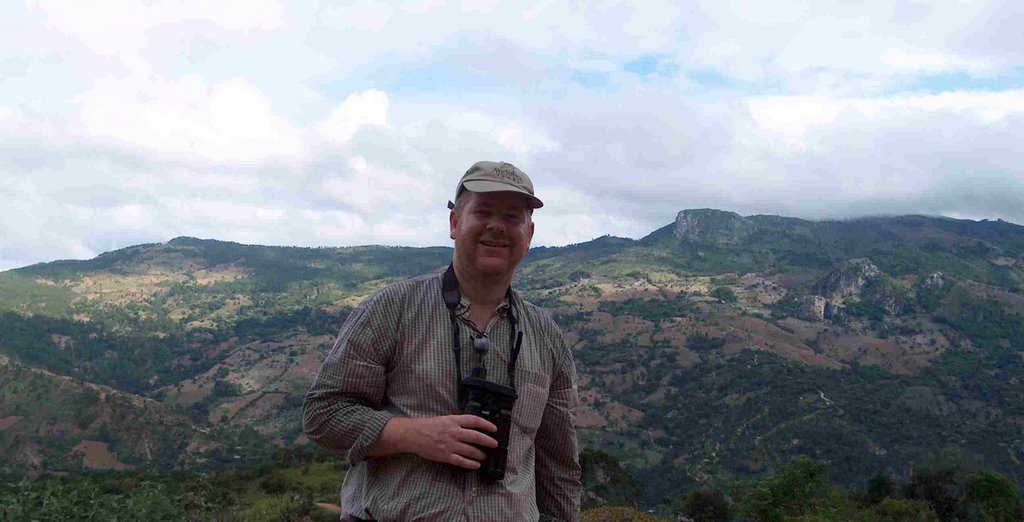 Tuesday, September 5, we headed out early to walk around the aldea above Jocotan. We concentrated on finding the birds that our informant knows--and found about twenty species in a couple hours of walking around the milpas (corn and bean fields) and patios (yards). Very cool to see Turquoise-browed Motmot, Spot-breasted Oriole, Cinnamon Humminbird, and an immature Gray Hawk. Walking back down to town, we heard at least three quail and managed to flush one in an abandoned field--a Spot-bellied Bobwhite. We spent the afternoon going over stories and beliefs about local birds, as well as trying to identify several more that we had names for, but only in Ch'orti' and Spanish.
Friday, September 15, 2006
Jocotan Birds
Tuesday, September 5, we headed out early to walk around the aldea above Jocotan. We concentrated on finding the birds that our informant knows--and found about twenty species in a couple hours of walking around the milpas (corn and bean fields) and patios (yards). Very cool to see Turquoise-browed Motmot, Spot-breasted Oriole, Cinnamon Humminbird, and an immature Gray Hawk. Walking back down to town, we heard at least three quail and managed to flush one in an abandoned field--a Spot-bellied Bobwhite. We spent the afternoon going over stories and beliefs about local birds, as well as trying to identify several more that we had names for, but only in Ch'orti' and Spanish.


Ch'orti' Birds
Monday, September 4 was my first day of ethnoornithology field work in Jocotan. I had come down to Guatemala to help Kerry Hull, a linguist from Reitaku University in Japan who studies Ch'orti' Mayan, identify the birds that he had collected Ch'orti' names and stories about. We spent each morning hiking around with Kerry's informants, and the afternoon trying to figure out the identification of other birds known by the local people, but that we hadn't seen yet.
The first morning we went up to an aldea above Jocotan, and found Clay-colored Robins, Social Flycatchers, Rufous-naped Wrens, Stripe-headed Sparrows, as well as vultures and doves in and around the yards or patios in the aldea.
As we were sitting in the patio of our main Ch'orti' assistant, he heard two wakos calling. They flew by, and we got a quick look--two Laughing Falcons. We collected some good stories about these birds, and recorded them in Ch'orti' and Spanish in the afternoon.
The first morning we went up to an aldea above Jocotan, and found Clay-colored Robins, Social Flycatchers, Rufous-naped Wrens, Stripe-headed Sparrows, as well as vultures and doves in and around the yards or patios in the aldea.
As we were sitting in the patio of our main Ch'orti' assistant, he heard two wakos calling. They flew by, and we got a quick look--two Laughing Falcons. We collected some good stories about these birds, and recorded them in Ch'orti' and Spanish in the afternoon.
Swifts in Jocotan
 After five hours on buses and vans, we arrived at Jocotan (about half an hour from the Honduras border east of Chiquimula) in a pouring thunderstorm. Fortunately, the rain dropped several species of swifts down from their normal foraging areas higher up in the mountains. From my window at the hotel I was able to identify two Great Swallow-tailed Swifts, two Black Swifts, two smaller White-chinned Swifts, as well as 20 additional Cypseloides sp. swifts flying about in the rain before dark. 30 Lesser Goldfinches came in to roost in a tree near my window, and I was also able to spot two Blue-gray Tanagers, one Yellow-winged Tanager, a Great Kiskadee, two Tropical Kingbirds, and a male Purple Martin with a couple other Progne (probably Grey-breasted Martins) martins roosting on the cell tower in front of the hotel. Finally, some real Central American birds!
Birds at Kaminaljuyu
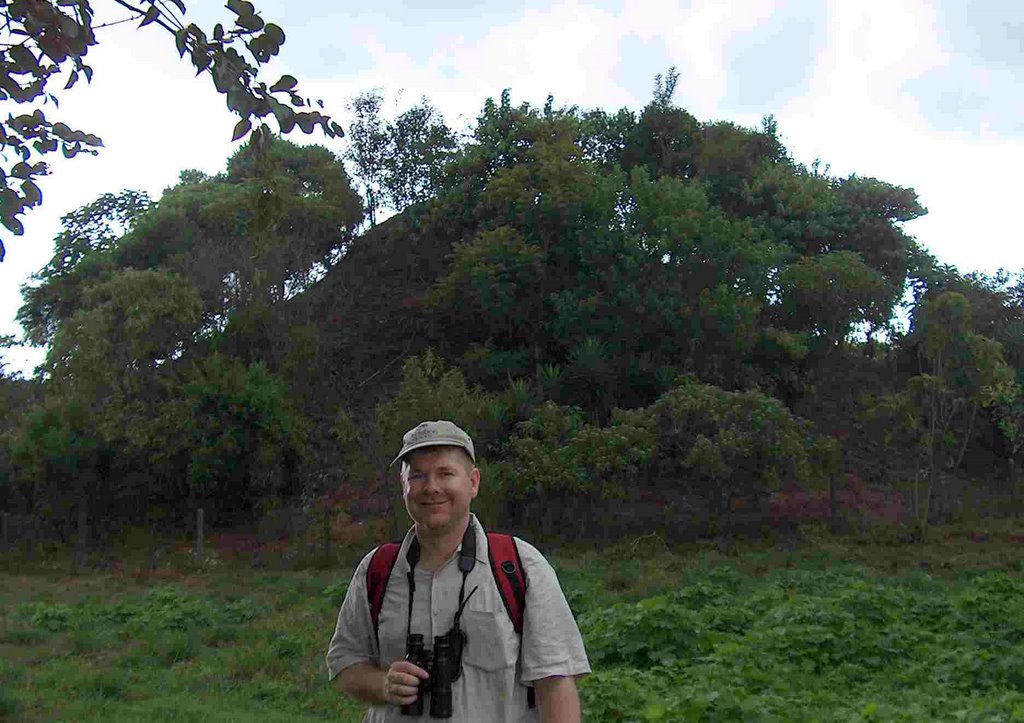 From the hotel, we took a taxi over to the Pre-Classic Mayan ruins at Kaminaljuyu--basically an archaeological park smack dab in the middle of Guatemala City. Here I am standing in front of one of the archaeological mounds. Not a lot of birds here, but did enjoy seeing three Eastern Bluebirds among the ruins. Interesting to wonder how they might have visited the site when it was inhabited 2,000 years ago. Also saw some Black Vultures and a Rufous-collared Sparrow...two more typically urban birds.
Back in the day, Kaminaljuyu was an important city, and one of the first places that we have record of rulers dressing up as bird gods to help legitimate their rule. Today, birds rule there again, as its parklike setting provides space for birds otherwise surrounded by the concrete jungle of Guatemala City.
First Birds in Guatemala
 After arriving after 10pm the night before, the first bird seen from the balcony of the Guatemala City Marriot was...Lesser Goldfinch. Followed shortly by Great-tailed Grackle and Clay-colored Robin. Off in the distance, a Leptotila dove--probably a White-tipped Dove--flew across the city. Great. All this way to see four birds easily seen in Texas!
Latest Info on Wild Birds and Bird Flu
A new paper to be published in the October issue of Emerging Infectious Diseases (and available now online ahead of print) reviews recent outbreaks of H5N1 HPAI, the species of migratory birds infected, and the potential for wild birds to spread bird flu to new areas.
The authors conclude that:
Reference: Rappole, J.H. and Hubálek, Z. (2006) Birds and influenza H5N1 virus movement to and within North America. Emerging Infectious Diseases, October 2006 issues, available online at: http://www.cdc.gov/ncidod/EID/vol12no10/05-1577.htm
The authors conclude that:
HPAI H5N1 spread rapidly across Eurasia during 2005 for reasons that are not entirely understood. Despite this rapid movement, effective introduction (i.e., under conditions allowing its spread) of the virus to the New World through migratory or vagrant birds seems unlikely. Few individual members of few waterfowl species migrate between hemispheres, and should a bird make the journey while shedding sufficient active virus to infect birds in the Western Hemisphere, newly infected birds would probably die before being able to transport the virus from the entry site. If spread of HPAI H5N1 to the New World occurs in its current form (e.g., through domestic or pet bird trade or smuggling), it should be readily detectable because of the large number of dead native birds likely to result.
Reference: Rappole, J.H. and Hubálek, Z. (2006) Birds and influenza H5N1 virus movement to and within North America. Emerging Infectious Diseases, October 2006 issues, available online at: http://www.cdc.gov/ncidod/EID/vol12no10/05-1577.htm
Thursday, August 31, 2006
Off to Guatemala
 I'm off to Jocotan, Guatemala to do some ethnoornithology research with a Mayan linguist. Hope to post something from down there, but if not, I'll be back September 13. (photo:jocotan project)
Eagle Scout Bluebirds
A scout from church created a bluebird trail at my work for an Eagle Scout project a couple weeks ago. This morning I went for a little walk and saw three bluebirds sitting on one of his boxes. These birds won't nest until spring, but they seem to be checking out the boxes already. Hopefully they will find at least one to their liking.
Birdchaser in Circus of the Spineless
My post on Muscongus Bay Bird Food is featured in the brand new Circus of the Spineless (a blog carnival dedicated to invertebrates) hosted by Steve Reuland of Sunbeams from Cucumbers. Steve positions all the posts as acts in a circus. I am, of course, the clown.
Tuesday, August 29, 2006
Local Shorebirds
Hoping to find some migrant shorebirds, I stopped by Bradford Dam in southern Bucks County on the way to work this morning. Most of the lake margin is covered with dying water hyacinths, so not a lot of good shorebird habitat. Only found 7 Spotted Sandpipers, and 4 Least Sandpipers on the vegetation, so kind of disappointing. There was a young Bald Eagle sitting on a log in the lake, as well as 2 Mute Swans, a single Canada Goose, 1 Great Blue Heron, and 4 Green Herons. Not what I was hoping for, but good to at least get a brief bird fix for the morning.
Monday, August 28, 2006
Birdchaser in Lawn & Garden Retailer
Check out my article on the bird flu in the Lawn & Garden Retailer magazine (here). Money quote:
By keeping bird feeders and birdbaths clean and by washing up thoroughly after servicing them, there is almost no way to contract H5N1. There is a much greater risk of tripping on your way out the door than there is of contracting avian flu or any other disease from backyard wild birds. The National Safety Council reports that trips and falls killed 16,000 Americans and sent more than 7 million others to the emergency room in 2003; less than 200 people across the globe have died from H5N1.
Gunnison Sage Grouse
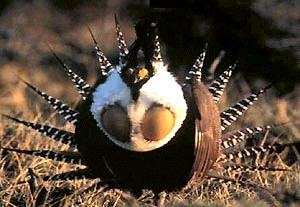
Here's a question--Who is going to step up to save the Gunnison Sage Grouse, perhaps the most endangered bird in the Lower 48? I was just out in Colorado for some Audubon meetings, and there is a real need to get some national attention on this bird. There is a local group Sisk-a-dee dedicated to protecting the birds, a conservation plan, and some serious efforts by the Colorado Division of Wildlife, but hardly anyone out there has even heard of, let alone embraced, this bird.
True, thousands have have travelled to see these birds. But how many people go to Colorado to see these birds, then don't lift a finger to do something for them after they get home?
How many of us can envision a world where there aren't just 5,000 Gunnison Sage Grouse on a good day, but maybe 25,000 or 50,000 of them across a larger expanse of their former range into Arizona and New Mexico?
Everyone was over the moon when we thought the ivorybill might have a second chance. While nobody seems to be able to find an ivorybill, here's a bird that we really can do something about still.
Is there a conservation through birding strategy that can help these birds? Some way to get more people to see, and then actually do something to help, these birds? What about a Sage Grouse Research and Visitor Center in Gunnison? A place where you can go to learn about the birds, take a guided tour to see them booming on their leks in the frigid cold of an early Colorado Spring? A center where summer interns and researchers can work out of as they struggle to learn more about these birds. A place on the map with a 40 foot sage grouse statue in front that makes the local community proud of their celebrity birds? Or a birding festival that fills the local hotels during the off season?
We have the tools. But the folks with Sisk-a-dee in Gunnison need our help. Ask not for whom the bell tolls, it tolls for these guys, and for our credibility as conservationists if we stand by and watch these guys go the way of Attwater's Prairie Chickens (down to about 40 birds in the wild).
(Gunnison Sage Grouse photo credit)
Jackie Chan on Bird Flu
 Announced here. Follow the links to watch the Public Service Announcement here. Maybe a bit over the top scary, but for kids, an important message in some parts of the world. Some kids in Turkey died after playing with the heads of some slaughtered infected chickens, so maybe not a message we need here in the USA, but possibly critical elsewhere. Hopefully the kids will listen to Jackie Chan. He may do his own stunts, but isn't messing around with this bird flu!
 Now, the part about "birds from somewhere else" making their birds sick...it may be true, but it wasn't clear if he was talking about wild birds or poultry imports. Wild birds are still not proven to be a primary carrier or transmitter of HPAI H5N1 avian influenza.
Colorado Rocky Mountain High
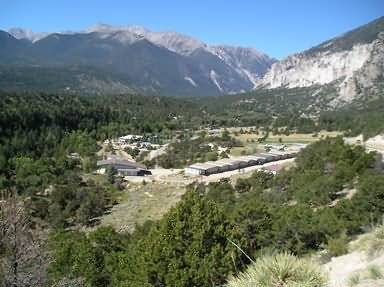 Friday I flew to Denver and drove three and a half hours up to Mt. Princeton for the Audubon Colorado Rendezvous. A spectacular meeting place along a creek below the cliffs of the 14,000 foot peak. Most of my time was spent in meetings watching the storms roll in and out of the valley, but great to see some old friends like Clark's Nutcracker, Townsend's Solitaire, and Mountain Chickadee. Heard Red Crossbills flying over several times but never got on them. Something was messed up with my binoculars, and I couldn't get them to focus fast enough. I thought it might have been sand in the focusing mechanism, but they are OK again now that I'm back in Pennsylvania, so wondering if it had something to do with the pressurized binocular tubes and the high altitude? If anyone has had anything like this happen to their Zeiss 7x42 Dialyts, let me know! It was a pain since I was pretty sure I had a Black Swift going over at one point, but couldn't focus the bins fast enough to get on it!
Wednesday, August 23, 2006
Cooperative Conservation?
I love rare birds, and was dismayed a couple months ago when the USFWS decided not to list the Gunnison Sage Grouse as an endangered species. If a bird with a tiny range and a population of only 5,000 individuals (in a good year) doesn't count as endangered, I don't know what does.
While the Endangered Species Act has some problems--most notably the government doesn't enforce it enough, there is a movement afoot to get rid of the Endangered Species Act as we know it. Called "cooperative conservation", this would make endangered species protection voluntary, rather than mandatory. While I'm all in favor of voluntary action, and decided against a career in environmental law because I'd rather encourage people to do the right thing, rather than suing them to do it, sometimes you need the stick to go along with the carrot, and taking the teeth out of the Endangered Species Act will not help any endangered or threatened bird. A "voluntary" Endangered Species Act would be about as effective as a voluntary sales tax.
So, why post this on PA Birds? Those within the federal government who would like to stir up support for gutting the Endangered Species Act are staging road shows all across the country to try and sell their ideas and make a show of support, and that show may be coming to a community near you sometime in the next couple of months. If you care about rare and threatened birds, find a session near you, mark your calendar and do what you have to in order to get to this meeting and make a public comment in support of a strong Endangered Species Act.
I know we'd all rather be out birding, but if we don't stand up for the birds when we get a chance, someday there just won't be as many of the cool birds we'd all really like to see. If birders won't stand up for rare birds, who will?
For more info on the public meetings, see:
http://cooperativeconservation.gov/sessions/index.html
For more info on this "cooperative conservation" movement, see:
http://cooperativeconservation.gov/about/index.html
More on these sessions from the Endangered Species Coalition (here).
While the website says that meeting attendance and commenting is first come, first served, and that speakers can only sign up at the session, word on the street is that there may be some dirty behind-the-scenes stuff going on to stack the speaker list in advance. So get there early, and if you aren't allowed to speak, let the world know about it.
There, I've said it. Now back to birding!
While the Endangered Species Act has some problems--most notably the government doesn't enforce it enough, there is a movement afoot to get rid of the Endangered Species Act as we know it. Called "cooperative conservation", this would make endangered species protection voluntary, rather than mandatory. While I'm all in favor of voluntary action, and decided against a career in environmental law because I'd rather encourage people to do the right thing, rather than suing them to do it, sometimes you need the stick to go along with the carrot, and taking the teeth out of the Endangered Species Act will not help any endangered or threatened bird. A "voluntary" Endangered Species Act would be about as effective as a voluntary sales tax.
So, why post this on PA Birds? Those within the federal government who would like to stir up support for gutting the Endangered Species Act are staging road shows all across the country to try and sell their ideas and make a show of support, and that show may be coming to a community near you sometime in the next couple of months. If you care about rare and threatened birds, find a session near you, mark your calendar and do what you have to in order to get to this meeting and make a public comment in support of a strong Endangered Species Act.
I know we'd all rather be out birding, but if we don't stand up for the birds when we get a chance, someday there just won't be as many of the cool birds we'd all really like to see. If birders won't stand up for rare birds, who will?
For more info on the public meetings, see:
http://cooperativeconservation.gov/sessions/index.html
For more info on this "cooperative conservation" movement, see:
http://cooperativeconservation.gov/about/index.html
More on these sessions from the Endangered Species Coalition (here).
While the website says that meeting attendance and commenting is first come, first served, and that speakers can only sign up at the session, word on the street is that there may be some dirty behind-the-scenes stuff going on to stack the speaker list in advance. So get there early, and if you aren't allowed to speak, let the world know about it.
There, I've said it. Now back to birding!
Detention Pond Shorebirds
This morning I made a quick stop by a water detention pond just north of the Giant supermarket in Quakertown. The basin is only about an acre in size and mostly dry, with a bit of water in spots and open mudflats, but it held 2 Solitary Sandpipers, 2 Lesser Yellowlegs, 20 Least Sandpipers, and 2 Semipalmated Sandpipers. Man, I sure miss the days of shorebirding the South Jetty of the Columbia River and the Bayocean shorebird flats in Oregon during the 1980s, or the last ten years of birding Hornsby Bend in Texas! I got spoiled on seeing hundreds or even thousands of individuals of dozens of species. Now shorebirds are a bit fewer and farther between for me.
Monday, August 21, 2006
Perseids and Parulas
 Nights in Maine are great for watching the skies. After a day of workshops, we enjoyed exploring the galaxy--and more distant galaxies--under amazingly dark skies. I've lived in the city too long, and it was great to watch the Perseid meteor showers, scope out the moons of Jupiter, and look at the Andromeda galaxy, as well as other deep sky objects in Sagitarius.
 We weren't the only ones watching the stars. Research has shown that many songbirds migrate at night and use the stars to help them navigate. While we were out looking at the stars, we could hear the flight calls of warblers going overhead. I'm still learning my flight calls, so hard to tell exactly which species were going over, but based on what we were seeing on the ground, maybe Black-throated Green Warblers, Northern Parulas, American Redstarts, and Magnolia Warblers.
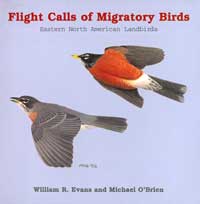 The best resource for learning the flight calls of migrant birds is online at oldbird.org. Get the CD. Its amazing and will open up a whole new world of night time birding. Fall migration is underway, so get a copy now. For another great view of the migration taking place each night, see the radar summaries at woodcreeper.com. Then head outside, hopefully to a dark spot away from city lights, and enjoy the celestial views of the sky and amazing sounds of the birds streaming overhead.
How Birds See the World
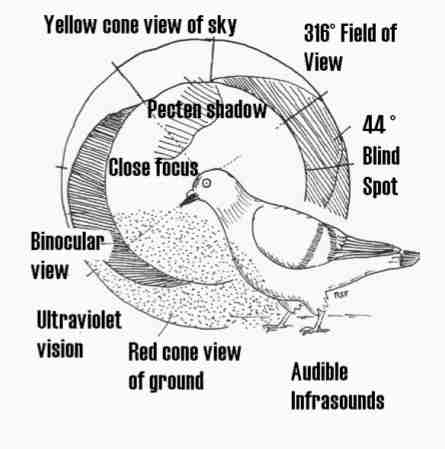 What do you do at the Audubon Leadership Workshop after a day of watching puffins and eagles? Why, you enjoy my presentation on how birds see the world, of course! I like this presentation, as it is a lot of fun to figure out how birds see and interact with their world. I haven't given this presentation for a while, but I've now added a lot of info from recently published research, and I'm set to take it on the road again. Next stop for this show: Houston Audubon Society meeting on November 8. If you've ever wanted to know what it is like to be a bird, this is the presentation for you!
Eastern Egg Rock

On the third day of the Audubon Leadership Workshop on Hog Island, we took the Puffin IV out to Eastern Egg Rock to look for the puffins that Stephen Kress introduced back to the island beginning in the 1970s. It was late in the season, but we did manage to see four of these little beauties sitting on the water.
 We might have seen more puffins, but there were four adult and three young Bald Eagles on the small island really stirring up the terns and gulls, so any other puffins in the area were probably smart to head out away from the island.
 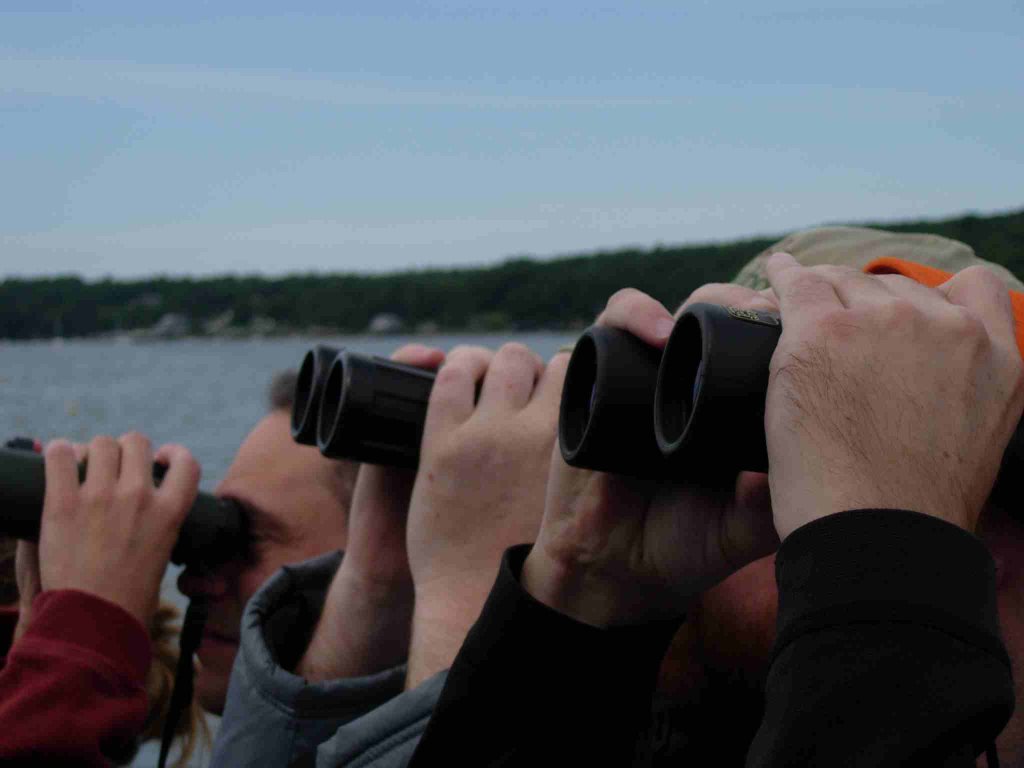 I am not the best on boats, especially when I keep my eyes glued to my binoculars looking for pelagic species. As we headed out, I told some folks that I wanted to see a Manx Shearwater. As we circled Eastern Egg Rock and the swells started to get to me, I kept up my vigil scanning the horizon with my binoculars while others watched the eagles. Finally, way off in the distance, I saw a shearwater skimming back and forth over the waves. Only a couple others were able to get on it before it disappeared, perhaps landing on the water. I was green, but I'd seen my bird!
Muscongus Bay Bird Food
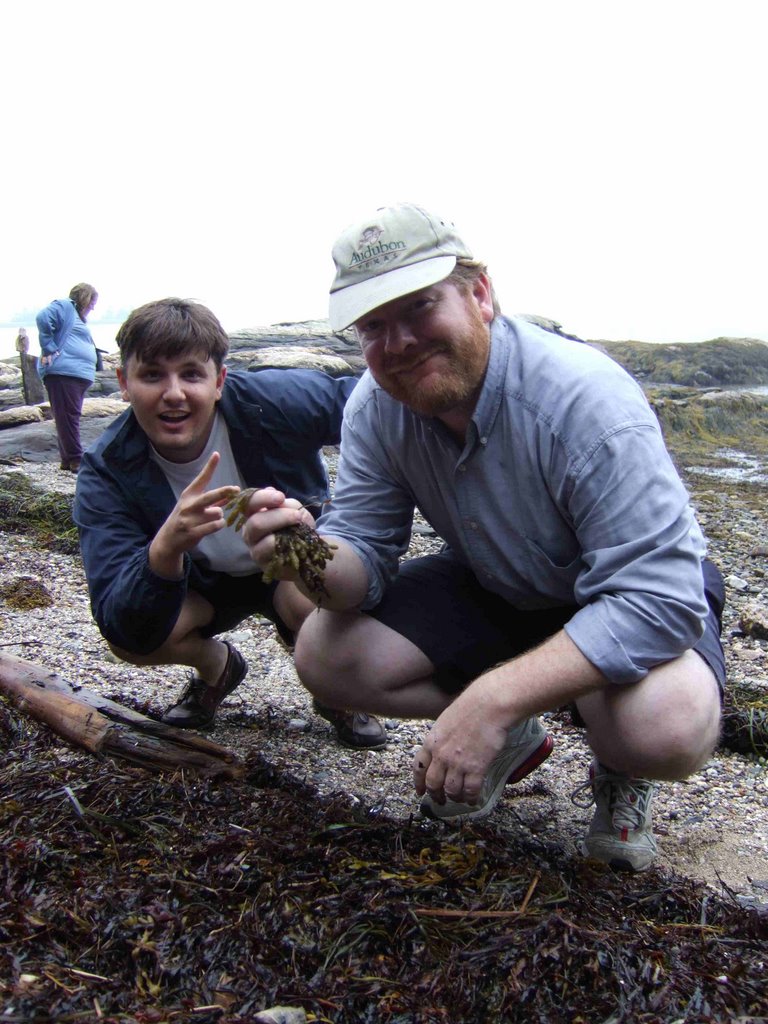 On the second day of the Audubon Leadership Workshop at Hog Island, we took a break to explore the intertidal zone, or as I like to think of it, with over thirty species of invertebrates present, the Maine coast's great bird food larder.
Of course, crabs were everywhere. Most were green crabs (Carcinus maenus), and hermit crabs, but we also found one female Asian shore crab (Hemigrapus songuineus) in berry, as well as a few rock crab (Cancer irroratus). These guys are all good food for the many Herring Gulls and Laughing Gulls in the area, and at one point I found three American Crows feeding on the remains of a larger crab. Common Terns also munch on green crabs.
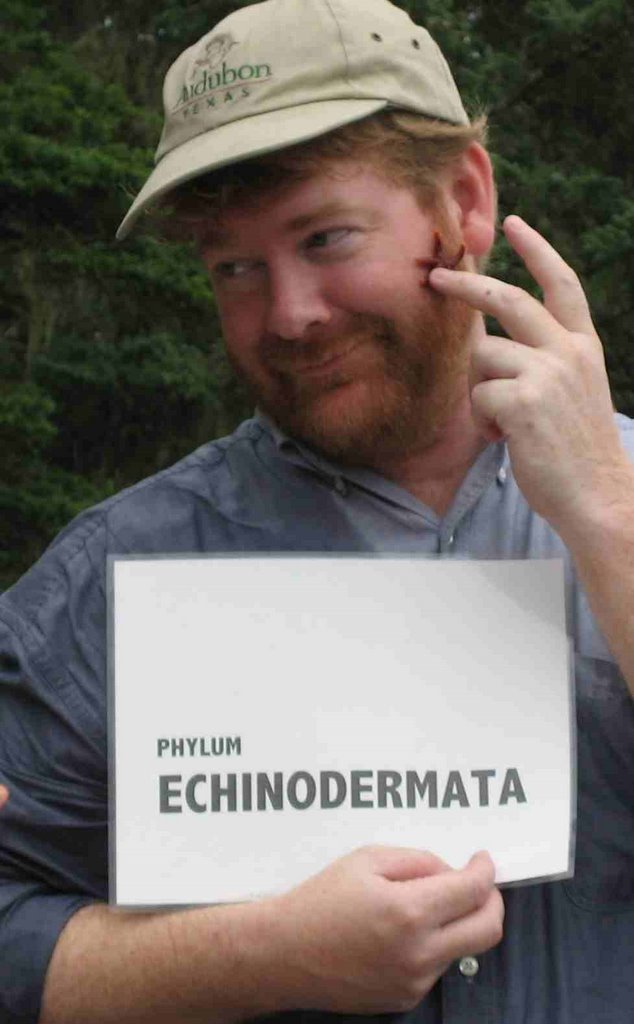 We also found two kinds of sea star. Here I am showing off my Blood Star (Henricia sp.), and we also found Northern Sea Stars (Asterias vulgaris). While these little guys are savvy hunters themselves, it isn't too uncommon to see gulls eating sea stars as well--especially the larger Glaucous Gull and Great Black-backed Gull. King Eiders also like to eat Asterias sea stars.
One denizen of the shore that was new to me was the clam worm (Nereis sp.), which make a good meal for shorebirds like Black-bellied Plover, Semipalmated Plover, Red Knots, and godwits, as well as gulls and waterfowl like the American Black Duck and Common Eider.
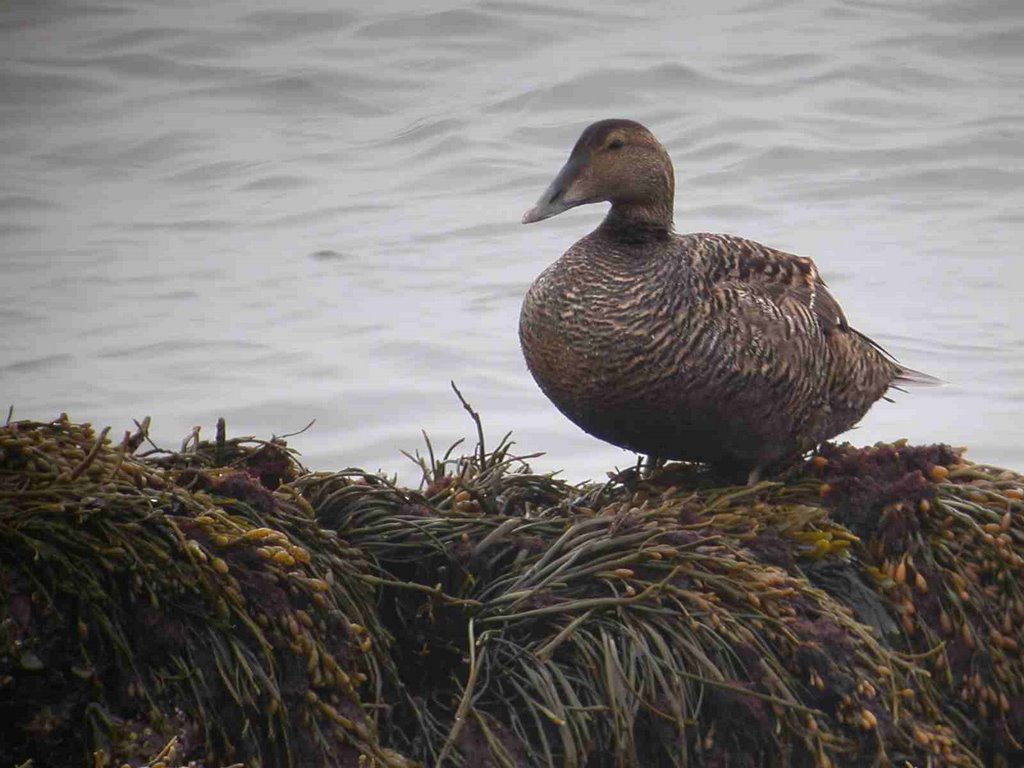 Of course, everywhere on the rocks we found barnacles, as well as blue mussels (Mytilus edulis) and horse mussels (Modiolus modiolus). These bivalves are the favorite food of the Common Eiders that are so common in Muscongus Bay. The sea ducks dive down and rip these mussels from the rocks, eat them whole, and grind them up in their gizzards, then excrete the shells as crazy blue droppings. Other birds that feast on mussels include American Oystercatcher and Black Scoter.
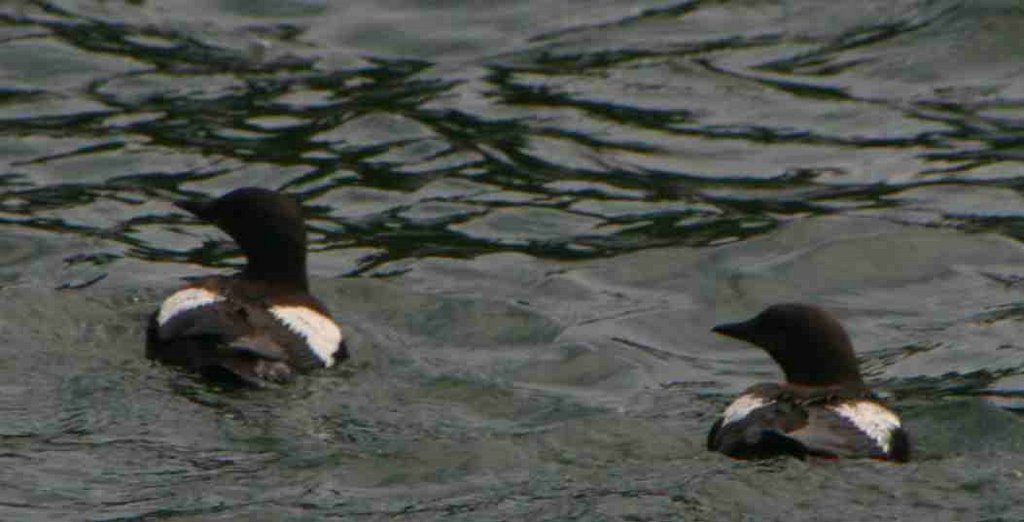 Rock eels (Pholis gunnellus) are the favorite food of the other most common Muscongus Bay bird--the Black Guillemot. We found a couple of these long fish--actually a gunnels--under rocks in the tide pools. The guillemots dive down and chase these fish among the rocks under water--a sight I'd love to see. Other birds that hunt these gunnels include Double-crested Cormorant, Great Cormorant, and Red-throated Loon.
 My favorite animal of the day was probably the golden star tunicate (Botryllus schlasseri). We also found Sea Pork (Amaroucium stellatum) and white crusts (Didemnum sp.). I have to admit I've never seen a tunicate before, and I was quite taken by these strange little animals. The golden star tunicates are introduced from Europe, and I have no idea if any birds actually eat these little colonies since they are rather firmly attached to the rocks, but they are quite pretty and its possible that the free-swimming forms may be eaten by birds at sea.
Snails were common in the tide pools, especially the common periwinkles (Littorina littorea) and dog whelks (Nucella lapillus). We also found some of the smaller smooth or northern periwinkle (Littorina obtusata) and a few tortoise shell limpets (Acmaea testudinalis). Dozens of bird species eat periwinkles, including shorebirds like Purple Sandpipers and Ruddy Turnstones, and ducks like Common Goldeneyes, scoters, and Long-tailed Duck. Limpets may take a little more work to pry off of rocks, but some do get pulled off by eiders and oystercatchers.
Other bird food we found included beach fleas (Orchestia sp.), blood worms (Glycera sp.), and my favorite the twelve scaled worm (Lepidonotus sp.). Amphipods included the North Atlantic scud (Gammarus oceanicus) swimming sideways under rocks, where they seek refuge from the dozens of birds that eat them--pretty much any shorebird, seabird, or sea duck in the area.
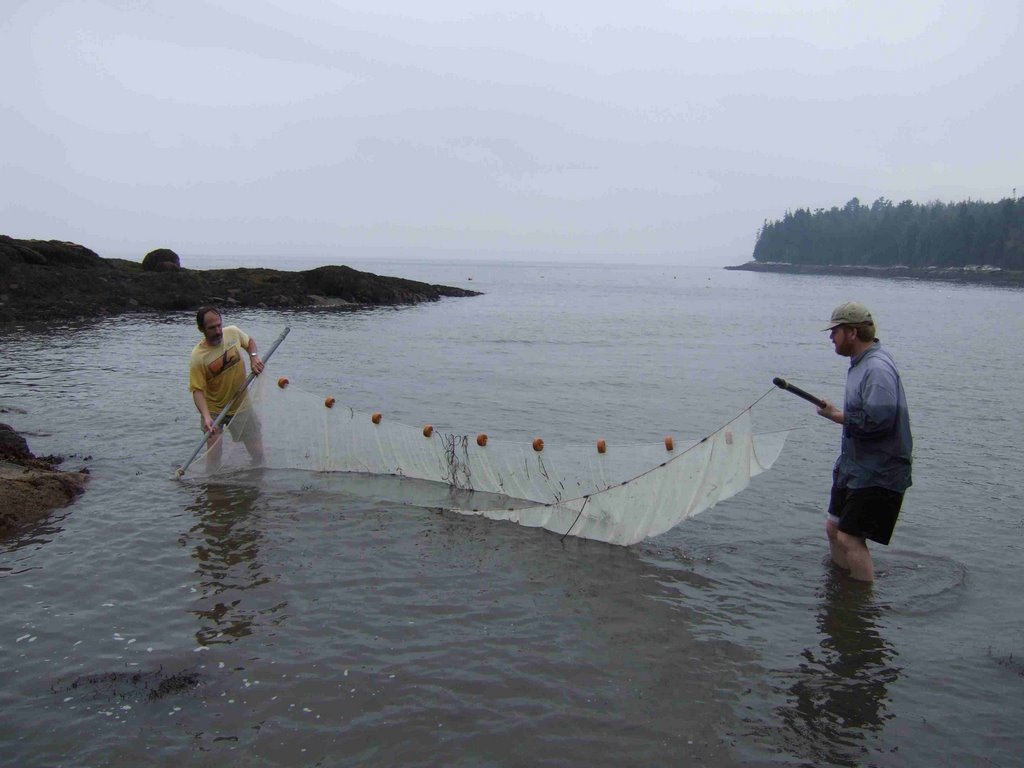 After checking out the littoral bird food, we waded out to do some sceining. This brought in lots of three spined sticklebacks (Gasterosteus aculeatus), Atlantic silversides (Menidia menidia), bent mysids (Praunus flexuosus), and grass shrimp (Hippolyte sp.). Common Terns frequently take all of these species, as do many other species feeding in shallow water--including Snowy Egret and Brown Pelican. We also managed a medium sized sculpin (Cottidae sp.)--a fish favored by loons, mergansers, cormorants, and even Great Black-backed Gulls.
  After a couple hours of exploration, it was clear that the world is a marvelous place full of strange creatures...and that there is a lot for birds to eat where water meets shore.
Subscribe to:
Posts (Atom)


