

The Murder That Never Happened
22 hours ago
Skin Design:
Free Blogger Skins
 This morning I stopped by Peace Valley Park on my way to work and was greeted by a stunning winter-plumaged male Long-tailed Duck floating in the middle of the lake with the large Common Merganser flock. This is mostly a coastal bird, so not one you see very often here inland. Also present were three Northern Pintail, and half dozen Ruddy Ducks and Ring-necked Ducks, also a lone male Bufflehead. Birds are on the move! (photo: Indiana Audubon Society)
Background: The apparent rediscovery of the Ivory-billed Woodpecker Campephilus principalis in Arkansas, USA, previously feared extinct, was supported by video evidence of a single bird in flight (Fitzpatrick et al, Science 2005, 308:1460-1462). Plumage patterns and wingbeat frequency of the putative Ivory-billed Woodpecker were said to be incompatible with the only possible confusion species native to the area, the Pileated Woodpecker Dryocopus pileatus.
Results: New video analysis of Pileated Woodpeckers in escape flights comparable to that of the putative Ivory-billed Woodpecker filmed in Arkansas shows that Pileated Woodpeckers can display a wingbeat frequency equivalent to that of the Arkansas bird during escape flight. The critical frames from the Arkansas video that were used to identify the bird as an Ivory-billed Woodpecker are shown to be equally, or more, compatible with the Pileated Woodpecker.
Conclusions: The identification of the bird filmed in Arkansas in April 2004 as an Ivory-billed Woodpecker is best regarded as unsafe. The similarities between the Arkansas bird and known Pileated Woodpeckers suggest that it was most likely a Pileated Woodpecker.
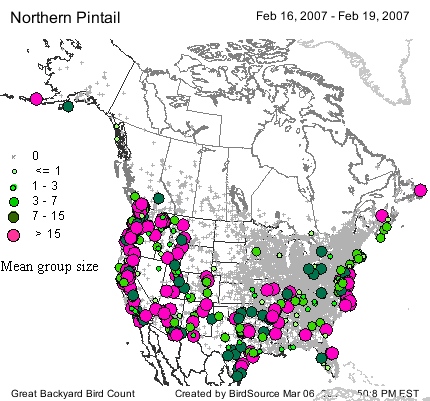 Public data entry for the Great Backyard Bird Count ended last week, but behind the scenes there is still a lot of work to do. We have over 90 regional reviewers sifting through the unusual records and trying to clean up the data. We are still missing reports of many species, especially in Hawaii--so we're contacting observers there who might have additional species to report. We're also starting to look at the results from this year--including some interesting trends. Northern Pintail numbers are down, which may be further evidence that this species is continuing its precipitous population decline. Hooded Merganser numbers are way up this year, so there might be something intersting going on there. American Crow numbers are down a bit on a per checklist basis, perhaps indicating continued problems with West Nile Virus mortality.
  I woke up this morning to news that an Ivory Gull was being seen in New York, about two and a half hours from my home. Having daydreamed about seeing this rare Arctic gull for years, there was nothing to do but to jump in the car with my nine-year old (if they can open school late for snow, I can cancel it for a day to show my 4th grader an all-white gull that eats dead seal carcasses left by Polar Bears!). We arrived at the designated spot and followed a half dozen birders on foot for about half a mile. And there it was, a beautiful white bird, sitting on top of a telephone pole, with 40 birders standing around below it. After 20 minutes, it flew off, circled around, and came back a couple times--landing on a piling, picking up part of a dead fish, and flying off again. Amazing. I wasn't ready for the colors on the bill--red, orange, yellow, green, blue. If you live on the East Coast, this is a good bird to chase. Since these birds are declining, possibly due to melting of Polar ice caps due to global climate change, and possibly due to mercury poisoning, there's no telling how many opportunities we'll have to see these birds. They almost never get this far south. (Photo: Phil Jeffrey)
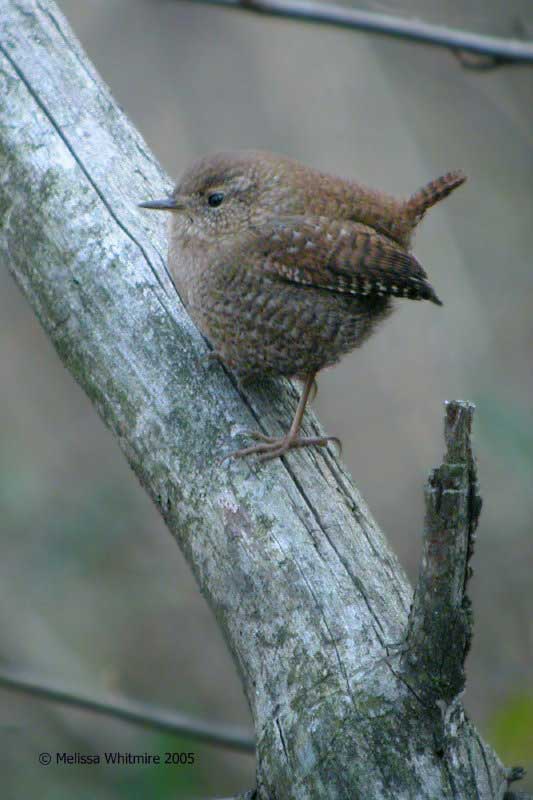 I've been practically living with my computer surgically attached to my body for the last week, while working on the GBBC. Besides the birds at Peace Valley Park on my way to work, and the birds at the feeders at work, I haven't been having enough bird encounters lately.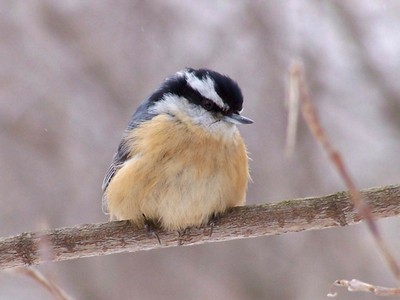


 RSS Feed (xml)


