Subscribe

RSS Feed (xml)

Powered By

Skin Design:
Free Blogger Skins

Powered by Blogger

Thursday, June 01, 2006

Latest on Bird Flu and Wild Birds in Europe

Here's the press release:

Brussels, 31 May 2006
Avian Influenza: Results of EU surveillance in wild birds presented

The European Commission and the Community Reference Laboratory (CRL) for Avian Influenza in Weybridge have published the results of the surveillance for avian influenza in wild birds carried out in the EU over the past 10 months. The extensive epidemiological data was presented today at the FAO/OIE International Scientific Conference on Avian Influenza and Wild Birds, which is taking place in Rome this week. Although final figures are still being collected for February-May 2006, it is estimated that around 60 000 wild birds were tested for avian influenza in the EU during that period. This, combined with the 39 000 wild birds tested between July 2005-January 2006, means that almost 100 000 tests for the H5N1 virus have been carried out on wild birds over the past 10 months. Since February 2006, over 700 wild birds across 13 Member States have been found to be infected with the H5N1 “Asian strain” of avian influenza. However, a positive decline in the incidence of the disease in wild birds in Europe has also been noted over the past weeks.

Markos Kyprianou, Commissioner for Health and Consumer Protection, said “Extensive surveillance for avian influenza in wild birds and poultry has been one of the key tools used by the EU to fend off the virus over the past months. It is a fundamental component in minimising the introduction and spread of this disease which poses a serious threat to animal and public health. The Commission and the Member States are continually working to improve the preventive measures already in place against avian influenza, so as to ensure that we have the tightest possible defences against it. We cannot let down our guard when it comes to avian influenza, as it is likely to remain a threat for Europe and the rest of the world for many months to come.”

Between February 2006 and 21 May 2006, 741 cases of highly pathogenic avian influenza (most of them confirmed as H5N1) have been detected in wild birds in 13 Member States – Greece, Italy, Slovenia, Hungary, Austria, Germany, France, Slovakia, Sweden, Poland, Denmark, Czech Republic and UK. There have been only four outbreaks of H5N1 avian influenza in poultry in the EU, and all of these were swiftly eradicated following detection. No human case of the H5N1 virus has occurred in the EU.

There is considerable variation in the number of cases of highly pathogenic avian influenza in wild birds, ranging from 326 in Germany to 1 in the UK (see chart 1). The peak in terms of the number of cases in wild birds was reached in March with 362 cases (compared to 200 in February), with cases declining to 162 in April and 17 in May (until 21 May – see chart 2). The most commonly affected wild birds have been swans (see chart 3), representing 62,8% of the total, followed by ducks (16,3%), geese (4,5%), birds of prey (3,9%) and others (13%).

Following the major geographical spread of the H5N1 avian influenza virus from South-East Asia in 2005, the EU has intensified its programmes for the surveillance and early detection of avian influenza, both in wild birds and poultry. Almost €2.9 million has been made available by the Commission to co-finance Member States’ surveillance programmes for the period July 2005-December 2006 (see IP/06/172 ). Guidelines on enhanced surveillance for avian influenza in wild birds were also issued by the Standing Committee on the Food Chain and Animal Health. The intensified surveillance has enabled the Commission and Member States to gain a clearer view of the avian influenza situation in the EU, and to rapidly detect and respond to any outbreaks.

For the Commission and CRL presentations and the surveillance results, see here

Thursday, May 25, 2006

Migration is Over

Well, its been three days of birding without seeing any migrants. So, while there are bound to still be some birds moving through, for the most part, the show is over. Amazing how quickly the birds come through this part of the world. Down in Texas, migration was a protracted endevour that lasted from February through the end of May and into June. Here, ducks are moving in February, but most of the land birds seem to move through more quickly after the leaves come onto the trees. A couple good weeks, maybe a month, and now its pretty much just summer birds everywhere. While I was out a fair bit this migration, I rarely saw more than a single individual of any given species...and never saw more than a dozen of any migrant species in one place (except for Yellow-rumped Warblers), making migration more of a whimper than a full-scale howl. Maybe bird numbers are declining, maybe I didn't get out on all the right mornings, or maybe this isn't the most birdy part of the world. While I saw thousands of individuals of over 100 species, it was sadly just not quite enough. Ah, the birder's curse...always wanting more!

Friday, May 19, 2006

No Ivorybills

The official word is out...searchers did not come up with any confirmed Ivory-billed Woodpecker sightings this year in Arkansas, despite spending over $1 million and thousands of hours in the field. Read the official Cornell statement here.

So, what does this mean? Only time will tell, but the polish is off the search for now. A riddle, inside a mystery, wrapped in the ghost of Elvis. One for the money, two for the show, three to get ready, now...no bird.

An AP story (here) highlights problems and discontent with the ivorybill search and recovery efforts. Hopefully, this whole episode will eventually help, rather than hinder, bird conservation efforts. But for now, things look a little hazy.

Bird Flu Update

We are starting to learn a little bit more about the role of wild birds and farming in the spread of H5N1 avian influenza, but lots of questions remain. While New Scientist (see story here) sticks to their claim that wild birds are spreading the virus, others are less sure. The New Scientist line of reasoning hinges on the spread of a particular strain of H5N1 that was found in wild geese at Qinghai, China last year. This is the strain that spread last year to Russia and Eastern Europe, and now Western Europe. New Scientist claims that since it is the same strain as found in wild birds, it must still be in wild birds. There are some major problems with this:

1) Now we are getting reports that the "wild" geese that were infected at Qinghai may not have been so wild, as there are ongoing efforts there to domesticate the "wild" bar-headed goose (see Nature article here).

2) There are also fish farms on the lake that use poultry manures, which can carry the virus, as fish food (see latest article here).

3) The route that the virus took in its spread westward, despite New Scientist claims, does not match any known migratory bird pathway, but does follow major railways and highways.

So, the Qinghai to Europe spread can be more easily accounted for by trade in poultry or poultry products, rather than the movement of wild birds. That said, it is troubling that there are so many wild birds with H5N1 being found in Western Europe--including dozens in Germany over the past few months. We need to learn a lot more about how these birds are contracting and possibly spreading H5N1. This may be a new stage in the spread of this virus, so all eyes should be on Europe and how wild birds are getting and carrying it there.

Tuesday, May 16, 2006

So as they don't waste away

Birders in the mood to buy a T-shirt should check out Jimmy Buffet's Margaritaville website. Mr. Buffett is donating $1 to the National Fish and Wildlife Foundation for the Puerto Rican Parrot Recovery Program for every t-shirt sold. Get your t-shirt and support the critically endangered Puerto Rican Parrot. Seems parrotheads know when to put their money where their mouths are.

Black and White

For me, black and white usually refers to a species of warbler. But after being profiled on The Cafes User Interface (thanks, I guess) and getting a couple comments from friends about how hard it is to read white text on a black background, I've switched to this black on white format. For now. It looks pretty boring, so I'm in the market for a new look. Feel free to comment or send suggestions on a new template. For now, here's hoping I'm easier to read.
Listing Report

Yesterday's mail brought the 2005 ABA Big Day Report and ABA List report--basically the equivalent of a birding orgy where everyone gets to compare whose bird list is bigger. Of course, the oversized lists at the top are always the most interesting. The biggest list in the ABA area (US Lower 48 plus Canada plus Alaska) is Macklin Smith at 873 species. An amazing 31 birders now report ABA lists higher than 800. When I was a kid, the ABA was still promoting the 600 Club as the birding big leagues for everyone who could manage to find 600 bird species north of Mexico. It wasn't that long ago that the first birder reported finding 700 species in North America. Of course, in the past 30 years, they've raised the bar.

The biggest world list reported was Tom Gullick with a whopping 8560 species, followed by Jon Hornbuckle with 8150 and Peter Kaestner with 8031. 17 birders report lists of over 7,000 species worldwide. That's some serious world travel.

So, what does all this mean? The sad fact is that for most serious list enhancement, the birder has to ask how big do you want it to be, how much are you willing to spend, and how much are you willing to be inconvenienced to get that big list. There isn't anything normal about these huge lists--they are a curiousity, if not a birding pathology. You don't get a size 86 DDD list without some serious cash and sacrificing of normal birding functioning. Just like the big cup size can chronically cripple your back, the personal lives of the big listers may become seriously distorted in their quest for the huge numbers of birds.

But while a huge list may not actually be much of an indicator of one's birding skills, it is an interesting curiousity--something to marvel at. Those big lists turn heads and provoke birding envy. While we might all fantasize about seeing that many birds, few of us can afford the cashola, time, or sacrifice of personal relationships that big listing can entail. So every year, most of us tune in to see what kind of list augmentations have been performed in the past year, shake our heads, and dream about someday getting to that far off place to see those birds that we can only dream about. But for a others, mostly near the top of the lists, the listing report is more than a birdwatching freak show--its a report card. You don't spend so much time and money on a big list without getting at least a little ego involved.

Monday, May 15, 2006

Magic

Sometimes, when all the stars line up, everything comes together and you get into the birding groove. Its almost magical.

Friday on the birdathon, my officemate Jim Sheehan picked up a Nashville Warbler singing in a mixed flock of warblers. The birds were impossible to see, but somehow, I managed to spot the bird singing from deep within a tree. Nashvilles often do this, and don't seem to move around as much as other warblers, so I was pretty happy to have been able to spot the bird.

An hour later, Jim's great ears picked up a singing Mourning Warbler. We rushed to the spot where the bird was singing from deep within a low patch of multiflora rose. These warblers often stay deep in the brush, and can be really difficult to see. I managed to spot the bird moving up into the lower branches of a tree. Or actually, I saw a small shape moving up that way. Then the singing stopped and the bird was gone. A few moments later, the bird sang from farther back in the woods. We searched for it, but couldn't see it. A few moments later, I spotted a Hooded Warbler pop up for a few seconds, but then it was gone before anyone else could see it. Turned out to be the only Hooded Warbler we found all weekend. Then, turning around, I happened to spot a bird 15 feet up in some vines--pink bill, gray hood with darker flecks on the gray bib, yellow underparts, no eye-rinig--Mourning Warbler. Unfortunately, it flew as I was trying to get the other guys onto it...but there it was as if by magic.

On Saturday, we went searching for a Barred Owl seen earlier in the morning by a birding team in Fairmount Park. We got to the spot on the trail where it had been seen, and it looked like it would be impossible to find the bird. But, I hiked off the trail up a small creek. The huge trees and dense leaves reminded me a lot of where I'd seen Spotted Owls in Arizona this past fall. And just like that search, I stopped for a moment and sat on a rock and just happened to look in exactly the right spot to see the Barred Owl 40 feet up near the trunk of a hemlock tree. No real reason I should have seen this bird at the distance it was, but that's part of the magic. I was able to get Jim onto the bird, but then it flew while I was trying to get another birder on it. So I hooted a Barred Owl call, and the bird flew in closer, perching 20 feet above us and calling vociferously. It was clearly agitated, so we retreated...giving the bird a sense of power in its ability to drive off three large and ugly rivals.

Sometimes it all comes together. For me, when I can slow down enough, I seem to be able to get into a grove where the birds just appear. Car birding, and rushed birding, often keep this from happening, so I cherish these magic moments--and scheme up ways to spend more time with the birds so that I can enjoy more of these experiences.

Birding with Bob Ridgely

On Saturday, legendary ornithologist and birding superstar Bob Ridgely joined our birdathon team for the morning. It was great fun to bird with Bob and hear the latest on his work to save several critically endangered species in Ecuador, including the Pale-headed Brush Finch and the Jocotoco Antpitta that he discovered. But since Bob worked at the Academy of Natural Sciences in Philadelphia for over 20 years and conducted bird surveys in Philadelphia's Fairmount Park, this is his old stomping grounds. Birders hate to make a bad call and to look stupid in front of their peers, or in this case, their superiors...but I'll offer up my most unfortunate moment of the morning here:

Bob (hearing a bird call): Acadian Flycatcher
Birdchaser (seeing a bird quickly fly from where the call came from): There it is!
Bob (seeing the bird I pointed out): Uh...that's a House Sparrow.
Birdchaser (very red-faced, and not from the sunburn): Ouch!

So, it happens to all of us. Fortunately, I was able to help find some good birds a few moments later to help redeem myself. But it was a bad bird call to remember, for sure!

Birdchaser Birdathon

On Friday and Saturday I went birding to help raise some money for the Wissahickon Valley Watershed Association. This is the second year I've helped with this birdathon, and its a lot of fun. We found 80 species on Friday, and had some good birds including Mourning Warbler and Nashville Warbler. The Mourning Warbler was a first for the entire birdathon, and none of the other seven teams found a Nashville Warbler, so it was a lot of fun. Great to see 17 warbler species, as well as Scarlet Tanagers, Rose-breasted Grosbeaks, and other migrants. But, good to know that every species we found raised $30 for the watershed association and their efforts to protect land in these neighborhoods northwest of Philadelphia. We visited several properties that they have been able to protect, and the birds are obviously much better for their efforts.

Birdchaser in Science

On Friday, Science Magazine published the following letter to the editor. Some great folks co-authored the letter. Nice to be associated with such fine company.

Letters
Migratory Birds and Avian Flu
In his article "Evidence points to migratory birds in H5N1 spread" (3 Mar., p. 1225), D. Normile reports that "increasingly, scientists are attributing this remarkably fast spread [of H5N1] to migratory birds, but dissenters remain."

All agreed that wild birds have a role, but attributing the spread of HPAI H5N1 entirely to migratory birds overlooks evidence that is inconsistent with this conclusion.

One cannot ignore the apparent lack of previous outbreaks along migratory pathways. Birds have been migrating along these same routes annually since this genotype of HPAI H5N1 was first identified in Asia in 1997, yet there was no spread of disease to Eurasia or Europe in the interim years. Although fewer than 0.05% of more than 13,000 healthy waterfowl tested (1) were positive for HPAI H5N1, billions of birds have traveled to Eurasia and Europe for 8 years. It seems suspicious that none has managed to transmit this highly pathogenic virus until now. The introduction of HPAI H5N1 onto the continent of Africa, as well as the earlier outbreaks in poultry, notably in Russia and Turkey, could have been as easily accommodated by the movement of infected poultry, poultry products, or contaminated fomites as suggested for migratory bird routes. Meanwhile, Japan, with strong controls on poultry imports, has remained H5N1-free since early 2004, when infected poultry flocks were destroyed, despite the annual arrival of large migratory bird populations from areas with known H5N1 outbreaks.

Four pathways are most likely involved in the movement of HPAI H5N1: poultry shipments; the movement of contaminated equipment, materials, and waste products; migratory birds; and the wild bird trade. At most, the evidence suggests that wild birds may be responsible for short-distance, secondary movement of HPAI H5N1. Ornithologists, virologists, veterinarians, and others must work together, sharing their specialized knowledge to understand more thoroughly the movement of this virus.

Rob Fergus
National Audubon Society
545 Almshouse Road
Ivyland, PA 18974, USA

Michael Fry
Pesticides and Birds Program
American Bird Conservancy
1731 Connecticut Avenue, NW
Washington, DC 20009, USA

William B. Karesh
Field Veterinary Program
Wildlife Conservation Society
2300 Southern Boulevard
Bronx, NY 10460, USA

Peter P. Marra
Smithsonian Migratory Bird Center
National Zoological Park
3001 Connecticut Avenue, NW
Washington, DC 20008, USA

Scott Newman*
Field Veterinary Program
Wildlife Conservation Society
2300 Southern Boulevard
Bronx, NY 10460, USA

*Previously at Wildlife Trust,
460 West 34th Street, 17th Floor,
New York, NY 10001, USA.

Ellen Paul
Ornithological Council
1707 H Street, NW
Washington, DC 20006, USA

Reference

H. Chen et al., Proc. Natl. Acad. Sci. U.S.A. 103, 2845 (2006).

Thursday, May 11, 2006

Wednesday, May 10, 2006

Listing

According to eBird, I've recorded 196 species in five states so far this year. Not a huge number of birds by any stretch. I've seen 76 of these species this year at my office, and 34 at our rowhouse since moving there in February. I keep lists, because I'm a birder. Its just part of what I do.

Once upon a time, when I first used birdchaser as my hotmail address, back before hotmail was bought out by Microsoft, I did more than keep a list. I actively chased birds to add to my life list, and even thought about competing in bird listing competitions. I still dream about doing an ABA big year to see how many species I can find in North America (north of Mexico) in one calendar year. I used to bump into some of the most avid bird listers in North America while chasing such goodies as Common Crane in Nebraska and Siberian Accentors in Idaho. After I first moved to Austin, my wife and I would house sit for a couple while they travelled the world seeking new birds to add to their list. One of them, a retired oil executive, had over 6,000 species on his world list. While I may have thought about birdchasing at that level once upon a time, when my little ones started to arrive, my birding took a much more local bent...which is where I've been for the last few years. I had put birdchasing mostly to the back of my mind, where I could manage the obsession with brief excursions tied to work travel or to see rare birds appearing locally.

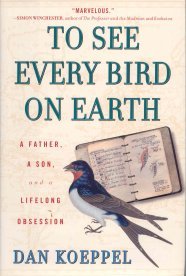
Then, I picked up To See Every Bird On Earth by Dan Koeppel, whose father Richard racked up a list of over 7,000 birds in a lifetime of birding and 59 major trips over 17 years before retiring from active birding after some serious health scares. Soon the floodgates were opened, and I found myself dreaming of trips to see exotic birds and wondering about some of the major bird listers that I had heard my friends talk about in the early 90s. Here in Koeppel's book, I got a glimpse of some of these characters--including the legendary Phoebe Snetsinger, who died on a birding trip to Madagascar a few years ago after racking up a still-record-holding list of over 8,500 species, and a current favorite Peter Kaestner, a diplomat for the US state department with a list of over 8,000 birds. (see a list of current global listing standings here)

Most of the book chronicles the struggles of Keoppel's father to find a footing in a world that undervalued his interest in birds, and seemed to have been stacked against a young birder seeking a fulfilling family and emotional life. The story is punctuated with bird sightings, but the hard-core bird listing doesn't enter into the narrative until rather late in the book. While Keoppel does a fair job explaining the global listing obsession, I was left wanting more in-depth coverage of this fascinating branch of birding. Keoppel mentions such infamous early 90s birders like Harvey Gilston--who reportedly couldn't identify hardly any of the over 7,000 bird species he had seen, and walked away from birding in 1991, or the British husband and wife team of Michael Lambarth and Sandra Fisher, who only counted birds they shared until Sandra died and Michael, too, walked away from the quest to see all the world's birds. While Keoppel spends a good chapter with legendary bird tour leader Bret Whitney of Austin, and birding with Peter Kaestner...these are the highlights of the book. I still want to see a juicy, down and dirty treatment of the world birding listing scene. Until that book is written, this will have to suffice as an intro into that world and some of the characters that inhabit it.

What drives people to spend hundreds of thousands and upwards of millions of dollars, not to mention years and years away from their families, to try and see so many birds? Koeppel declines to offer a reason, suspecting that any answer would involve complex personal psychological factors beyond his ken. After reading this book, I wonder about that myself. And to wonder how long I can stave off such madness in my own life. Can I be satisfied with yard and county listing and a handful of trips around the country each year to see some new birds, or am I teetering on the edge of a madness that few could fathom? I'm slipping off to Veracruz, Mexico this fall for an ornithological conference. Maybe, just maybe, I'll have to dust off the world bird checklist that has been languishing on my library shelf these last few years. If I dare!

Chimney Swifts

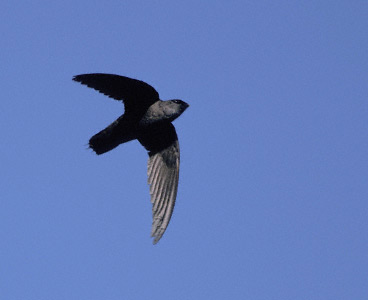
One of the joys I get from living in the city is the chittering calls and aerial acrobatics of the Chimney Swifts that nest on my block. I grew up with Vaux's Swifts in Oregon--birds that usually stay in the coniferous forests, unless they are drawn to urban roosts during migration. Living in the East, Chimney Swifts have been a lot of fun to hang out with, and I look forward to seeing them each year (photo:avesphoto).

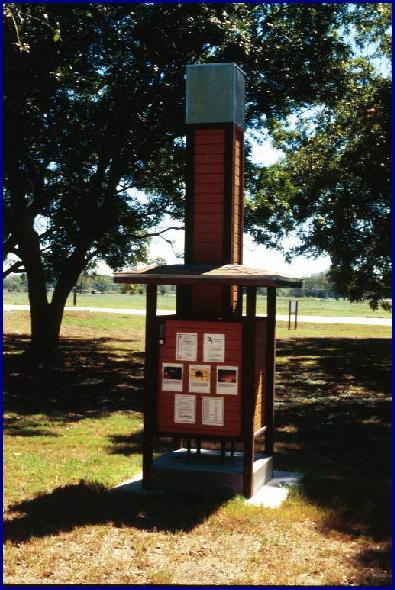
In return for the enjoyment that they bring, there are things that we can actually do to help these amazing birds. My friends Paul and Georgean Kyle in Texas have a Chimney Swift conservation program that they run out of the Driftwood Wildlife Association. They encourage people to build artificial chimneys as roosting and nesting structures for the swifts, and to either clean and manage their chimneys for birds, or to cap them so the birds aren't trapped or tempted to nest in an unsafe chimney. This photo is of a swift tower that also serves as a nature kiosk just off the parking lot of the main building at Hornsby Bend near Austin, Texas. These tower kiosks make perfect mini-nature centers for parks or schools, where they can host info about local birds and nature, as well as serve as a landmark and meeting place for local bird walks or other activities.

Since wood-burning and chimney use and construction has declined, Chimney Swifts have declined in numbers across much of their range in the Eastern United States. They are considered a priority species for conservation and monitoring by Partners in Flight, the planning organization working to sustain populations of American land birds.

Some of the best info about the birds and what you can do to help them can be found in two Texas A&M Press books recently written by the Kyles. Chimney Swifts covers the biology, life history, and conservation of the birds, while Chimney Swift Towers provides more detailed instructions on how to build artificial structures to attract and help the birds. If you are lucky enough to live in Chimney Swift habitat--and most of us east of the Rockies do, enjoy their aerial chases and courtship flights this month, and take a look to see if there isn't more you can do to encourage "America's mysterious birds above the fireplace".

Monday, May 08, 2006

10 Most Beautiful Birds

Laura at Birder Blog tagged me with this meme, which was started by John at A DC Birding Blog. Here are the rules: Post a list of the 10 birds you consider most beautiful on your blog; you may limit the list to the ABA area (continental United States and Canada) or use a geographic area of your choice. Mark birds you have seen with an asterisk.

So, here goes...proving that beauty is in the eye of the beholder, here's my ABA list:

1. California Condor* (lifer 8/85--large, and rare, with whistling wings--awesome!)
2. Whooping Crane* (lifer 4/95--large, white, piercing eye)
3. Snowy Owl* (lifer 1983--white, alien-looking)
4. Greater Sage Grouse* (lifer 3/94--awesome when booming)
5. Great Gray Owl* (lifer 6/95--stunningly fierce eyes)
6. Long-billed Curlew* (lifer 1984--what a beak!)
7. Siberian Accentor* (lifer 1997--rare, dreamy subtle beauty)
8. Greater Flamingo* (lifer 1999--other-worldly-pink, with a wild bent snoz)
9. Bachman's Warbler (thought I saw one once, but of course, they are extinct...)
10. Ivory-billed Woodpecker (if not extinct, perhaps the most beautiful of all...)

Does this betray any kind of prejudice for the large, rare, and unusual? If so, what does that tell you about a birdchaser's psyche?

Most folks I know have been tagged, but I'd like to see a list from Julie Zickefoose and Jeff Gyr, and just for kicks from my less-bird-oriented-but-very-aesthetic-in-law Chef Messy.

Good Kid Bird Movies

Wouldn't it be great if we could get a bird conservation movie into the homes of millions of Americans? What if it were a kids movie from a major studio...something that taught people about the importance of taking care of birds and wildlife in the urban environment? What if somebody else made the movie and it didn't cost conservation organizations a cent?

Pretty much this very thing is happening this summer with the the theater release of two major motion pictures--Over the Hedge and Hoot. Over the Hedge
is a computer animated kids movie by Dreamworks that will premiere May 19. It features woodland wildlife surprised to find a new subdivision in their territory when they wake up from hibernating through the winter. Think of it as an environmentally friendly version of Shrek. Hoot is a live-action movie that premiered last weekend about some kids that try to save a neighborhood Burrowing Owl from bulldozers. Its brought to you by the same folks who made Holes--another recent classic kids movie.

How about partnering with a local theatre to have a kids showing of these films, starting out with a short talk about the importance of taking care of wildlife in our neighborhoods. Give out some backyard birding handouts. Make it a fun family event. Shoot, maybe your local birding club or Audubon chapter can even find a way to use this to raise some money.

If Hollywood is going to hand us this kind of gift, we oughta take advantage of it!

Peace Valley Migrants

Saturday I took my kids for a two hour expedition to Peace Valley. Lots of fun chasing frogs and picking up a few new migrants like blue-winged Warbler, Chestnut-sided Warbler and Yellow Warbler. Sunday afternoon I led a bird walk there and was surprised by the large number (over 60) of White-throated Sparrows in the woods. Also heard my first Great Crested Flycatcher of the year. Peace Valley remains a favorite with my kids, and with me too.

Friday, May 05, 2006

Yellow-throated Warbler

Just before noon, Jim came in to say that he had a Yellow-throated Warbler singing outside his window. We went out and heard it down by the creek. After a few minutes, two of us got quick looks as if flew up onto an exposed branch, before disappearing again. Great to work with birders, and to have migration fever hitting the whole office!

Migrants

Took an hour stroll through the woods at work this morning and found 43 species--including nine species of warblers. Nice to see the Indigo Buntings back, as well as to hear Ovenbirds calling from the understory of the woods. Most of the warblers were Yellow-rumped, though I did hear Black-throated Blue, Black-throated Green, and Northern Parula. Wood Thrushes were singing, as was a Hermit Thrush. This time of year, the birds are moving through fast, and different birds are present every day. Its a magical time, so get outside and enjoy the spectacle!

Saltmarsh Sharp-tailed Sparrow--1, Birdchaser--0

Tuesday I had to give a presentation down in Maryland, so I spent a couple hours driving the marshes at Elliot Island. Good looks at 32 species, including a few migratory shorebirds and singing Seaside Sparrows, but no sign of Saltmarsh Sharp-tailed Sparrow--an Audubon WatchList species that I was hoping to get a peek at. Wish I had more time to look, and that I hadn't forgotten my birdsong CD in my early morning departure. I did hear two Virginia Rails in the marsh, a great sounding bird that I hadn't heard since last spring, so a nice treat. And it was also nice to hear Eastern Meadowlarks singing, since they are not very common in my neck of the woods.

Monday, May 01, 2006

Birding Gotham

Last Friday, I conducted a bird count as I walked the two+ miles up ninth street from my hotel near Penn Station to the American Museum of Natural History. This area is almost completely built up, with a few street trees, rooftop plantings, and a little bit of landscaping around near Lincoln Center. Here's the count:

Rock Pigeon--375
European Starling--60
House Sparrow--110
Herring Gull--2
American Robin--2 (flyovers)

Compare this to the birdlist I compiled in a couple of hours of birding later that day in the Ramble of Central Park--which included 171 individuals of 42 species, and you can see a pretty clear lesson from urban ecology:

Built up urban areas dominated by buildings and concrete may have more individual birds of fewer species, while parks and vegetated areas will usually have more species, but lower numbers of individual birds.

How does the urban area support so many birds? I saw an average of about 8 pigeons on each block...feeding on spilled food and other items in the early morning before traffic picked up. So, there's lots of human leftovers to eat. The most startling for me (OK, maybe I live a sheltered life) was to see starlings eating human vomit off the sidewalk!

Central Park was great by comparison. Lots of good migratory birds in the Ramble, including a couple of Veery's. I was also able to get Larry (a male Red-winged Blackbird back for his second Spring) to land on my hand and eat some seeds, and Lola (Pale Male's mate) circled over the trees off towards her nest on the Upper East Side. Lots of good stuff to see and gorgeous weather to enjoy them in.

Friday, April 28, 2006

Pale Male

I was at the Conserving Birds in Human-Dominated Landscapes conference at the American Museum of Natural History in New York all day, and cruised across the street to Central Park for some birding during the lunch break. Still a bit early for warblers, but had Ovenbird, Black-throated Green, Yellow-rumped, Black-and-white, and Louisiana Waterthrush. While we were birding the Ramble, Pale Male flew over and circled twice. Central Park is a really great birding spot--if you're ever in New York during migration, don't miss it.

Tuesday, April 25, 2006

Its springtime...time to save some birds!

Spring is the perfect time to get outside, see some wonderful birds, and think about some easy steps you can take to protect the migrants as they move through your yard and neighborhood, as well as the birds returning to nest near your home.

Many of the activities you do around your home have a direct impact on birds. Pesticides and fertilizers kill many species in yards, as well as in waterways after rains wash them into streams and rivers (remember the dead grebes from Silent Spring). Pet waste and car fluids also poison birds when they impair water quality. And all that water that we sprinkle on our lawns might be better used by birds if we didn't use it at all. In our yards, many exotic plants can send their seeds out into the neighborhood, where they may displace native plants and make the habitat less inviting to local birds, while planting native plants helps provide the habitat that wild birds are looking for. Almost 10% of the nearly 20 billion birds that live in North America are killed each year near settlements when they collide with windows, cars, wires, and towers...or get picked off by outdoor housecats. We can all take efforts to protect birds by changing some of our habits and landscaping.

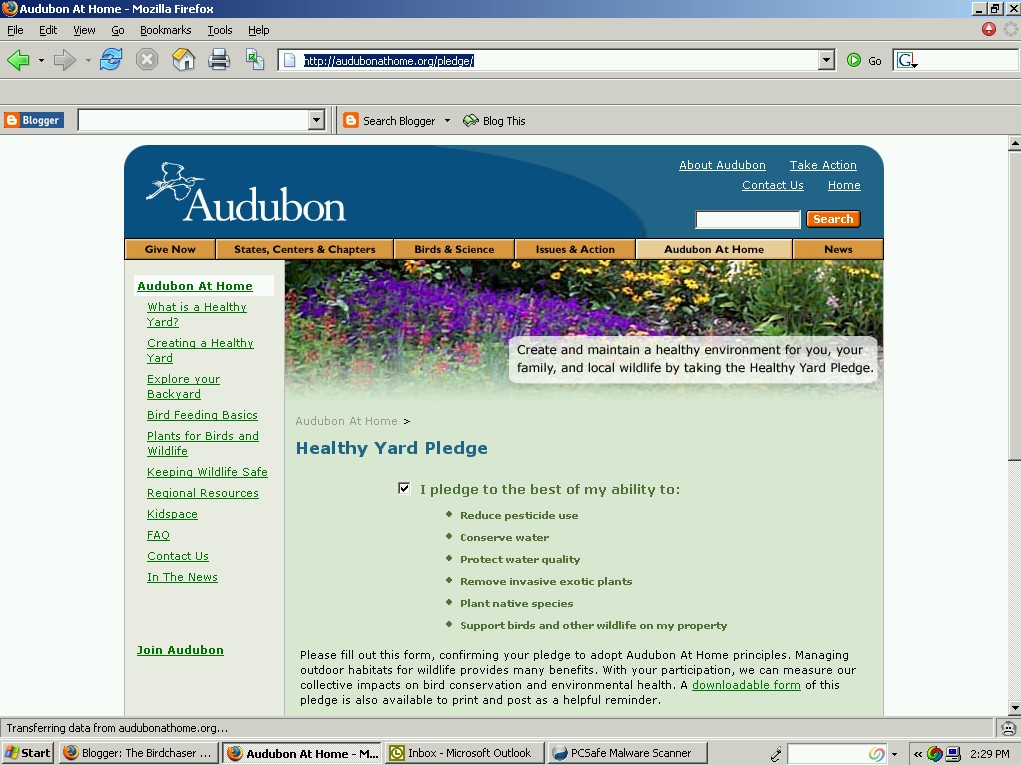
Audubon challenges everyone to begin protecting wild birds (and the environmental health of their yards and families) by taking the Healthy Yard Pledge. Click here to pledge to
* Reduce pesticide use
* Improve water quality
* Conserve water
* Remove invasive exotic plants
* Plant native species
* Support birds and other wildlife on your property

More information on how to take these actions are available from Audubon here.

For other ideas on how to help birds, you might want to pick up the brand new book 101 Ways to Help Birds by Laura Erickson. I used the initial 101 list from Laura for an urban bird conservation class I taught at the University of Texas two years ago, and will post a full review here after my own copy arrives. Meanwhile, I've got some exotic plants to pull out of my backyard and new migrants to look for in the trees behind the house!

They're Baaack!

This morning I arrived at work to the singing of a Wood Thrush across the road in the woods. An hour later, a Baltimore Oriole was singing in the trees out behind the office, and two Warbling Vireos were hoping around up there as well. For me, Spring has officially arrived when these migratory birds start showing up just as the leaves start popping out on the trees. Its hard to believe that these little birds have flown thousands of miles across the Gulf of Mexico and the southern states to spend the next five months in our yards and neighborhoods. Others are just passing through on their way north, so now is the time to get out and see as many of these little guys as you can! Turn off the computer and go outside now!

Monday, April 24, 2006

Turkeys in the Rain

Just before a line of thunderstorms moved through this morning, six turkeys were feeding in the field behind my office. I'm glad I live in a world where these birds are doing well, after they declined to less than 30,000 birds by the 1930s. Hats off to hunters who have worked hard to restore these birds, and to our friends at the National Wild Turkey Federation. For something a little different, check out their Energy for Wildlife program.

Thursday, April 20, 2006

Associated Press quotes Birdchaser about bird flu

I was quoted today in an AP story about migratory birds and bird flu. Again, not the best quote (you gotta go all the way to the end of the story to see my line), but what the heck.

This article references today's Science magazine story reviewing "Global Patterns of Influenza A Virus in Wild Birds". Its a great article with lots of details on just how many birds are carrying various bird flu viruses. By most accounts, the H5N1 virus is even more rare than these other strains of bird flu, so the article re-emphasizes just how rare that virus probably is in most bird populations.

Wednesday, April 19, 2006

Birds At Work

Spring is slowly arriving...a few trees starting to leaf out, though most are still bare. I walked down by the creek to look for migrating waterthrushes or some early warblers. Still not many migrants, but a singing Ruby-crowned Kinglet was new for the season. Just to give a taste of what's around this time of year, here's what I saw on my half hour break:

Canada Goose (6)
Mallard (2)
Wild Turkey (2)
Turkey Vulture (1)
Red-tailed Hawk (1)
Rock Pigeon (2)
Mourning Dove (3)
Red-bellied Woodpecker (2)
Downy Woodpecker (1)
Northern Flicker (1)
Eastern Phoebe (1)
Blue Jay (2)
American Crow (3)
Fish Crow (1)
Northern Rough-winged Swallow (2)
Carolina Chickadee (3)
Tufted Titmouse (2)
Carolina Wren (2)
Ruby-crowned Kinglet (1)
American Robin (4)
European Starling (2)
Cedar Waxwing (3)
Chipping Sparrow (1)
Song Sparrow (5)
White-throated Sparrow (8)
Dark-eyed Junco (2)
Northern Cardinal (5)
Red-winged Blackbird (6)
Common Grackle (2)
Brown-headed Cowbird (1)
House Finch (2)

The wild turkeys were underneath the birdfeeder behind the office this morning before I started my walk. They have to be one of my favorite birds--I love to see their prehistoric gait as they run. The swallows are building nests under the bridge over the creek. As is the phoebe.

Bird Flu and Poultry Smuggling

A good article on the possible role of poultry smuggling in the spread of H5N1 avian influenza is (here) in the April 15 New York Times. Waterfowl are on the move, so if wild birds are commonly carrying this, we might expect to see it spreading. But so far we aren't.

That would seem to be good news for wild birds, but maybe there is a catch. How good is our monitoring of bird flu in wild birds? Check out this latest New Scientist article (here). According to the article, improper procedures have been used for testing for H5N1 in wild birds in the UK,

The problem may have been DEFRA's method of collecting samples. Crommie says DEFRA told WWT samplers to moisten a sterile swab on a stick with saline, take a faecal sample from the bird, then put the swab back in its dry plastic tube. The tubes were then kept at refrigerator temperature and taken to the testing laboratories the next day.

Both Nolting and Olsen are adamant that swabs must be immediately immersed in a saline or preservative solution, and also frozen quickly. "If you left a swab in the refrigerator in its sheath like that, it would dry out and you'd lose all your virus," says Olsen. He says whoever planned the tests "should have talked to us". DEFRA has not done large-scale flu surveys before.

"If you just want to identify the viruses present you could put it in a nutrient solution or in ethanol, but you need a transport medium," says Nolting. "We never take dry swabs." Both groups also quickly freeze samples.
Now the question is...how good is the testing of wild birds in other areas of the world? Are we missing the virus in wild bird populations elsewhere due to faulty testing techniques?

Tuesday, April 18, 2006

Ivory-billed Field of Dreams?

Just read an interesting quote from an article (here) in the latest issue of The Auk:
An underlying assumption in avian habitat management is that if the manager can provide habitat with appropriate structure at all relevant scales, the target bird species will find and use it. Many of us call this the "Field of Dreams" hypothesis, referring to the movie of that name in which the character played by Kevin Costner hears a voice saying, "if you build it, they will come." Costner's character builds his baseball field and long-dead ballplayers show up, though it takes a while, and not all humans can see the ballplayers, which perhaps has parallels with current Ivory-billed Woodpecker (Campephilus principalis) management.

Wait a minute...did they just equate trying to save Ivorybills with chasing ghosts?

Monday, April 17, 2006

New Yard Birds

Saturday I spent an hour on the back porch and counted 21 bird species--not bad for an early spring count in an urban setting. Highlights were five Cedar Waxwings, which I hadn't seen since the holly tree next door was fruiting in December, and a Northern Flicker calling from the top of the baseball field lights in the park behind the house. Was hoping for some raptors to fly through, but no dice.

Friday, April 14, 2006

Latest I and the Birds

The blog carnival I and the Birds #21 is up now, with another great selection of the best in recent bird blog posts. It includes an interview with Tom DeLay inspired by my own submission to the carnival. Take in the posts, buy a book, and enjoy!

Bird Smuggling and Bird Flu

Fantastic news story (here) about this from the International Herald Tribune. Good to see that bird smuggling is being more closely looked at as a major way for H5N1 avian influenza virus to be transmitted around the world.

What are the Feds thinking?!?

Just saw the news that the USFWS has denied the petition to list the Gunnison Sage Grouse as an endangered species. With less than 5,000 of the birds left on a tiny portion of western Colorado and eastern Utah, this bird is one of the most endangered birds in North America (see the Audubon report here). The agency claims that the birds aren't endangered because their numbers may have increased in the last two years. Hello! California Condor numbers have increased too. So have Whooping Crane numbers. But when you have birds with a very limited range, and only a small population--that's the definition of endangered! Hopefully state regulations and efforts will be able to protect these birds, but its just another example of how the Endangered Species Act is not effective because the agency that is supposed to administer it is, for whatever reason, failing to actually use it to protect many species that need the most protection. Ladies and Gentleman, welcome to the world of conservation politics. What a load of crock!

Woodpeckers at Cornell

I visited Sapsucker Woods and the Cornell Laboratory of Ornithology yesterday for some meetings. Tree Swallows over the pond near the lab were a sign of spring, otherwise, mostly just resident birds--a few Canada Goose and Mallards, a Sharp-shinned Hawk soaring over the pond during one of my meetings, and a small handfull of songbirds.

My most interesting sighting was of a Pileated Woodpecker that flew over the road in front of the car as we approached the lab. While I've seen a fair number of Pileateds over the years, I don't see them all the time, and I've been paying closer attention to them since the possible Ivory-billed Woodpecker sightings and video came to light last year. Due to all the debate in identifying the Big Woods woodpecker on Luneau video, it was interesting to note the underwings of the bird that we saw yesterday. The underwing coverts were white, but the flight feathers were much more prominent and all black--looking almost twice as wide as the white. There wasn't really much white visible from below at the angle we were looking, from almost directly below. No matter what you think of the identity of the Luneau video, and I don't know how much variation there is in Pileateds, from the bird I saw yesterday, it would be easy to understand how researchers at Cornell might think that the Luneau video shows a bird with way more white in the wings than they are used to seeing on their resident Pileated Woodpeckers.

Wednesday, April 12, 2006

Fish Crows

For most people, crows are crows are crows. In fact, most people may have a hard time distinguishing between a crow and a blackbird. So it may come as news to some folks that there are many different kinds of crows around the world. Most of them look pretty similar to each other. In fact, as I've been watching the crows flying around downtown DC for the last couple days, I haven't known which species I was seeing--since there are two kinds of crows in this part of the country. Last night I finally heard the crows calling as I walked back to my hotel, and could tell that they are Fish Crows.

Unlike the common American Crow that is found across most of the United States, Fish Crows are pretty much restricted to waterways and coastal areas along the East and Gulf Coasts from Beaumont, TX to southern Maine. They are called Fish Crows because of their habitat mostly along rivers and waterways. But if you were to call it by its voice, you might call it a Frog Crow...since their caw notes (listen here) sound lower and more like a frog than the caw notes of the common American Crows.

Other than by voice, American and Fish Crows can be hard to tell apart as they look pretty much the same. But when they open their beaks, you can tell the difference. So, next time you think there is something fishy going on in Washington, DC--as long as you're thinking about crows, you may well be right!

Tuesday, April 11, 2006

DC Crows

I'm down in Washington DC for meetings at the National Geographic this week. Not a lot of birds in this part of NW DC. Mostly starlings and House Sparrows, but several times today I did see crows flying over, and on my way back to my hotel, a lone male Mallard flew by between buildings. True urban birding is low on diversity--but it is kind of fun to see the common birds in rather uncommon settings.

Friday, April 07, 2006

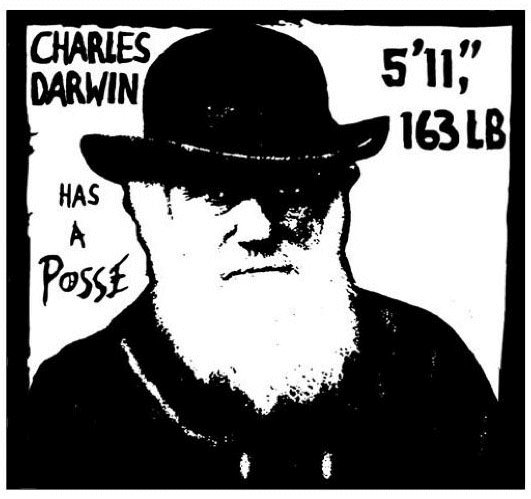
Charles Darwin has a Posse

I recently finished reading Lyanda Haupt's Pilgrim on the Great Bird Continent. I'm going to be writing a full review for Birder's World magazine, but for now I just wanted to say that this book has really given me a lot to think about. Haupt follows Darwin as he spends five years chasing birds and other creatures around South America and beyond, and shows exactly how these experiences transformed him from an eager young naturalist into a careful observer and serious scientist.

Haupt shows just how important it was for Darwin to spend quality time closely observing birds and other animals. This has helped me rethink some of my own birding. I'm often way too busy with work saving birds and creating bird conservation programs to spend the hours necessary to closely watch and more fully understand the lives of the birds I care about. I miss the time when I could spend hours on a Saturday just wandering around Hornsby Bend or the woods near my house growing up in Oregon, and I've vowed to find the time I need to really live in close fellowship with birds and other creatures. Haupt characterizes this type of relationship as respectful and reverential, and key to Darwin's transformation into a revolutionary thinker with deep insights into the processes of nature.

So, follow Darwin. Watch closely. Think Deeply. As another hero of mine once said, the mysteries of nature "are of deep import; and time, and experience, and careful and ponderous and solemn thoughts can only find them out". Take time to smell the roses, watch the birds, and to ponder the mysteries of the world around you. Join Darwin's posse, and treat yourself to a marvelous ride.

New Yard Bird--Osprey

In the never not birding category--while having dinner yesterday, I saw an Osprey fly up Perkiomen Creek behind our house.

Robins have been singing for over a week now. Last night, I was working late and heard the first bird start singing at 3:30am! A week ago, that would have been 2:30am--these birds are really jacked up on horomones right now. Driving in to work today, I saw several robins chasing each other low across the road. Its a dangerous time of year for these birds, as they get so focused on chasing each other that they often fly out onto busy roadways and get killed.

Radio Expedition--Searching for Bird Flu

Good NPR story (here) on the search for H5N1 avian influenza in Alaska this year.

Tuesday, April 04, 2006

Wild Bird Surveillance for Bird Flu

If you need some heavy reading, check out An Early Detection System for Highly Pathogenic H5N1 Avian Influenza in Wild Migratory Birds U.S. Interagency Strategic Plan. Here's an overview:
The goal of this plan is to describe the essential components of a unified national system for the early detection of HPAI, specifically highly pathogenic H5N1 avian influenza, in migratory birds. While the immediate concern is a potential introduction of highly pathogenic H5N1 avian influenza into the U.S., the development of a system that is capable of detecting the introduction of all HPAI viruses through migratory birds would significantly improve the biosecurity of the Nation. This document provides guidance to Federal, State, university, and non-governmental organizations for conducting HPAI monitoring and surveillance of migratory birds in the U.S. It is expected that this document will be used by agencies and organizations to develop regional and/or state-specific implementation plans for HPAI surveillance.


The plan is the source for recent list of birds considered to be the most likely carriers of H5N1. Some of the top candidates, according to this plan are: Steller's Eider, Northern Pintail, Dunlin (despite no evidence for Dunlin ever having carried the virus), Arctic Warbler (another species that admittedly winters in Asia, but never shown to carry the virus). This is a strange list, and seems to be based more on the geographic range of each species (Alaskan birds spending some time in Asia), rather than any epidemiological study showing liklihood of these species actually contracting and carrying the virus.

We still don't really know very much about how H5N1 or other avian influenza viruses are transmitted and which species are carrying which strains of bird flu. Its possible that this plan to test all these species this summer and fall will help us better understand how this all works, though if these species really aren't main carriers of H5N1, then it may take a long time to actually find evidence of that virus in Alaskan birds. I'm all in favor of more research to determine where the various bird flu strains are in wild bird populations--but it should be seen more as a long term research and biosecurity program, rather than just a one-time search for H5N1, which despite media reports to the contrary, probably has only a small chance of arriving in Alaska via wild birds anyway.

Birding with Tom DeLay

News that Tom DeLay is to resign takes me back to the Spring of 2004, when I was teaching a course on urban bird conservation at the University of Texas at Austin. Every Tuesday and Thursday, I would walk down to the Texas state capitol building to look for migratory birds with my students. Twice I ran into Tom DeLay while walking to the capitol with my binoculars and Audubon Texas baseball cap on. The first time, since I had just seen the movie Adaptation on DVD, I thought it was the actor Chris Cooper. But then I figured out who it was. One time he was getting into an SUV with a bunch of guys, the other time he was standing in a group with other men outside a building just north of the state capitol grounds. We made eye contact as I walked by, and though I thought he gave me a sour look, maybe he was just having a bad day. At the time, I wondered what he was doing in Austin. Now we all know he was there to redistrict Texas and solidify his power base. We're still waiting to see how much legal vs. illegal action that involved.

So, while I technically didn't bird with The Hammer, I did bird in his shadow. While he was making major power moves, I was just off stage, with my students, trying to get them to better appreciate birds and the landscapes we share with them. Several students from that class have gone on to undertake more bird studies, and to find employment doing bird conservation work. I still get emails from some of them, and its fun to know that this class had even a small impact in the lives of young people who want to make the world a better place. Not exactly a major power play, but then again, its only birdwatching. Tom, if you manage to beat the rap in Austin and want a more peaceful way to try and change the world, you're welcome to bird with me anytime!

Monday, April 03, 2006

Turkeys Gone Wild

Another sign of spring is the strutting of Tom turkeys. This morning I saw males strutting at two places on my way to work. I saw the first one when a hawk flew quickly across the road in front of me. When I got to where it had crossed, I saw it dive on the male turkey in a field. The second group a few miles down the road had three Toms strutting around with four hen turkeys crouching in front of them. They were in the back behind a house on a rural road, and I watched them from a few minutes from the driveway before pulling out to avoid making the human residents nervous. Nothing like turkeys gone wild to start out the day in a frisky way!

Birdchaser at Home

Spent most of the weekend with my kids at home. On Saturday night, I was in the parking lot of the grocery store down the street and saw a Great Blue Heron flying down the creek towards my house at dusk. Hoping to add it to the new yard list, I sat out on the porch Sunday evening with my (almost) two-year-old. She seemed to enjoy hearing the robins and cardinals singing all around the neighborhood, and we saw a few birds flying off to roosts, but no sign of the heron. I was hoping that flying along the creek to roost was part of its normal routine, but apparently it had other things to do on Sunday.

This morning, I had breakfast out on the back porch and heard an American Goldfinch singing in the neighborhood. Eventually, it flew into our small little yard, and then hopped down to visit the bird feeder in the neighbor's yard. While these birds have started to sing, they haven't obtained their full breeding plumage, and this male was still mostly drab yellow on the back, with only a hint of black on the head. Spring is coming, but slowly!

Friday, March 31, 2006

Down By the Creek

At work this afternoon, I took a walk down by the creek and found a new yard bird (Common Merganser) and new 2006 yard bird (Wood Duck). Since most of the mergansers have left Peace Valley, I was worried that I'd missed this bird for the season, but a nice drake sitting on a rock in the middle of the creek was yard bird #106 and 2006 bird #44--a nice way to end the month.

Bird Flu Misinformation

Let me just say it like this...our political leaders and many in the media are either sadly misinformed, or they are playing politics with bird flu. Latest Reuters story (here) continues the mistaken notion that H5N1 avian influenza is inevitably going to come to the US via migratory birds this year.

If you ever hear this reported in the news, or from your political leaders, you should ask them:

1) What evidence do you have that wild birds are carrying this virus and spreading it to each other? Which species and in which locations?

2) Which birds that cross over to America from the Old World are carrying this virus?

3) How easily can wild birds spread the virus to each other?

4) Can birds migrate thousands of miles while carrying this virus?

5) Why is it more likely that wild birds will bring the virus here, than the possibility that it will come in on the shoes, luggage, or baggage of one of the millions of travelers who fly to America after having spent time in infected countries--or through legal or illegal shipments of poultry or poultry products?

H5N1 is potentially a major threat, but for now, it is mostly a threat if you are a chicken or a chicken farmer who could lose your livelihood. Its good to be following the spread of this virus, but we have a lot more studying to do before we can make any categorical statements about it--like that it is coming to America on wild birds and there's nothing we can do about it.

Thursday, March 30, 2006

Healthy Yard Pledge


Something I've been working on for quite awhile is now online. Take the Healthy Yard Pledge to help create a healthy environment and protect birds and wildlife where you live--and then get all your friends and neighbors to pledge as well. Its free. Its easy. Its cool. Just click here.

Free Bird Videos Online

Back in 2001, some friends in Austin were planning to set up a website where you could pay to watch bird videos, with the proceeds going to support bird conservation. They gave me a top-of-the-line video camera to use, and encouraged me to go out and shoot footage of local birds. One of my biggest disappointments is that between working on my PhD, working full-time, and juggling three small children, I never really got to become the bird videographer that I might have hoped, and when I moved from Austin, I gave up the video camera.

Well, my friends finally have their website up--and good news is you can watch the videos for free! Right now there are over 200 high-quality bird videos to watch; everything from Andean Cock-of-the-Rock to Yellow-eyed Junco.

Check out the cool videos at NatureViewing.com.

Wednesday, March 29, 2006

New Yard Bird--Snow Goose, and signs of spring

Yesterday as I was taking out the trash, I heard a gull overhead. Looking up as the Ring-billed Gull flew over, I noticed a flock of Snow Geese flying high overhead. A nice addition to the yard list--guess I need to spend more time doing work in my tiny urban yard!

Today on the way to work, a lone Snow Goose as at Peace Valley, as were a pair of Hooded Mergansers. Spring is coming, but birding has been slow at work--with no new migrants yet, but chickadees, nuthatches, and cardinals singing.

We slept with the windows open last night, and this morning I awoke to the pre-dawn chorus of American Robins.

Tuesday, March 28, 2006

Birdchaser in the New York Times

I'm quoted briefly in a New York Times article on bird flu that came out today. If you want to read the whole thing, go here (its a decent article). Otherwise, my meager quote is:
"It's hard to know what's going on," said Rob Fergus, science coordinator for the National Audubon Society. "But we're not seeing many wild birds dying nearby every time we find outbreaks in poultry."

I spoke with the reporter for over half an hour. If this was my best quote, I suppose I'm just lucky to have been quoted at all!

Last of the Parakeets

Sunday morning, I joined birding friend, Florida bird distribution guru, and birdfinding guide author Bill Pranty in searching for the last of the Budgerigars that have been established north of St Petersburg, Florida since the 50s. Once numbering over 20,000 birds in the 1970s, these parakeets are now restricted to a population of less than 100 birds in two locations.

The short of the story is that these birds seem to be on their way out. We drove around the same roads in Hernando Beach for almost 5 hours without seeing or hearing any of the small green birds. They are apparently loosing the nest boxes that they depend upon--both to rising House Sparrow populations, and to removal by new residents.

Finally, when we were about to give up, we spotted three birds flying into a tree in a front yard on Gulf Winds Circle (check out Bill's photo of the "last" three wild budgies in America). While 38 Budgerigars were reported here on the last Christmas Bird Count, it didn't bode well that it took us so long to find the birds, and that there were only 3. For all we know, we could have just seen the last of the parakeets. If you haven't seen these birds, now is the time to go. They could disappear at any time.

As an introduced exotic species, probably nobody is going to lift a finger to save this population--which is really a shame. I'm usually not one to advocate supporting exotic bird species, but driving around the suburban neighborhood where they live, its clear that they would add much to the otherwise unremarkable urban avifauna of House Sparrows, European Starlings, Brown-headed Cowbirds, and Eurasian Collared-Doves. The budgies nest together in small bird houses--like miniature Purple Martin colonies. With a coordinated effort, maybe we could see large flocks of budgies once again lining the power lines on US Hwy 19 like migratory swallows.

Later in the day, we were able to find only one budgie in the territory of the Pasco County flock--the only other known location for these birds. Flying back to Pennsylvania on Sunday night, I had visions of a great community project, with scouts and others making attractive little budgie boxes and educating people about how to help the budgies by removing House Sparrow nests. I could see thousands of budgies once again roaming these neighborhoods, which can never be what they were eighty years ago (coastal saltmarsh), but could well regain what they had thirty years ago--flocks of perky green Australian birds bringing joy to residents and visiting birders alike. It was a much more pleasant vision than the more likely scenario, where nobody does anything for these birds, they disappear, and nobody ever bothers to fly down to Florida to go birdwatching in Hernando Beach again!

Introducing--Black-hooded Parakeet

In case you haven't heard, one of the next species to be added to the ABA Checklist of North American birds is likely to be the Black-hooded Parakeet, also known as Nanday Conure or Parakeet. Over 800 of these birds are breeding in and around St Petersburg, Florida. On Saturday morning, I was able to see several of these birds on trees and power lines on my way back from an Audubon bird walk to Fort De Soto Park.

Monday, March 27, 2006

Exotic Miami

After drinking in the sights of the Everglades for a few hours, I headed back to “civilization” to search the urban jungles of Kendall for exotic Red-whiskered Bulbuls and Spot-breasted Orioles—birds that have made this part of Florida home for decades, and which are “countable” according to the rules of the American Birding Association (ABA).

First stop was the Royal Palms Tennis Courts—where bulbuls are supposed to be found on the wires and trees in the adjacent neighborhoods. After over an hour of driving and walking around, I started wondering if the day is getting too late and the wind is keeping birds quiet. While searching, I did hear parakeets, and looked up to see two birds flying overhead. Unfortunately, they were Yellow-chevroned Parakeets—birds that are not fully established in Florida, and hense “uncountable” according to the listing rules. I drove to a couple more places where the birds are supposed to be found, but (say it with me now)—no birds. I headed over to the Kenwood Elementary School—another known site for the birds, but nothing. I dropped by the offices of the Tropical Audubon Society in south Miami, another bulbul and oriole spot—but nothing.

I needed to be at a meeting in St. Petersburg by 7pm—a five hour drive with traffic—so just after 2pm I had to call off the search and head back across the Everglades and Big Cypress on the fast-moving I-75 (Alligator Alley). After two days of birding, I’d seen only a couple of my target species, started making plans to return some other time to search for the birds I couldn't find this trip, and started wondering about the sanity of a person who would drive hundreds of miles to see a few birds. While I had Bill Pranty’s A Birder’s Guide to Florida to tell me where to look for birds, I didn’t have much time to prepare for this trip and I’m feeling a bit frustrated by not having as much info as I would normally have before heading out to bird unfamiliar territory. Note to self—do more homework before your next birding trip and learn a bit more about the habits and habitats of the birds you are looking for!

Everglades...glades that go on, forever!

Waking up before sunrise on Friday morning, I had a choice to make—head to Miami to look for exotic Red-whiskered Bulbuls and Spot-breasted Orioles, which I’ve never seen, or head out to Everglades National Park, where I had less chance of seeing anything new. I took off my bird listing hat for a few hours, put on my conservationist hat, and headed out to the Everglades.

Just outside the park, I stopped to look for a Shiny Cowbird that was reported last week. No dice on the cowbird, though I did see a six foot long iguana sitting in a tree, and on a tip I drove down to the end of the road to look for Limpkin. No Limpkin at the end of the road, but as I was driving back, I saw a couple unusual birds on the power line. They flew down and landed near the car, hopped down onto the road, and started walking away. They were two Common Mynas—birds introduced to Florida and first noted there in 1983, but which don’t “count” for birdwatchers because nobody has done the study to determine exactly how well they are established.

As I pulled away from the mynas, a large bird flew up into a tree along the canal—finally, a Limpkin! I’ve seen these large brown wading birds in Central America, but this was the first one I’ve seen in North America—so it was a first for my ABA (American Birding Association) list.

Inside the park, I drove the 30 plus miles down to Flamingo, hiked a few trails, and scanned the trees around the ponds for White-crowned Pigeons. No dice on the pigeons, but did see lots of Wood Storks. At one point, I was staring into the eye of a Wood Stork only 50 feet from the car, when I realized that I have usually seen these birds in flight. This was the first time I’d actually been able to look one of these prehistoric-looking beasts in the eye—a very alien experience!

Two cottonmouths were additional highlights, while a low was seeing hundreds of exotic anole lizards on the Snake Bite Trail. South Florida is a veritable zoo, with dozens of exotic reptiles, amphibians, birds, and mammals taking over landscapes that are also changing due to large numbers of invasive exotic plants that crowd out the native vegetation. It’s a Disneyesque landscape—completely altered by humans. Even the Everglades, that endless “sea of grass,” thousands of square miles of sawgrass and water, are altered by the water control projects that have deprived the area of the water it needs to sustain its natural processes.

However, altered or not, the Everglades are still amazing. Even Great Blue Herons—birds commonly seen along waterways in even the most urban areas—take on a new majesty when seen in a marsh that stretches out of sight to the horizon.

Tamiami Trail

U.S. Highway 41, the Tamiami Trail, crosses the Big Cypress National Preserve and the Everglades as it runs from Napes to Miami. I spent all afternoon on Thursday listening to 30 minute nature programs on the Everglades Radio Network while searching this area for Limpkins, Snail Kites and other interesting Florida birds. It’s a sad day when Wood Storks and Swallow-tailed Kites (check out this USFWS photo, its such a cool bird!) just aren’t good enough—but it was a bit frustrating to search all the known locations and come up short on Snail Kites and Limpkins. The afternoon did produce some cool reptile sightings—including a glass lizard, American alligators (hundreds), and huge female soft-shelled turtle crossing the road.

For over an hour before dusk, I drove back and forth on Hwy 41 near the Muscogee General Store looking for the Snail Kite roost. Again, nothing. With only a couple of days to try and blitz the birds of Florida, and many cool birds not yet back from winter haunts to the south, I know I’ll have to come back if I want to see these birds in the U.S., but its frustrating to search and search and come up short.

By the end of the day, I was camping in Homestead south of Miami with over 400 miles on the car and only having seen one of my target birds. Note to self—next time you go to Florida, spend more time birding and less time driving!

First Blood

Thursday, I was up at 3am for the drive to the airport. By 9am, I was in Tampa, and half an hour later, I was in my rental car speeding south to Oscar Scherer State Park south of Sarasota in search of Florida Scrub-Jay.

At the park entrance, the attendant indicated that the jays could be found on the Yellow Trail at the end of the pavement. Walking down the trail, all I could hear were Blue Jays and I was starting to worry that this would be a long search. About 300 yards down the trail, I heard the familiar ruck-ruck-ruck-ruck call of a scrub-jay, and suddenly three birds appeared less than ten feet away in the low bushes.

I had heard that the jays at another location were tame and would come to your hand if you had peanuts for them (check out this photo by Joel Sartore). Feeding is not allowed at Oscar Scherer, but I held out my fist as if I had something hidden in my hand. In an instant, one of the birds flew up and landed on my hand and started trying to pry my fingers apart. When that didn’t work, the bird started pecking vigorously on the knuckle of my hand (I suppose a clenched finger must look a bit like a giant acorn to a scrub-jay)!

I opened my hand, the bird looked at it for a moment, and then flew away. As I was watching it, another jay scared me when it tried to land on my head. I watched the three birds for a few more minutes, and then, just as suddenly as they appeared, they were gone.

I’ve had close encounters with some amazing birds, but this was the first time a life bird (one I haven’t seen before) has drawn blood!

Wednesday, March 22, 2006

NYC Crows

Yesterday I was in meetings all day at the National Audubon Society headquarters at 700 Broadway in New York City. The heavily built landscape view out of the 5th story window there didn't provide for much birding--just the regular flybys of Rock Pigeons. Finally, at a low point in the afternoon, four American Crows flew lazily over the NYU buildings. Six hours, two species. Now that's slow birding!

The other disappointment of the day was that I missed Ivory-billed Woodpecker searcher Bobby Harrison's visit to the Audubon magazine staff--I was in other meetings and didn't get to hear his story. Apparently he gave a good presentation, sorry I wasn't able to catch it.

Monday, March 20, 2006

The OTHER Merganser

After months of seeing thousands of Common Mergansers almost every time I go to Peace Valley, this morning I was able to find three Red-breasted Mergansers in among the 80 or so Common Mergansers remaining on the lake. I really like these birds, with their rakish manes. While Common Mergansers look like something that a craftsman could create in their shop, Red-breasted Mergansers look more alien and wild. Here's a nice painting of them by Trevor Boyer.

Bird Flu and Poultry Trade

Great op-ed in the International Herald Tribune.

Why can't we get more news stories and investigative reporting about legal and illegal poultry shipments? Check out this news story about poultry smuggling into Vietnam (presumably) from China. Hard to control H5N1 avian influenza with such free-flowing movements of birds from potentially infected areas.

And here is a horrific story of the result of poultry smuggling from Israel into Palestine:

"Near the West Bank city of Hebron, Palestinian customs officials intercepted two trucks carrying poultry which had entered illegally. Palestinian officials said they would kill the 2,600 chickens in the trucks.

Palestinian workers later started burying the chickens alive in a pit by dumping soil on them with bulldozers.

“We want to get rid of these chickens because they came from Israel, which is an infected area,” deputy Hebron commander Musbah Al Baba said. “We do not know for sure they are infected, we are just taking precautionary measures.” Smuggling into Palestinian areas has grown due to demand for cheaper supplies of livestock."


Many officials claim that poultry or bird smuggling in the US is such a small enterprise, that it doesn't constitute a major pathway for H5N1 into the country. However, based on how few overseas shipments are actually inspected, and that bird shipments are not unheard of, such claims seem as at least as premature and irresponsible as statements indicating that wild birds are the primary pathway by which the virus will arrive in the US.

Friday, March 17, 2006

Ivory-billed Woodpecker ID hits ID Frontiers Email List

Today Kenn Kaufman sparked a round of discussion about the Luneau woodpecker ID on the ID Frontiers email list. Check out his post here, and the continuing discussion here. When this discussion has died down, you'll be able to find an archive of it here. We might all just learn a little something from this discussion, and I look forward to keeping tabs on it!

More Ivory-billed Info in Science Magazine

If you read the Sibley Article and the Cornell Rebuttal Article, you've only seen half the evidence they draw on to make their case. Don't forget to check out the supplemental online information--here's the supplemental Sibley info, here's the Cornell extra info.

These articles seem to underscore the fact that reasonable people can disagree about the identification of the bird in the blurry video. If there is disagreement, then we don't have conclusive evidence for Ivory-bills. Frustrating as this may be (who's eyes aren't bleary after trying to figure out what these blurry video images are really showing?), perhaps Nuthatch (a blogger and bird researcher I greatly respect) best sums it up with this statement:

"In the Sibley paper, similar analytical tools were used to reach a different conclusion than in the original paper, akin to two researchers performing the same experiment and getting different results. Nor have the "results" presented in the first paper been replicated in two years of herculean effort. In the world of science, a situation of this nature would generally be considered to be at the "back to the drawing board" stage. And I think that's where the IBWO is at. Still awaiting rediscovery."

Others will disagree, and the video will remain a Rorschach Test in which people will see what they want to see.

Media Coverage and Lame Bird Puns

Why is it, that whenever a bird story hits the news, reporters can't seem to avoid using bad bird puns? In the most recent CBS story about the Ivory-billed Woodpecker debate, entitled "Feathers Fly in Woodpecker War", the problem extends beyond the headline to include the following bad bird references:

"top bird expert is pecking away"
"controversy took wing"
"Gov. Mike Huckabee flew into the fray in a bid to ground Sibley"

Is anyone else out there sick of the tired, lame bird references that slip into news stories about birds? Tired of stories of birders "flocking" to see rare birds. Of bird controversies causing a "flap"? Of bird conservationists "getting their feathers ruffled"?

While bird stories may provide a lighthearted break from otherwise grim news reporting, here's my plea to journalists:

Lay off the lame bird references. Just because it's a bird story, doesn't mean that people want you to try and be cute. If you want people to enjoy your bird stories, just make sure you spell the names of the birds correctly, and get your facts straight and the story will take care of itself. No need for tired old bird puns. We are not amused!

More Ivory-billed Woodpecker Video?

Ivory-billed Woodpecker searcher Bobby Harrison claims to have additional video of a distant Ivory-billed Woodpecker visiting one of his woodpecker decoy sites in the Big Woods of Arkansas. Listen to him describe it here (click on the 2/28/06 podcast). Why hasn't this video been made public, if it offers additional evidence for the continued existence of these birds?

Sibley essay on The Nature Conservancy Site

The Nature Conservancy has put up a fine essay by David Sibley detailing his views on the Ivory-billed Woodpecker search, conservation of the Big Woods, and why he came forward with his recent article questioning the video evidence for the Ivory-billed Woodpecker's existence. I've only birded with David a couple of times--twice on a dike at Cape May in 1995 where he amazed me by calling out the ID of warblers as they streamed by overhead, and once at Hornsby Bend when he came to Austin on a book tour. In person, as well as in writing, he is soft-spoken and very careful. I'm glad his article and essay are out, and hope that they inspire us all to be careful, but also to take appropriate action, as we move forward in trying to protect the birds that we have in our care. If Ivory-bills still exist, they deserve all we can do to keep them around. Their current or former habitat--whatever the case may be--also deserves protection.

Ivory-billed Woodpecker Story on NPR

Morning Addition has a story today (here) on the Sibley paper, including quote by Birding magazine editor Ted Floyd.

Thursday, March 16, 2006

Ivory-billed Woodpecker Doubts Explode

The Sibley Science article has finally appeared online, and the media frenzy has begun (Sibley article here, Cornell rebuttal here. News articles about Ivory-billed skepticism have already appeared in the New York Times, National Geographic News, Nature, and the Associated Press. Other stories are due out from NPR and others. The blogosphere is also lighting up. Tom Nelson is following this closely at the Ivory-bill Skeptic, but GrrlScientist has also posted a long lament entitled "Goodbye, Beautiful Dream".

Its a sad day, but hopefully one that can help us refocus our efforts and help us figure out where we're really at with the Ivory-billed Woodpecker, and bird conservation in general.

Birdchaser in the Wall Street Journal

I'm quoted in a bird flu Q&A in the Wall Street Journal online. Not sure how much I add to the discussion here, but the piece does raise some good issues.

Tooth Fairy Bird

A lighthearted jab at speculation about the role of migratory birds in spreading HPAI H5N1 bird flu virus is Martin Williams and Nial Moores' online article describing the illusory Tooth Fairy Bird. The authors conclude that:

"The Tooth Fairy Bird is clearly an intriguing scientific and social phenomenon – never yet found, existing most strongly in the brains of certain virologists, officials and journalists (and, of course, some bloggers, bless ‘em), and with a strong and widespread hold in the popular imagination. Like the mythical bogeyman that some parents find convenient, the Tooth Fairy Bird is ever ready for blaming when bird flu strikes, always available for helping sound dire warnings of doom."

A fun read, with some good information on problems with the "Wild-birds-are-spreading-bird-flu Theory".

Kenn Kaufman Weighs in on Arkansas Ivory-bills

Birding luminary Kenn Kaufman posted this on the OH bird email list yesterday:

Subject: Woodpecker behavior
Date: Wed, 15 Mar 2006 09:58:51 -0500

The reported rediscovery of Ivory-billed Woodpeckers in Arkansas has been mentioned on ohio-birds many times over the last 11 months, which suggests that this is an acceptable topic for this forum.

Last month in Ecuador we caught up with a related species, the Powerful Woodpecker (Campephilus pollens). I'd missed it on previous trips to South America -- not surprisingly, since it's rather rare. In The Birds of Ecuador, Vol. 1, Robert Ridgely says that it's "rare to uncommon and perhaps local." In Vol. 2, he expands on this to say that its habits are "similar to other Campephilus woodpeckers, though Powerful's home range seems exceptionally large and as a result the species is encountered only infrequently." We found a family group in forest on the east slope. The birds were wary, as one would expect with a large woodpecker, and they were in dense forest, but we were able to follow them at a respectful distance for a long time, and Kim even got decent photos with her small digital camera.

The encounter got me to thinking about our North American species of Campephilus, and I went back and reread Roger Tory Peterson's account of seeing the Ivory-bill in 1942. (This was in RTP's wonderful book, Birds Over America, published in 1948.) He had sought the bird in South Carolina on the basis of rumors there in the 1930s, but finally he went to the Singer Tract in Louisiana, the last place where there were still known to be any living Ivory-bills (two adult females had been seen there a few months earlier). The Singer Tract was big, 80,000 acres, and there were no stakeouts such as roost sites, so Peterson and his companions knew it wouldn't be easy. It wasn't: it took them a whole day and a half to find the birds. Once they found them, though, they were able to follow them for almost an hour.

Now, about these freakishly elusive, supernaturally un-photographable birds in Arkansas... Once you look at the only "proof," the famous four-second video, and realize that it actually shows a Pileated Woodpecker, you have to wonder: What's really going on there?

Kenn Kaufman
Rocky Ridge, Ohio

Wednesday, March 15, 2006

Foxy

A day at the office spent fielding bird flu media queries, and working on urban bird conservation guidelines was happily interrupted by a Fox Sparrow under the feeders. First one of these we've seen here this year, and a reminder that spring is on its way!

Final GBBC Results

GBBC reviewing has pretty much concluded. When the count period ended, we had 585 accepted species records. The final count is now up to 623 species. Some of these came in through normal channels, but probably at least half of these came in as a result of scouring the internet and emailing researchers and bird tour leaders for additional observations during the count period. I'm pretty happy with the totals from Hawaii--we got many more native Hawaiian species than we have in the past, including the incredibly rare Maui Parrotbill. Very cool. Hopefully next year we can do even better.

Here is the actual GBBC summary press release from Cornell and Audubon:

"Extreme" Bird Count's Fascinating Findings
Record-breaking Great Backyard Bird Count results


New York, NY & Ithaca, NY, March 9, 2006—The ninth annual Great Backyard Bird Count, which took place February 17–20, set new records as participation soared across the United States and Canada. From backyards to wildlife refuges, bird watchers tallied a record-breaking 623 bird species and 7.5 million individual birds during the four-day event, coordinated by the Cornell Lab of Ornithology and National Audubon Society. Participants sent in more than 60,000 checklists, providing a wealth of information unmatched in previous years.

The flood of reports yielded what would have been otherwise impossible—a comprehensive snapshot of the continent’s birdlife. “With more people watching birds, together we discovered amazing things,” said Paul Green, director of Citizen Science for National Audubon Society. “In some places, observers described flocks of robins so large their combined calls were louder than jetliners, and good seed crops in northwest Canada caused several species of seedeaters to remain in sub-zero northern Canada rather than move to warmer areas further south.”

American Robins are typically reported in greatest number by observers in the balmy southern states, but they inundated the Northwest this year, including Washington State, where flocks of 40,000 or more were seen and totals skyrocketed to 96 percent above last year’s count. In contrast, tallies of robins were down to less than one-half of their 2005 numbers in Texas, Louisiana and Mississippi for reasons that are as yet unclear.

Although most insect-loving birds travel south of the United States in winter, warm weather may also have enticed some swallow and warbler species to stay farther north than usual, living on a partly vegetarian diet. The number of bird watchers who reported Orange-crowned Warblers rose by more than 50 percent compared with last year and they reported twice as many birds, some of which were eating suet and nectar from feeders. Tree Swallows, which can feed on bayberry berries during winter, have broadened their distribution from 11 states in 2001 to 20 states in 2006. Adjusted numbers were up by 134 percent compared with last year.

Complete tallies and maps are available at the Great Backyard Bird Count web site www.birdsource.org/gbbc, along with photos and narratives about other birds—including species in southern states hit by hurricanes, the stunning invasion of Snowy Owls in the Pacific Northwest, migratory pathways of Sandhill Cranes, regional rarities such as a Black-throated Blue Warbler in Connecticut, and continued drops in counts of American Crows, which have been plagued by West Nile virus.

The web site also announces winners of this year’s contests for localities with the highest participation, and features some of the more than 3,000 bird photos sent in for the photo contest.

“The success of citizen-science projects such as the Great Backyard Bird Count is built upon the generosity, skill, and enthusiasm of our participants. It was incredibly exciting to watch the number of checklists climb this year,” said Janis Dickinson, director of Citizen Science for the Cornell Lab of Ornithology. Next year’s Great Backyard Bird Count takes place February 16–19, 2007.


Checklist Champs for 2006

With more than 60,000 checklists submitted, the 2006 Great Backyard Bird Count ranks as the second-highest ever in participation, up 15 percent compared with last year and up a whopping 40 percent from two years ago. Three Canadian provinces and fifteen states set new records for checklists submitted. The following are the checklist champs for this year’s competition:

Top 3 Provinces:

1) Ontario (1,309)
2) British Columbia (424)
3) Alberta (317)

Top 10 States:

1) New York (3,978)
2) Pennsylvania (3,173)
3) Virginia (2,863)
4) North Carolina (2,847)
5) Ohio (2,833)
6) Texas (2,754)
7) California (2,550)
8) Georgia (2,507)
9) Florida (2,263)
10) Michigan (2,071)

Top 5 U.S. communities:

1) Fultondale, AL (505)
2) Charlotte, NC (362)
3) Mentor, OH (340)
4) Cincinnati, OH (287)
5) Richmond, VA (262)

Top 5 Canadian communities:

1) London, Ontario (86)
2) Calgary, Alberta (69)
3) Saskatoon, Saskatchewan (47)
4) Winnipeg, Manitoba (45)
5) Campbell River, British Columbia (40)

For a complete list of top communities in their states and provinces, and recognition for “most improved,” please visit our contest results page.

The Cornell Lab of Ornithology and National Audubon Society thank Wild Birds Unlimited, sponsor of the Great Backyard Bird Count.

Audubon is dedicated to protecting birds and other wildlife and the habitat that supports them. Their national network of community-based nature centers and chapters, scientific and educational programs, and advocacy on behalf of areas sustaining important bird populations, engage millions of people of all ages and backgrounds in conservation.

The Cornell Lab of Ornithology is a nonprofit membership institution interpreting and conserving the earth’s biological diversity through research, education, and citizen science focused on birds.

Tuesday, March 14, 2006

New Yard Bird--Fish Crow

Before I tackled the plumbing this morning, I actually had another nice bird sighting at my house--a Fish Crow being chased by four American Crows. Fish Crows are slightly smaller cousins of American Crows, and in this part of the world they wander about a bit early in the spring before settling into their more riverine nesting areas. As I was taking out the garbage this morning I heard the lower, harsher call of a Fish Crow, and looked up to see it call again, while being chased by the American Crows. I can only suspect that the local American Crow family wasn't too thrilled to have this interloping cousin cruise through their territory. I, on the other hand, was more than happy to see it in my yard and to add it to my growing new yard bird list.

Swan Lake

Most days I stop by Peace Valley on my way to work and scope out Lake Galena. Today I got there a bit later than normal and the water was choppy. From the road, I usually see a flotilla of over a thousand Common Mergansers, but they weren't there this morning. From over a quarter mile away I could see several large white birds floating in the middle of the lake, and guessed they were swans. Driving closer, I got out the scope to see if they were roving Mute Swans, or perhaps a group of migratory Tundra Swans heading north.

Luck was on my side, as the scope revealed them to be six Tundra Swans, necks bowed, facing into the wind. Graceful and sharp-looking, a nice view after a frustrating morning struggling under the kitchen sink with leaky plumbing. Though they didn't soothe all my jangled nerves, they did provide a measure of peace, and greatly improved my mood. It isn't every day that I get to see a lake graced by swans. Fortunately, it isn't every day that I so desperately need their stately grace to brighten my morning. But today, I took the swan sighting as auspicious, and was glad that Peace Valley truly lived up to its name.
Nature Blog Network Fatbirder's Top 1000 Birding Websites